 Save to Pinterest
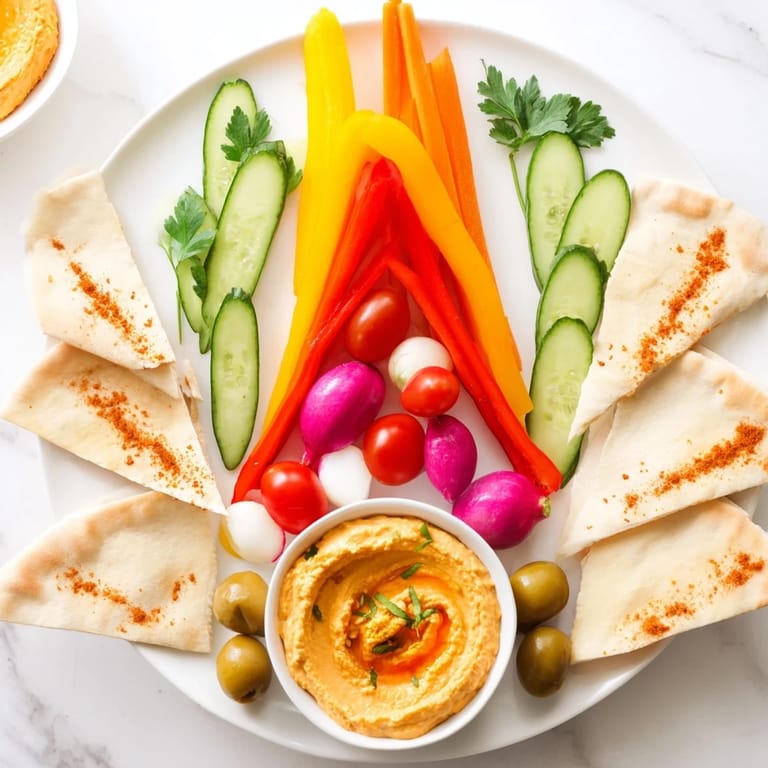
 I discovered this platter while watching my neighbor arrange vegetables on a massive oval dish for a summer gathering, and she stacked them to look like a tent—a whimsical canopy of color that made everyone smile before they even tasted anything. She told me it came from a trip to Marrakech, where street vendors would arrange their mezze in these playful shapes to catch the eye of passing tourists. What struck me wasn't just the Moroccan spices layered into the dips, but how the presentation itself became the first course, a conversation starter that lingered long after the last carrot stick disappeared.
I made this for my daughter's art class potluck, and when she came home, she said the other kids spent more time taking photos of it than eating it. She was secretly thrilled—not because of the attention, but because she'd helped me slice the vegetables that morning and felt like she'd created something worth capturing. That feeling, of watching your food become part of someone else's memory before it's even consumed, is what this platter does best.
Ingredients
- Cucumbers: Slice lengthwise to create long, elegant strips that anchor the tent structure with their pale green hue.
- Red and yellow bell peppers: These are your stars—cut them into thick strips so they hold their shape and their colors glow under any light.
- Carrots: Peel and cut into sticks; they stay crisp for hours and their natural sweetness balances the savory dips.
- Cherry tomatoes: Halve these so they nestle between other vegetables and catch light like tiny rubies.
- Red onion: Slice paper-thin and don't skip this; it adds a sharp, bright note that wakes up every bite.
- Radishes: Their peppery bite and papery texture make them worth hunting for in the produce section.
- Pita or msemen: Warm them gently so they soften just enough to fold, but stay sturdy enough to scoop dip.
- Hummus, muhammara, and baba ganoush: Buy the best versions you can find or make them fresh; they're the soul of this platter.
- Olives: Mix green and black for visual contrast; their briny depth ties everything together.
- Fresh herbs: Cilantro or parsley should be chopped just before serving so they stay vibrant and smell alive.
- Sesame seeds and spices: Toast the sesame seeds yourself if you have time; the smell will convince anyone in the kitchen that something special is happening.
Tired of Takeout? 🥡
Get 10 meals you can make faster than delivery arrives. Seriously.
One email. No spam. Unsubscribe anytime.
Instructions
- Prep your vegetables like you're arranging a garden:
- Slice and cut everything according to the ingredient list, keeping pieces roughly the same size so they sit together naturally. As you finish each vegetable, arrange it in a spot on your platter so you can see the color story emerging.
- Build your tent framework:
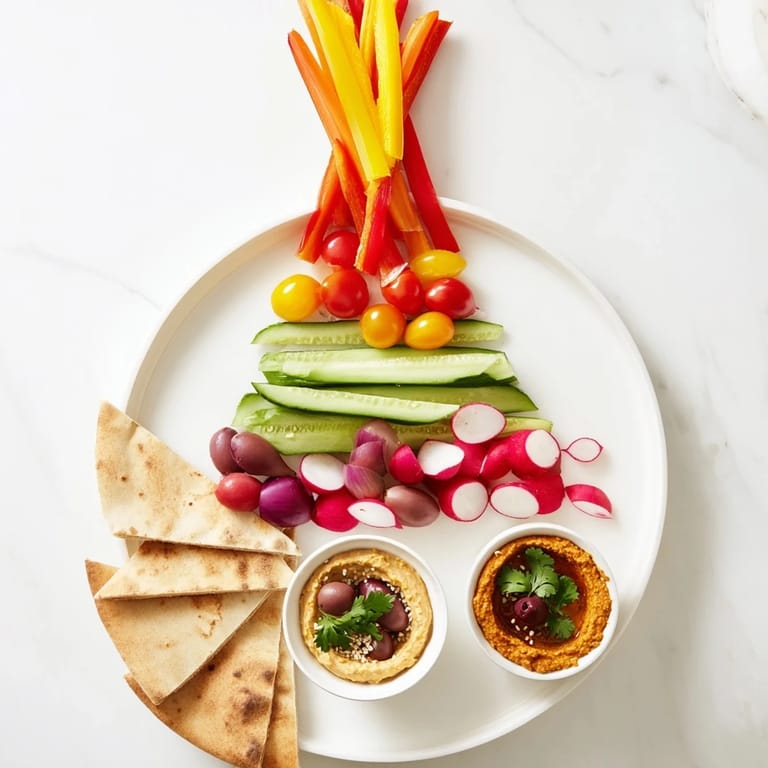
- Start at the base of your platter and create a V-shape with your longest vegetable strips—cucumbers work beautifully. Then layer other vegetables on top in triangular groupings, alternating colors so red sits next to yellow, orange next to green.
- Warm your breads gently:
- Heat your pita or msemen in a dry skillet over medium heat for just 2-3 minutes per side, or wrap them in foil and warm in a 300°F oven. Cut them into triangles while still warm, then fan them out at the base of your vegetable tent like a gathered fabric.
- Set up your dip station:
- Spoon hummus, muhammara, and baba ganoush into three separate small bowls and nestle them at the center base of the tent. Sprinkle each dip with a light dusting of cumin, smoked paprika, and toasted sesame seeds, so they look intentional and inviting.
- Finish with flair:
- Scatter olives around the arrangement, then shower everything with chopped fresh cilantro or parsley. Stand back and admire your work—this is the moment where a platter becomes a centerpiece.
 Save to Pinterest
 There's a moment right after you finish arranging everything, when you step back and the whole thing suddenly looks like edible art, that you realize you've created something that will disappear quickly but will be remembered for much longer. That's the gift of this platter—it's both dinner and decoration, both nourishment and joy wrapped up in one arrangement.
The Architecture of Appetite
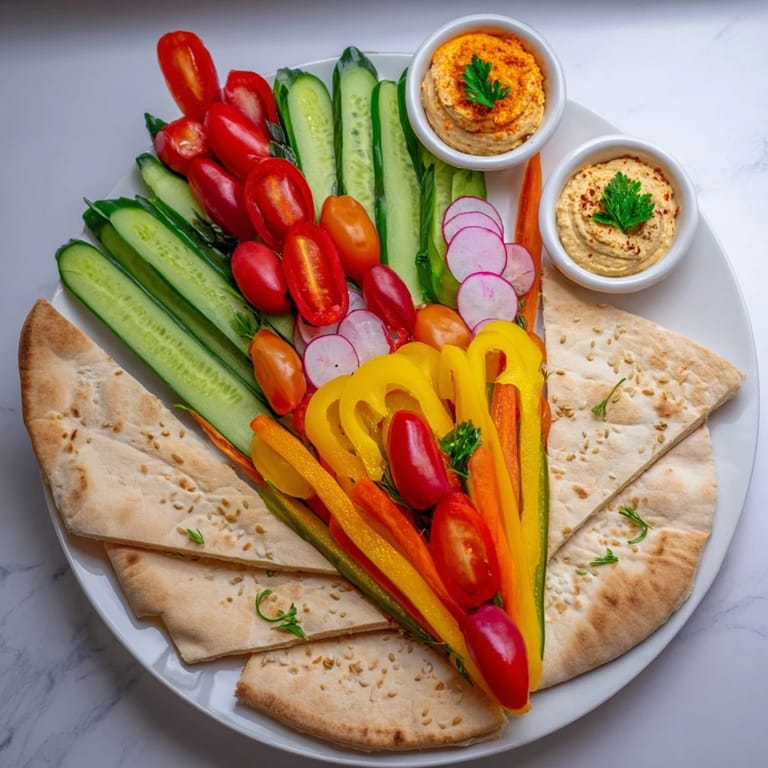
The beauty of the tent structure isn't just visual—it's practical too. By stacking vegetables vertically and creating height variation, you actually make it easier for guests to see and access everything on the platter. A flat arrangement disappears into itself, but this one invites interaction from every angle. I learned this the hard way after hosting a buffet where people gravitated immediately to the tallest, most dramatic dish, even though other options were equally delicious.
Flavor Pairing Secrets
The three dips—creamy hummus, smoky muhammara, and earthy baba ganoush—each tell a different story, and the spiced toppings tie them together into one cohesive conversation. When you dust each dip with cumin and paprika, you're not just decorating; you're signaling that these three are meant to be tasted together, compared, layered. I never realized until making this how much the aroma of warm spices whispers to the brain before you even taste anything, priming your palate for what's coming.
Make It Your Own
This platter is a canvas, not a mandate, so play with it. Add roasted chickpeas for crunch, marinated feta for richness, or swap in snap peas and blanched green beans if that's what your market has offering today. The tent structure stays magical regardless of what vegetables fill it, which means you can make this with whatever is fresh and seasonal.
- Try adding pomegranate seeds or fresh pomegranate molasses to one of the dips for a tart, jewel-like pop.
- If you're feeding vegans, double-check that your store-bought dips are dairy-free, or make them yourself for complete control.
- Serve this alongside Moroccan mint tea for an authentic experience, or crack open a crisp white wine if that's more your gathering's style.
 Save to Pinterest
 This platter reminds us that sometimes the best part of feeding people is watching them pause and appreciate what's in front of them before diving in. That brief moment of admiration, before the eating begins, is where real connection happens.
Recipe FAQs
- → What flatbreads work best with this platter?
Pita breads or Moroccan msemen cut into triangles work well to complement the fresh vegetables and dips.
- → Can I substitute the vegetables used in the platter?
Yes, snap peas, blanched green beans, or other fresh vegetables can be used to add variety and color.
- → How should the spiced dips be seasoned?
The dips are enhanced with ground cumin, smoked paprika, and toasted sesame seeds to balance and elevate their flavors.
- → Is this dish suitable for vegetarians?
Yes, it features only vegetables, flatbreads, and plant-based dips, making it vegetarian-friendly.
- → How can I make a vegan-friendly version?
Ensure that all dips and flatbreads are dairy-free, and choose vegan-certified ingredients when available.
- → What are good beverage pairings for this platter?
Moroccan mint tea or a crisp white wine pairs beautifully with the vibrant flavors of this platter.