 Save to Pinterest
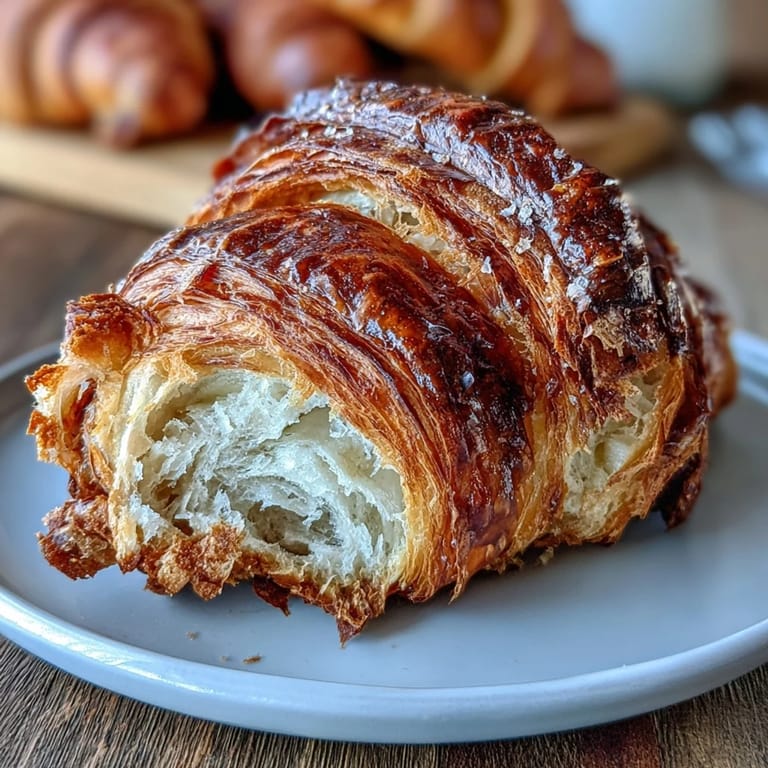
 There's something almost magical about laminating dough for the first time—watching butter and flour transform into dozens of delicate, flaky layers. My kitchen smelled like a Parisian bakery that day, and I realized sourdough croissants weren't some intimidating French technique but rather a patient conversation between time and ingredients. The tangy starter adds depth that regular croissants can't quite capture, making each bite feel both nostalgic and entirely new.
I brought a batch of these to my sister's house one Sunday morning, still warm from cooling, and watched her tear into one with zero hesitation. The butter had created those perfect, shattering layers, and the crumb inside was tender and complex from the sourdough. She didn't say much—just closed her eyes and smiled—which somehow meant more than any compliment could.
Ingredients
- Bread flour (500 g): The higher protein content builds structure and gluten development, crucial for supporting all those laminated layers without tearing.
- Granulated sugar (60 g): Feeds the yeast, encourages browning, and adds subtle sweetness without overpowering the sourdough's tang.
- Fine sea salt (10 g): Strengthens gluten and balances flavors; too much dulls the sourdough character, too little and the dough spreads carelessly.
- Whole milk, cold (240 ml): The cold temperature is non-negotiable—warm milk would start gluten development too early and interfere with lamination.
- Active sourdough starter, 100% hydration (100 g): The soul of these croissants; it provides flavor, fermentation, and that distinctive tang that makes them different from every other croissant you've tasted.
- Unsalted butter, softened (30 g): Added to the dough for richness and to help with lamination acceptance; this small amount keeps the dough supple.
- Unsalted butter, cold (250 g): This is your lamination butter—it must stay cold and firm or your layers will blur together into a greasy mess instead of remaining distinct and flaky.
- Large egg (1) plus milk (1 tbsp): The egg wash gives that glossy, golden finish that makes people stop mid-conversation to ask where you bought these.
Tired of Takeout? 🥡
Get 10 meals you can make faster than delivery arrives. Seriously.
One email. No spam. Unsubscribe anytime.
Instructions
- Mix and knead the foundation:
- Combine flour, sugar, and salt in your bowl, then add the cold milk, sourdough starter, and softened butter all at once. Mix until the dry flour disappears, then knead for about 8 minutes until the dough becomes smooth and elastic—you should feel it transform under your hands from shaggy to silky.
- First rest and chill:
- Shape the dough into a rough rectangle, wrap it tightly in plastic, and refrigerate for at least 2 hours; this resting period lets the gluten relax and allows you to start the lamination process with a dough that won't fight back.
- Prepare the butter block:
- Sandwich the 250 g of cold butter between two sheets of parchment paper and pound it gently, then roll it into a 20 x 15 cm rectangle. The butter needs to be cold but slightly pliable—not brittle—so it spreads evenly during lamination without breaking apart.
- Incorporate the butter:
- Roll your chilled dough into a 40 x 20 cm rectangle on a floured surface, place the butter block on one half, fold the dough over the butter, and press the edges to seal. This is the moment where it all begins—the butter and dough are now partners.
- First letter fold:
- Turn the dough 90 degrees and roll it into a 60 x 20 cm rectangle, then fold it into thirds like a business letter. Wrap it and chill for 1 hour before moving forward.
- Second and third folds:
- Repeat the rolling and folding process two more times, always chilling for 1 hour between turns and rotating 90 degrees each time. Each fold multiplies your layers—three total folds create the depth and fragility that makes a true croissant sing.
- Overnight rest:
- After the final fold, wrap the dough carefully and refrigerate for 8 to 12 hours; this long, cold rest allows the sourdough to develop its full flavor while the laminated butter remains distinct and crispy.
- Shape the croissants:
- Roll the chilled dough to a 60 x 30 cm rectangle, about 5 mm thick, then cut into 12 long triangles using a sharp knife. Starting from the wide end, roll each triangle toward the point, tucking the tip underneath to create the classic crescent shape, and place each one on parchment-lined baking sheets.
- Proof until puffy:
- Cover the shaped croissants loosely with plastic or a clean kitchen towel and let them proof at room temperature until they've visibly doubled, roughly 2 to 3 hours depending on your kitchen's warmth. They should feel light when you touch them but still hold their shape.
- Egg wash and bake:
- Preheat your oven to 200°C (400°F), whisk together the egg and milk for the wash, and brush it lightly over each croissant—not too much or they'll look shiny rather than golden. Bake for 18 to 22 minutes until they're deep golden brown and sound crisp when you tap the bottom.
- Cool and enjoy:
- Transfer the croissants to a wire rack to cool slightly; they'll continue cooking from residual heat and firm up as they cool, so patience here matters.
 Save to Pinterest
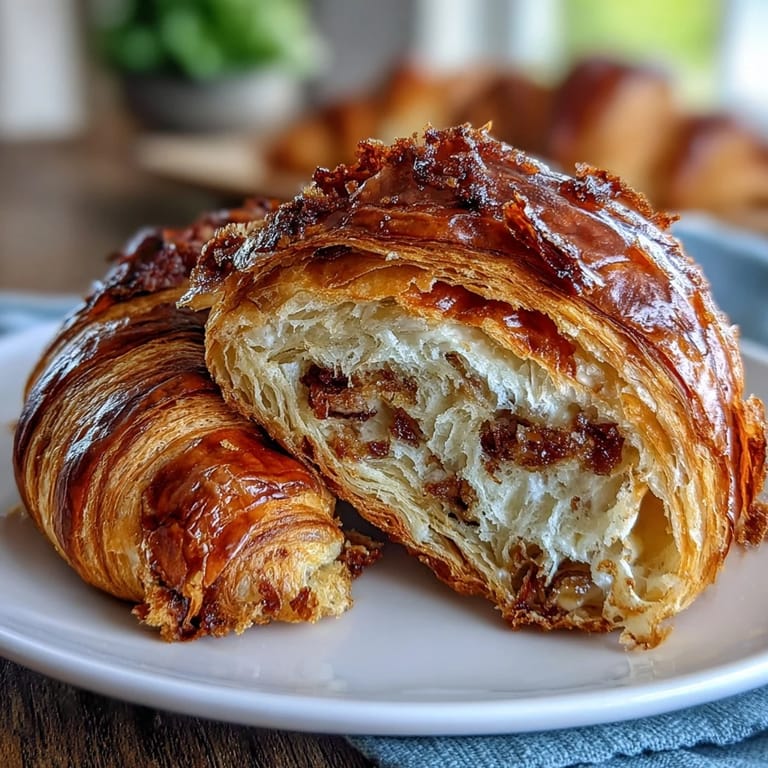
 The first time I pulled a batch from the oven and actually saw the layers separate and stand up, I felt genuinely proud in a way that surprised me. These weren't just breakfast pastries anymore—they represented hours of small decisions, gentle handling, and trust in a process that seemed impossible until it wasn't.
The Sourdough Difference
Regular croissants are wonderful, but sourdough versions have an earthy complexity that lingers on your palate long after you've finished eating. The starter adds acidity that brightens the butter and creates a subtle tang that makes people pause and ask what makes them taste so different. If you're using a younger or less mature starter, the flavor will be milder—which is fine, but feeding your starter regularly for a week or two beforehand will give you that deeper, more distinctive character.
Troubleshooting Common Lamination Mistakes
I've made these croissants in three different kitchens, and each one had its own personality and challenges. In a cold basement kitchen, the dough was sluggish and the proofing took nearly twice as long, but the results were exceptional because the slow fermentation developed incredible flavor. In a warm summer kitchen, I had to chill my work surface and move quickly, but I learned that speed and confidence actually produced better results than overthinking each fold.
Beyond the Classic Crescent
Once you've mastered the basic croissant shape, the laminated dough opens up endless possibilities that feel natural rather than forced. You can fill them with dark chocolate before rolling for pain au chocolat, or tuck in a small square of sharp cheddar and thin slice of ham for a savory version that disappears in seconds. The vanilla extract note in the original recipe is worth considering too—just a teaspoon stirred into the dough creates a subtle warmth that complements the sourdough without announcing itself.
- Freeze unbaked, shaped croissants on a baking sheet, then transfer to a freezer bag; bake directly from frozen, adding just a few extra minutes to the bake time.
- Day-old croissants can be split and filled with pastry cream or fresh berries for a casual dessert that tastes far more impressive than the effort required.
- If you're making these for guests, prep through the overnight rest the day before so you only need to shape, proof, and bake on the morning you're serving them.
 Save to Pinterest
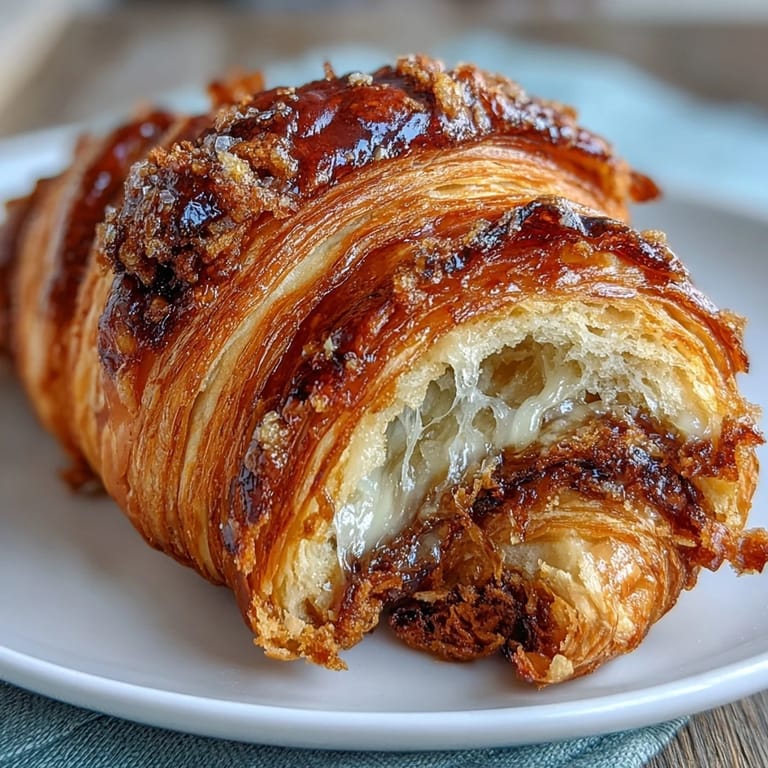
 Making sourdough croissants taught me that some of the most rewarding foods aren't about speed or shortcuts but rather about showing up, being present, and trusting the process. These croissants are worth every minute.
Recipe FAQs
- → What gives these croissants their tangy flavor?
The active sourdough starter provides natural fermentation, which introduces a pleasant tang and depth to the dough's flavor.
- → Why is the dough chilled overnight?
Chilling allows the dough to rest and ferment slowly, enhancing flavor complexity and making the butter layers distinct for flakiness.
- → How can I tell when the croissants are properly proofed?
They should roughly double in size, feel puffy but not overly soft, and hold a gentle indentation when poked.
- → What is the purpose of the egg wash?
Brushing with egg wash before baking creates a shiny, golden crust, adding to the croissants’ appealing appearance and texture.
- → Can I customize the filling for a savory option?
Yes, rolling cheese, ham, or herbs into the dough before shaping adds a delicious savory twist to the croissants.