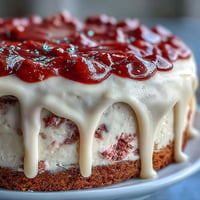
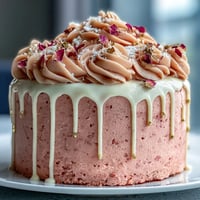
 Save to Pinterest
 My sister called me in a panic two days before her spring birthday party—she'd promised a homemade cake but suddenly realized she had no idea where to start. I found myself at her kitchen counter on a gray afternoon, pulling out eggs and butter, and by the time we'd mixed that first batch of batter, the whole place smelled like vanilla and possibility. That's when I understood: this sheet cake wasn't just about feeding people, it was about showing up. The lemon curd filling came later, a golden surprise that made the whole thing feel special without requiring three days of work.
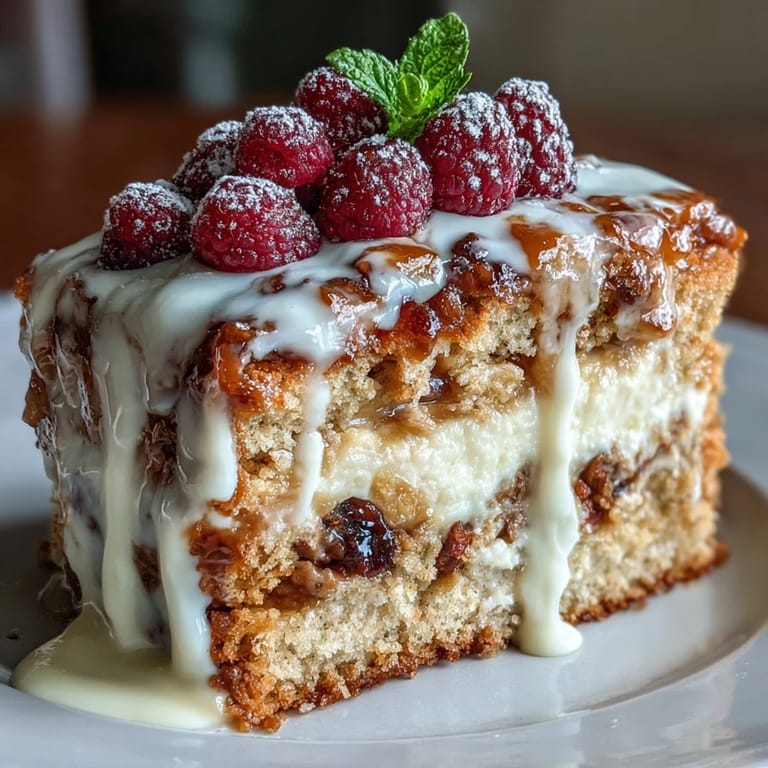
What I remember most from that birthday party wasn't the compliments—though there were plenty—but how my sister cut into it and the lemon curd caught the light. Her friends crowded around, and suddenly this cake became the thing people were talking about for weeks. That's the magic of homemade: it gives people permission to feel celebrated.
Ingredients
- All-purpose flour (2 ½ cups): This is your foundation, and I learned the hard way that spooning it into the measuring cup instead of scooping keeps your ratios honest.
- Baking powder and baking soda (2 ½ tsp and ½ tsp): They work together to give you that tender crumb that makes people think you've been baking since childhood.
- Unsalted butter and granulated sugar (1 cup and 2 cups): Creaming these together until pale is where the cake's personality starts to develop—don't rush this part.
- Eggs, room temperature (4 large): Cold eggs won't incorporate smoothly, so pull them out of the fridge about 30 minutes before you start.
- Vanilla extract and lemon zest (1 tbsp and zest of 1 lemon): These two make the cake taste like spring actually tastes—bright and comforting at the same time.
- Whole milk, room temperature (1 cup): This creates a tender crumb that's almost cloud-like when you get the alternating method right.
- Egg yolks, granulated sugar, fresh lemon juice, and lemon zest for the curd (4 yolks, ½ cup sugar, ⅓ cup juice, zest of 2 lemons): This combination becomes glossy and thick in minutes, and there's no better filling for a spring cake.
- Unsalted butter for curd (¼ cup): Whisked in at the end, this makes the curd silky instead of just tart.
- Heavy cream, powdered sugar, and vanilla for frosting (2 cups, ½ cup, 1 tsp): Whipping cream yourself means you control exactly how stiff it gets—none of that over-whipped graininess.
- Fresh berries and edible flowers (optional): These transform the cake from homemade-looking to restaurant-worthy in about two minutes.
Tired of Takeout? 🥡
Get 10 meals you can make faster than delivery arrives. Seriously.
One email. No spam. Unsubscribe anytime.
Instructions
- Prepare your workspace:
- Preheat the oven to 350°F and grease a 9x13-inch sheet pan, then line it with parchment paper so your cake slides right out without drama. Having everything within arm's reach before you start mixing makes the whole process feel calm instead of chaotic.
- Mix the dry ingredients:
- Whisk flour, baking powder, baking soda, and salt in a medium bowl—this distributes the leavening agents evenly so every bite rises the same way. Set this aside and don't skip this step, even though it seems boring.
- Cream the butter and sugar:
- Beat them together with an electric mixer for 3-4 minutes until the mixture looks pale and fluffy, like a cloud you could almost touch. This is where air gets incorporated, which means a tender crumb later.
- Add the eggs one at a time:
- Beat well after each egg so they fully incorporate before the next one goes in—rushing this makes the batter look curdled and weird, but don't panic if it does because the milk will fix it. Your patience here pays off in the final texture.
- Mix in the vanilla and lemon zest:
- Fold these in so they're evenly distributed, and breathe in while you do—that's the smell of spring happening in a bowl.
- Alternate the dry and wet ingredients:
- Add the flour mixture in three parts, alternating with the milk and starting and ending with the dry ingredients—this prevents overmixing and keeps everything tender. Mix just until combined; lumps are okay, overmixing isn't.
- Bake the cake:
- Pour the batter into the prepared pan and smooth the top, then bake for 28-32 minutes until a toothpick comes out clean and the edges are just barely pulling away from the pan. Let it cool completely in the pan on a rack—don't rush this because the layers need to be sturdy before you slice them.
- Make the lemon curd while the cake cools:
- Whisk egg yolks, sugar, lemon juice, and zest in a small saucepan over medium-low heat, stirring constantly for about 5-7 minutes until it thickens enough to coat the back of a spoon. Remove from heat and whisk in the butter until it's completely smooth, then transfer to a bowl and press plastic wrap directly onto the surface so a skin doesn't form.
- Whip the frosting:
- Beat cold heavy cream with powdered sugar and vanilla until stiff peaks form—watch it carefully because this goes from perfect to grainy in about 30 seconds. Keep it refrigerated until you're ready to assemble.
- Slice and fill the cake:
- Once the cake is completely cool, use a serrated knife and a gentle sawing motion to carefully slice it horizontally into two layers. Remove the top layer and spread the chilled lemon curd evenly over the bottom layer, then replace the top layer.
- Frost and decorate:
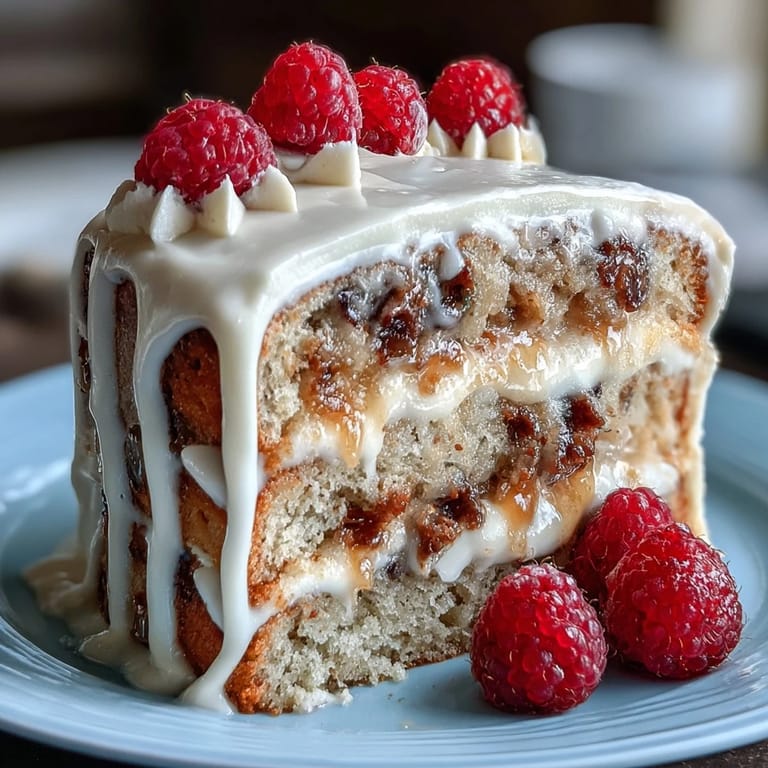
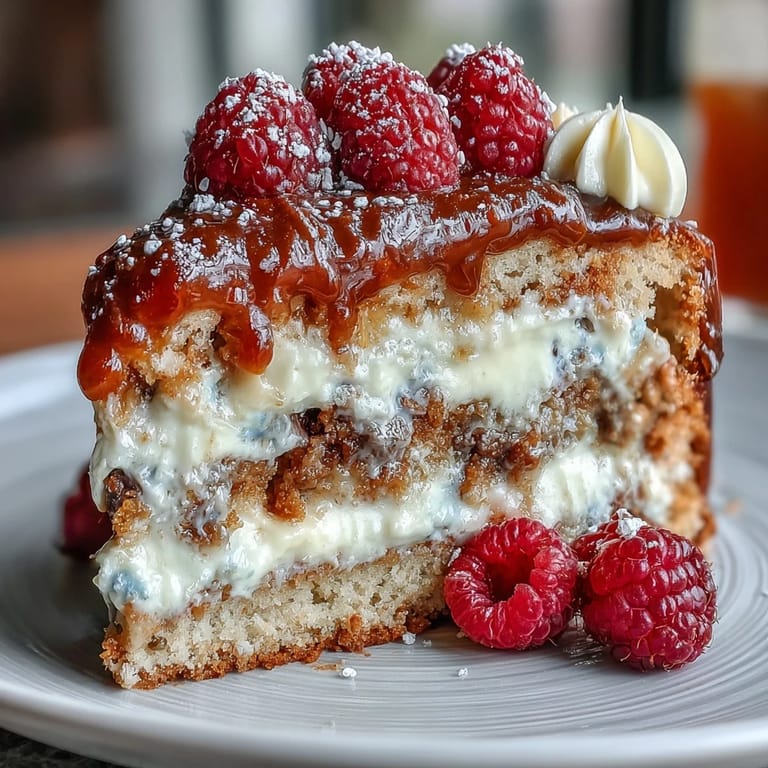
- Spread the whipped cream frosting evenly over the cake using an offset spatula, and arrange fresh berries or edible flowers on top while you're feeling creative. A few lemon zest curls scattered over everything makes it look intentional and finished.
- Chill before serving:
- Let the assembled cake chill for at least an hour in the refrigerator so the layers set and you can cut clean slices instead of messy ones. This also gives all the flavors time to get to know each other.
 Save to Pinterest
 I still think about how my sister's face looked when she cut into that cake and saw the golden lemon curd layer surprise everyone. It wasn't just dessert; it was proof that showing up for someone, even in small ways, creates moments worth remembering.
The Secret to Tender Layers
The alternating method—dry ingredients, then milk, then dry again—isn't just a technique, it's a way of keeping the batter from becoming overdeveloped. When flour mixes with liquid, gluten starts forming, and too much mixing creates a tough cake instead of a tender one. I learned this when I made the mistake of trying to combine everything at once, and while the cake still tasted good, it felt dense and heavy instead of cloud-like. After that, I became religious about the alternating method, and the difference was immediate and undeniable.
Why Homemade Lemon Curd Changes Everything
Store-bought lemon curd is convenient, but homemade tastes like you actually care, and it takes only 10 minutes longer than opening a jar. The brightness of fresh lemon juice mixed with bright zest creates a filling that tastes alive instead of flat. There's also something satisfying about watching it thicken in the pot, knowing you created that golden layer all by yourself.
Assembly and Serving Wisdom
The final assembly is where your patience pays off in the form of clean slices and even layers. A serrated knife with a gentle sawing motion—not a press-down-hard motion—keeps the cake from crumbling apart. Chilling the assembled cake for at least an hour gives everything time to set, and it also makes serving easier because the whipped cream frosting stays firm instead of sliding around on the plate.
- Use a bench scraper or long, thin offset spatula to steady the top layer while you slide it back into place—it's easier than it sounds and prevents crumbs from mixing into the filling.
- Fresh berries look prettiest scattered on top right before serving, but you can arrange them up to an hour ahead and refrigerate so you're not doing last-minute decoration when guests arrive.
- If you want extra lemon flavor, brush the cake layers lightly with a simple syrup made from equal parts lemon juice and sugar dissolved in water before assembling.
 Save to Pinterest
 This cake exists in that perfect space between impressive and approachable, which is exactly where the best celebrations happen. Every time you make it, you're not just baking; you're creating a memory someone will talk about for years.
Recipe FAQs
- → How do I achieve a tender crumb for this sheet cake?
Ensure butter and eggs are at room temperature and mix just until combined to avoid overworking the batter, resulting in a tender texture.
- → What’s the best way to thicken the lemon curd filling?
Cook the egg yolks, sugar, lemon juice, and zest over medium-low heat while stirring constantly until thickened, usually 5-7 minutes.
- → How can I prevent the whipped cream from deflating when frosting?
Use cold heavy cream and sugar, whip to stiff peaks, and apply the frosting immediately before assembling the cake layers.
- → Can I make the cake ahead of time?
Yes, the cake can be baked and assembled in advance. Chill well before slicing to ensure clean pieces.
- → What decorations complement the flavors in this cake?
Fresh berries, edible flowers, and lemon zest curls add color and enhance the bright citrus notes of the dessert.
- → How do I get clean slices when serving?
Chill the assembled cake thoroughly and use a serrated knife, wiping the blade clean between cuts for neat servings.