 Save to Pinterest
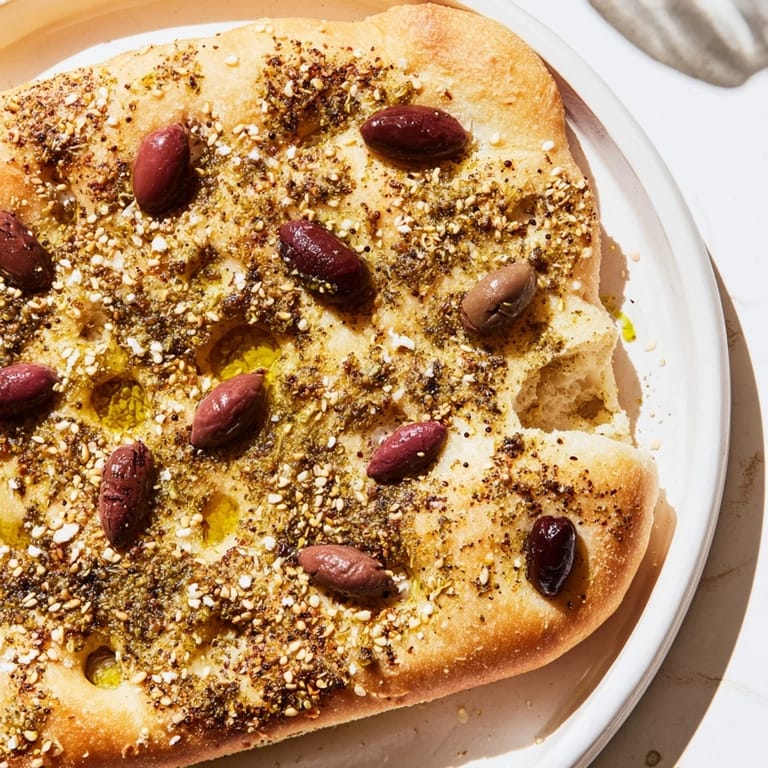
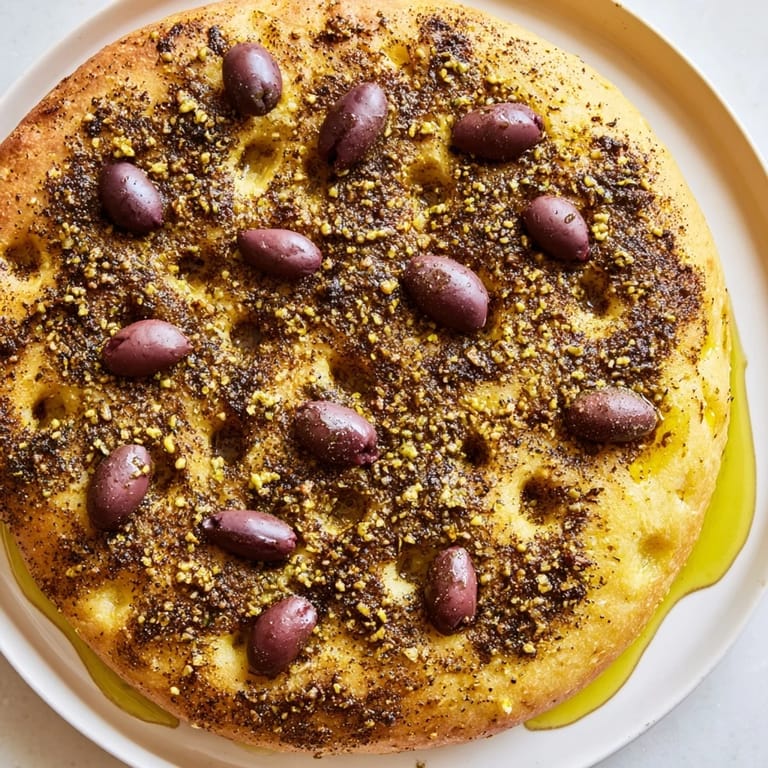
 The first time I made zaatar focaccia, I was standing in a tiny spice market in Istanbul, overwhelmed by the aromatic chaos of it all—cumin, sumac, thyme layered in wooden bins. The vendor handed me a small bag of zaatar blend and said, You must try this on bread, with oil and olives. Three months later, I was home in my kitchen, trying to recreate that moment of discovery. What emerged from the oven was nothing short of magic: a golden, dimpled canvas dotted with briny olives and fragrant spices, still warm enough to fill the room with the most incredible smell. I've made it dozens of times since, and it never stops feeling like a small act of travel.
I made this for a potluck last summer, and my neighbor—who'd never had focaccia before—came back for thirds and asked if I'd teach her. We ended up in the kitchen together the very next afternoon, her hands covered in dough, laughing because she pressed the dimples too gently and we had to poke them again. That's when I realized this bread isn't just about feeding people; it's about those quiet moments when someone trusts you enough to learn something new from you.
Ingredients
- Bread flour (500 g): The protein content is what gives this focaccia its tender crumb and slight chew; don't substitute with all-purpose flour if you want that perfect texture.
- Active dry yeast (7 g): Proof it in warm water first—this foamy stage is your visual guarantee that the yeast is alive and ready to work.
- Fine sea salt (1½ tsp): Mix this into the flour before adding the yeast to prevent the salt from killing the yeast cells directly.
- Warm water (325 ml): 40°C is the sweet spot; too hot and you'll kill the yeast, too cold and it won't activate properly.
- Extra virgin olive oil (60 ml plus 2 tbsp for topping): Use the good stuff here—the flavor matters because there aren't many other ingredients to hide behind.
- Zaatar spice blend (2 tbsp): This earthy, tangy mix of thyme, sumac, and sesame is the whole point, so don't skip it or go light-handed.
- Kalamata olives (100 g, halved): The brine they're packed in is liquid gold; I sometimes brush a tiny bit onto the dough before baking for extra depth.
- Flaky sea salt (1 tsp): Use this as a finishing touch, not table salt—it dissolves differently and adds a wonderful mineral bite.
Tired of Takeout? 🥡
Get 10 meals you can make faster than delivery arrives. Seriously.
One email. No spam. Unsubscribe anytime.
Instructions
- Blend your dry goods:
- Combine the bread flour and fine sea salt in a large bowl, stirring them together so the salt distributes evenly and won't shock the yeast when it arrives.
- Wake up the yeast:
- Dissolve the yeast in warm water and wait 5 minutes—you'll see it foam up like a tiny volcano, which means it's alive and hungry to get to work.
- Bring it together:
- Pour the yeast mixture and olive oil into the flour and stir until you have a shaggy, rough dough that pulls away from the bowl's sides.
- Knead with intention:
- On a lightly floured surface or in a stand mixer with the dough hook, knead for 8–10 minutes until the dough becomes smooth, elastic, and slightly sticky to the touch—it should spring back when you poke it.
- Let it rise in peace:
- Place the dough in an oiled bowl, cover it with a kitchen towel or plastic wrap, and set it somewhere warm (an off oven or sunny windowsill works) for about 1 hour until it's roughly doubled in size.
- Shape and second rise:
- Oil a large baking sheet or 9x13 pan, punch down your dough gently, and press it evenly into the pan with your hands; cover and let it rise for another 30 minutes, which helps it become even lighter and fluffier.
- Create the signature dimples:
- Using your fingertips, press firmly and deeply across the entire surface of the dough, creating little wells that will catch the oil and toppings as it bakes—this is both functional and beautiful.
- Dress it up:
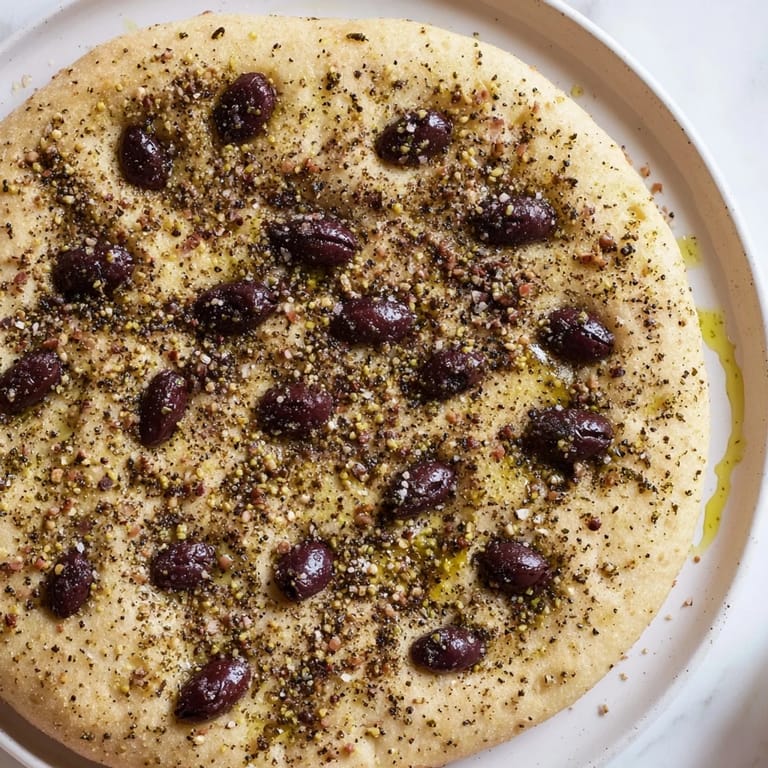
- Drizzle with 2 tbsp of olive oil, scatter the zaatar evenly across the surface, then distribute the halved olives, and finish with flaky sea salt.
- Bake to golden perfection:
- Bake in a preheated 220°C (425°F) oven for 20–25 minutes until the edges are crispy and the top is deep golden brown.
- Rest and serve:
- Let it cool for just a few minutes, slice, and serve while it's still warm enough to release all those incredible aromas.
 Save to Pinterest
 One rainy afternoon, I brought a still-warm slice of this focaccia to my elderly neighbor who'd been recovering from surgery. She took one bite and tears actually came to her eyes—not because it was fancy, but because it reminded her of a bakery she'd visited in Rome forty years ago. Bread has this strange power to unlock memories and create new ones all at once, and that's why I keep making it.
The Zaatar Advantage
Zaatar isn't just a topping; it's a flavor statement that does the heavy lifting for you. The blend of thyme, sumac, and sesame creates this tangy, slightly herbaceous depth that makes people pause and ask, What is that? The sumac gives you a subtle citrus note without needing any lemon, and the sesame adds a whisper of nuttiness that rounds everything out. I learned early on that when you buy pre-mixed zaatar, the quality varies wildly, so I now taste it before using it—a pinch on my finger tells me if it's vibrant and balanced or if it's been sitting on a shelf too long.
Making It Your Own
The beauty of focaccia is that once you master the basic dough, you can play with toppings endlessly. I've pressed roasted garlic cloves directly into the dimples, scattered crispy sage leaves across the top, and even added a handful of sun-dried tomatoes that I'd soaked in warm water first to plump them up. One winter, I tried mixing a teaspoon of honey into the olive oil before drizzling it on top, and the sweetness against the salty olives and earthy zaatar was genuinely surprising in the best way. The formula stays the same; only your imagination changes what lands on top.
Storage and Serving Moments
This focaccia is best eaten the day it's made, when it's still tender and the zaatar hasn't faded into the background of your attention. If you do have leftovers (a rarity in my house), wrap them loosely in foil and reheat gently in a 150°C oven for about 5 minutes to wake up the crust and the flavors. I've also sliced leftover focaccia, rubbed it with a tiny bit more olive oil, and served it alongside hummus, labneh, or even a simple Greek salad for a casual lunch.
- Pair it with hummus or labneh for dipping, which turns a side bread into a full appetizer experience.
- If you can't find Kalamata olives, green olives work too but taste sharper and more briny, so adjust other seasonings slightly.
- Make two smaller focaccias instead of one large one if you want to experiment with different topping combinations.
 Save to Pinterest
 Every time I slice into a fresh focaccia, I'm reminded of that spice market moment and the joy of cooking something delicious for people you love. This bread has a quiet magic that never gets old.
Recipe FAQs
- → What is the best way to knead the dough?
Knead on a lightly floured surface for 8–10 minutes or use a stand mixer with a dough hook until the dough is smooth and elastic.
- → Can I use different olives for the topping?
Yes, substituting Kalamata olives with green olives offers a milder taste while maintaining a Mediterranean flavor profile.
- → How should I dimple the dough before baking?
Use your fingers to press deep dimples across the dough surface; this helps hold the olive oil, zaatar, and olives during baking.
- → What variations can I add for extra flavor?
Incorporate sun-dried tomatoes or roasted garlic into the topping for extra depth and aroma.
- → How can I serve this focaccia best?
Serve slightly warm or at room temperature alongside dips like hummus, labneh, or extra olive oil for dipping.