 Save to Pinterest
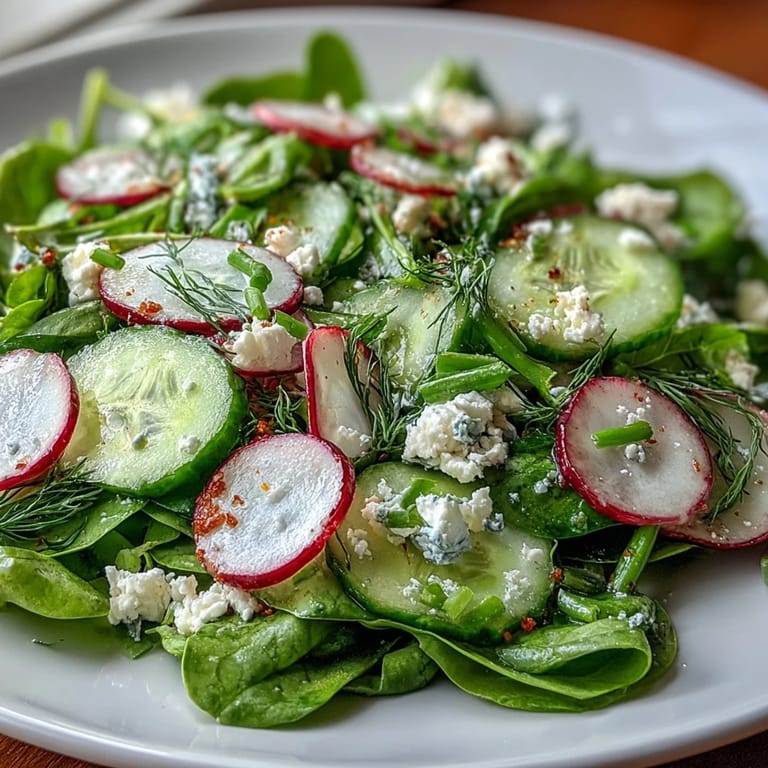
 There's something about assembling a salad in spring that feels like you're finally getting permission to eat something bright and alive again. I discovered this particular combination while frantically prepping for a dinner party on a warm April evening, when my fridge revealed a bundle of radishes, some baby greens that needed rescuing, and a lemon that seemed to be calling out for purpose. The vinaigrette came together almost by accident—a whisked moment of clarity between chopping and plating—and somehow it became the thing everyone asked about that night.
I'll never forget my neighbor peeking over the fence that evening, drawn by the sound of knife work and the smell of fresh herbs. She ended up staying for dinner, and halfway through this salad, she said something I didn't expect: that she'd forgotten how good simple food could taste. That's when I realized this wasn't just a salad—it was a moment where fresh ingredients and care created something worth lingering over.
Ingredients
- Mixed baby greens (150 g): The foundation matters here—arugula brings peppery attitude, spinach adds earthiness, and tender lettuces keep everything delicate and light.
- Radishes (6 medium): Slice them paper-thin so they stay crisp and their sharp flavor doesn't overpower; thick slices sit heavy in the mouth.
- Cucumber (1 small): Choose one with thin skin and smaller seeds, as they contribute coolness and texture without becoming watery.
- Scallions (2): The white and light green parts provide mild onion sweetness; save the dark green tops for garnish if you want extra color.
- Extra virgin olive oil (4 tbsp): This is where quality actually makes a difference—a fruity, peppery oil transforms the vinaigrette from basic to memorable.
- Freshly squeezed lemon juice (2 tbsp): Never use bottled; the brightness dissipates and you'll taste the difference immediately.
- Dijon mustard (1 tsp): It acts as an emulsifier and adds subtle depth that makes people ask what the secret ingredient is.
- Honey (1 tsp): A touch of sweetness rounds out the acidity and brings balance; maple syrup works equally well for vegan tables.
- Garlic clove (1 small, minced): Mince it finely so it distributes evenly rather than sitting in harsh little chunks.
- Fine sea salt and black pepper (1/4 tsp each): Season confidently here—the vinaigrette needs proper seasoning to shine when it hits the greens.
- Fresh dill and chives (2 tbsp each): These herbs brighten everything and should be added just before serving so they stay vibrant and fresh.
- Feta cheese (40 g, optional): Crumbled feta adds a salty, creamy contrast; if you skip it, the salad still sings without feeling incomplete.
Tired of Takeout? 🥡
Get 10 meals you can make faster than delivery arrives. Seriously.
One email. No spam. Unsubscribe anytime.
Instructions
- Make the vinaigrette first:
- Pour olive oil and lemon juice into a small bowl or jar, add mustard, honey, and minced garlic, then whisk or shake vigorously for about 30 seconds until the mixture turns pale and slightly thickened. Season with salt and pepper, taste it, and adjust—this is your chance to get it right before it touches the salad.
- Prepare your canvas:
- Spread the mixed greens across your serving platter or into a wide, shallow bowl, creating an even base that shows off the different colors and textures.
- Layer with intention:
- Scatter the thinly sliced radishes, cucumber, and scallions across the greens in a way that looks generous and scattered rather than methodical—it should feel like abundance, not arithmetic.
- Dress at the last moment:
- Drizzle the vinaigrette over everything just before serving, using only about three-quarters of it so the greens don't wilt into submission before people taste them.
- Toss gently together:
- Using your hands or two spoons, turn the salad over itself a few times, letting the dressing coat the greens without crushing anything delicate into submission.
- Finish and serve:
- Sprinkle the fresh dill and chives across the top, add crumbled feta if using, and bring it to the table immediately while everything is still at peak crispness and life.
 Save to Pinterest
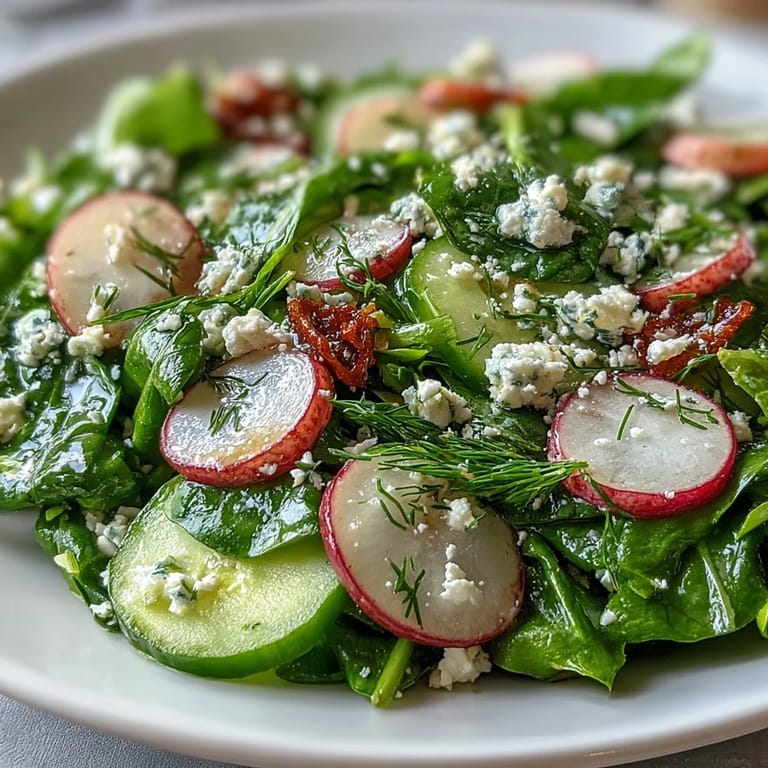
 There was a moment during that dinner party when all the noise of conversation quieted for just a second—everyone was too busy eating, really tasting, not performing politeness. That's what this salad does: it makes people slow down and notice what they're putting in their mouth instead of rushing through another meal.
Why Spring Salads Matter
After months of roasted roots and braised things, spring arrives as a gentle permission to eat vegetables raw again. There's psychology in that—the lightness of a salad after heavy winter cooking feels like opening windows in a stuffy house. This particular combination works because nothing fights for attention; everything cooperates, each ingredient knowing its place.
Vinaigrette Wisdom
I used to think vinaigrettes were interchangeable, that any acid and oil would do, until I made one properly and realized the difference between a dressing and a transformation. The whisking matters because it creates emulsion, which means the oil and lemon actually become friends instead of enemies sitting in uneasy separation. Once you understand this, you'll find yourself making vinaigrettes for everything—roasted vegetables, grilled fish, even bread for dipping.
Variations and Flexibility
This salad structure is sturdy enough to welcome additions without losing its identity—snap peas add sweetness and crunch, toasted nuts bring warmth and texture, sliced strawberries introduce unexpected fruit sweetness that somehow makes sense in spring. The beauty is that you can customize it based on what's actually in season and what your guests prefer, making it feel personal rather than prescribed. Some people swap feta for goat cheese or crumbled blue cheese, others omit dairy entirely and rely on the vinaigrette to carry everything.
- Toast walnuts or almonds in a dry pan for a minute to deepen their flavor before scattering them across the salad.
- Add strawberries only if they're truly ripe and sweet—mediocre berries do more harm than good to this delicate balance.
- Consider serving the vinaigrette on the side for guests who prefer to control the amount, rather than imposing uniformity.
 Save to Pinterest
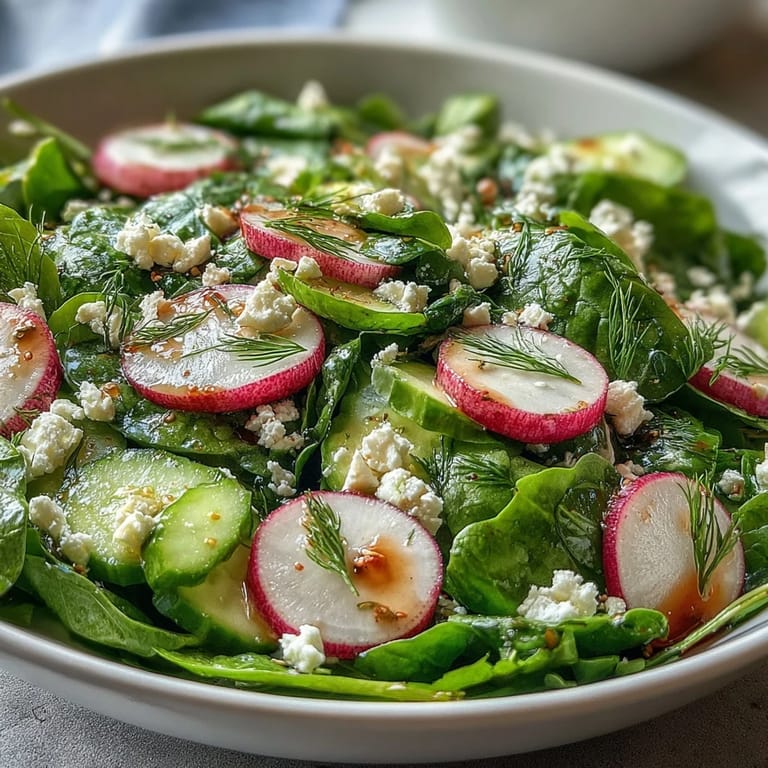
 This salad has become my go-to when I want to cook something that feels effortless but tastes like you actually tried. It's proof that the best meals don't require complicated technique or rare ingredients—just attention and respect for what you're putting on the plate.
Recipe FAQs
- → What greens work best in this salad?
A mix of baby greens like arugula, spinach, and baby lettuces provides a tender, flavorful base that balances well with the radishes.
- → Can I substitute the feta cheese?
Yes, goat cheese can be used instead or omitted entirely for a vegan-friendly option without sacrificing texture.
- → How should the lemon vinaigrette be prepared?
Whisk olive oil, lemon juice, Dijon mustard, honey or maple syrup, minced garlic, salt, and pepper until well emulsified before drizzling over the salad.
- → Are there recommended additions for extra crunch?
Toasted walnuts or sliced almonds can be sprinkled on top to add crunch and enhance the salad’s flavor profile.
- → What beverages pair well with this salad?
A crisp Sauvignon Blanc or a dry Rosé complement the bright, fresh flavors of the lemon vinaigrette and vegetables.