 Save to Pinterest
 The first time I arranged a board just for the sake of visual balance, I wasn't even thinking about cooking—I was trying to impress someone who'd spent years talking about harmony in everything. I grabbed what I had: some cheeses, a handful of fruit, and honestly, a slightly neurotic need to make two perfect halves. When I drew that first curve of blackberries down the middle, something clicked. It wasn't precious or overdone; it just felt right, like the board had been waiting for that single gesture to become something special.
I made this for a dinner where the conversation had gotten a bit heated, everyone taking sides about everything. Watching people reach across that blackberry line, mixing light and dark, soft and sharp—it became this quiet, unplanned meditation on complementary things. No one mentioned it out loud, but the board did the talking, and by dessert, the tension had softened.
Ingredients
- Fresh blackberries (150 g): These are your visual and flavor anchor—use them while they're still firm enough to hold a line without rolling everywhere, and honestly, they taste better when they haven't been in the fridge for three days.
- Goat cheese, young Manchego or white cheddar: The light side needs something creamy and something with a bit of age; together they balance tangy with mild in a way that feels intentional.
- Aged blue cheese and aged Gouda or sharp cheddar: Dark cheeses should have personality—blue brings funk, Gouda brings caramel notes, sharp cheddar brings that little punch that makes people nod in recognition.
- Pear and black plum: Fresh fruit keeps the board from feeling heavy, and the color contrast is just a bonus to how good they taste next to creamy cheese.
- White and red or black grapes: These do more work than you'd think—they're small anchors of color and they give your fingers something to reach for when you're nervous at a party.
- Raw almonds and roasted hazelnuts: Raw almonds stay pale and delicate; roasted hazelnuts are darker and almost buttery—this detail matters more than it sounds.
- Rice crackers and dark rye crisps or seeded crackers: Choose crackers that won't immediately crumble under cheese; texture contrast is everything.
- Fresh mint leaves and edible flowers: A last-minute scatter of green and color keeps the board from feeling static, even though you're doing zero cooking.
Tired of Takeout? 🥡
Get 10 meals you can make faster than delivery arrives. Seriously.
One email. No spam. Unsubscribe anytime.
Instructions
- Start with your canvas:
- Place a large round serving board in front of you—the roundness matters because it echoes the yin-yang concept. Take a breath; this part is oddly meditative.
- Draw the line:
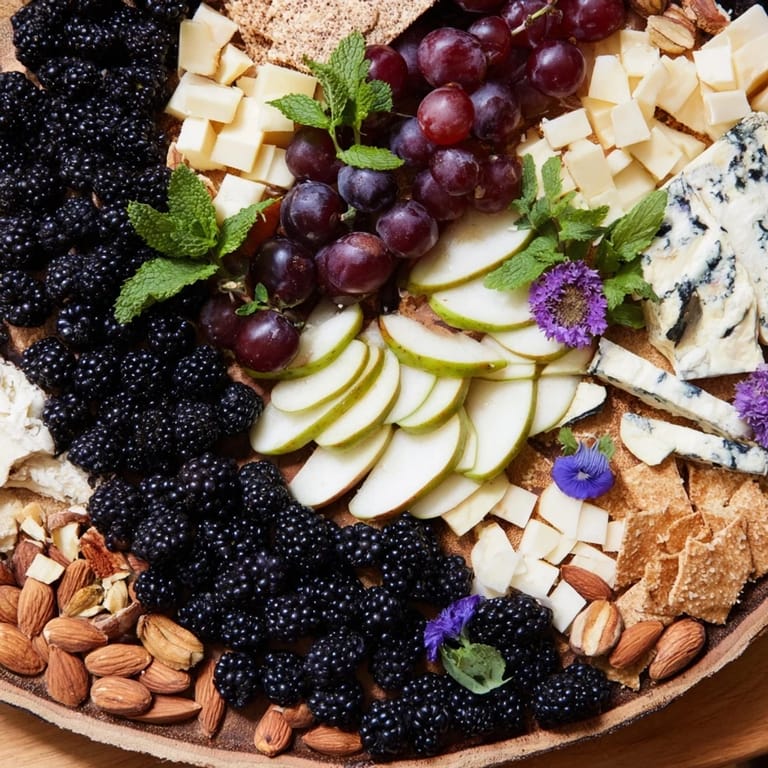
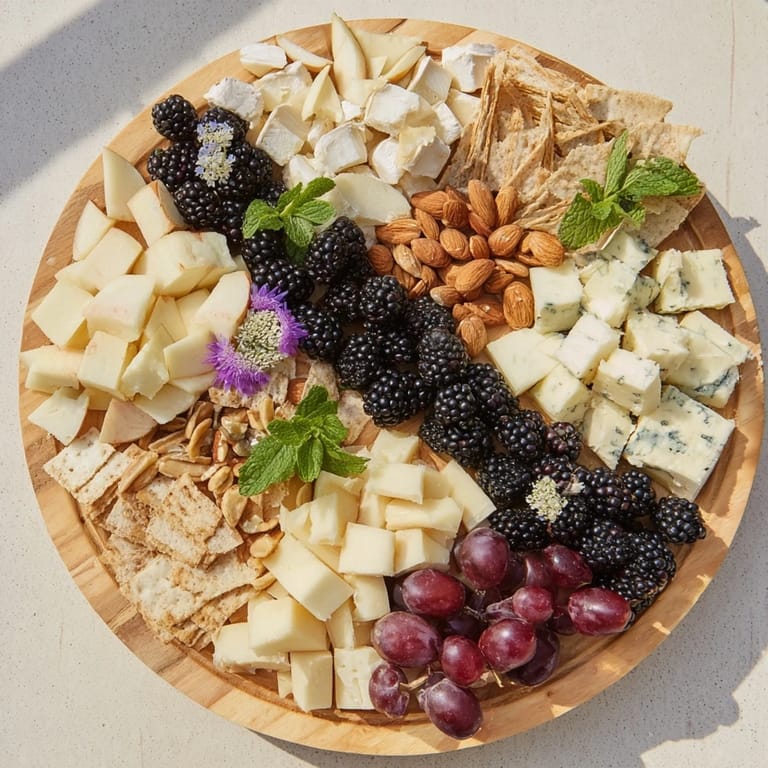
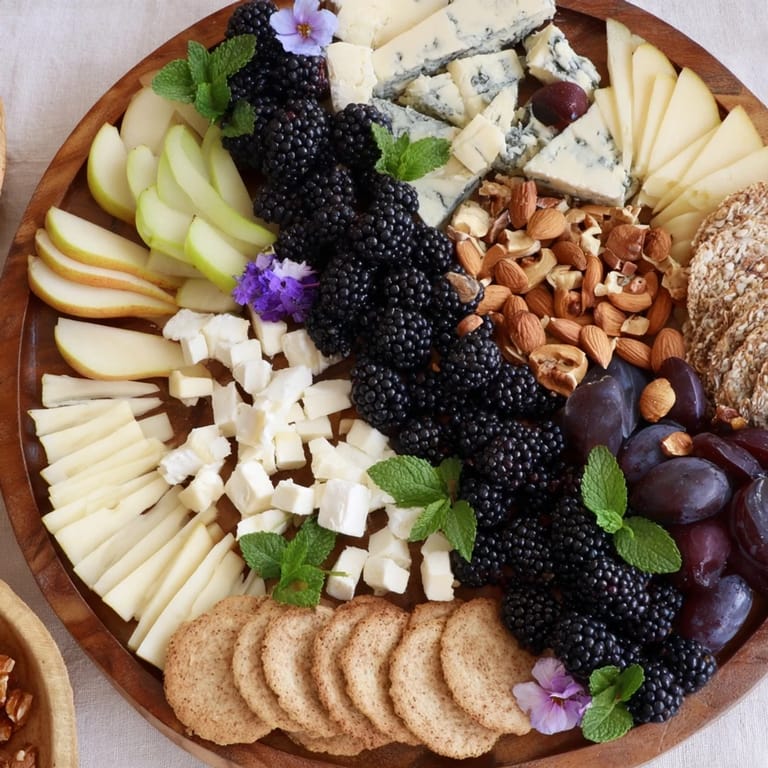
- Arrange blackberries in a slow, curved S-shape down the center, mimicking that balance symbol. If they roll, that's actually fine—imperfection reads as intentional once people see the whole picture.
- Build the light side:
- Working from the center out, place goat cheese, then Manchego cubes, then pear slices in a gentle arc. Add white grapes, almonds, and light crackers in pockets of space, leaving room to breathe.
- Mirror with the dark side:
- Repeat on the opposite side with blue cheese, Gouda, plum slices, darker grapes, hazelnuts, and seeded crackers. You're creating visual rhythm, not perfect symmetry.
- Finish with color:
- Scatter mint leaves and edible flowers (if using) across both sides. This last step transforms it from organized to alive.
- Serve straight away:
- The moment it's complete, bring it out—there's something about the freshness of a just-arranged board that people can sense before they even taste anything.
 Save to Pinterest
 The best part isn't the eating—it's watching someone's hand hover over the board, genuinely torn between reaching for the light or dark side, then laughing when they realize the point is that both belong together. That moment when food becomes metaphor without being preachy: that's when you know you've built something worth offering.
The Philosophy of Building Boards
A cheese board isn't really about perfection; it's about conversation and permission. When you give people choice—light or dark, sharp or creamy, nutty or delicate—you're saying there's no wrong way to enjoy this moment. I learned this after years of agonizing over every placement, realizing that the guests' enthusiasm came from being trusted to build their own bites, not from my precision. The blackberry line is just an invitation to think about balance, not a rule.
Seasonal and Flavor Variations
Summer invites stone fruits and honey drizzles; autumn calls for fig jam and candied nuts; winter works with preserved items and deeper cheeses. I've found that once you understand the light-dark dynamic, you can substitute almost anything—the structure holds the concept together. The skeleton is always cheeses, fruit, nuts, and crackers, but the personality changes with what's in season and what you've been wanting to taste.
Small Touches That Change Everything
The first time I added honeycomb to the light side and fig jam to the dark side, I thought it was too much. It wasn't—it created these little flavor surprises that made people slow down and actually notice what they were eating. These aren't required, but they're the difference between a nice board and one that people remember. Once you've built the structure, you can layer in your own small joys.
- A drizzle of good honey on the light side or a small spoonful of fig jam on the dark side adds richness without chaos.
- Fresh edible flowers (pansies, nasturtiums) aren't just pretty—they're also slightly peppery and genuinely delicious.
- If guests include wine-drinkers, mention that crisp whites align with the light side and lighter reds with the dark—it's a nice way to tie the whole experience together.
 Save to Pinterest
 This board works because it asks nothing of you except intention and a willingness to play with contrasts. Every time you build it, it'll be different, and that's exactly the point.
Recipe FAQs
- → How do I create the dividing line on the board?
Arrange fresh blackberries in a curved line across the center of your serving board to visually separate the light and dark sides.
- → What cheeses work best for the light side?
Soft goat cheese and young Manchego or white cheddar offer creamy textures and mild flavors that complement the fruits and nuts on the light side.
- → Can I substitute the fruits on each side?
Yes, seasonal fruits like pears and grapes can be swapped out based on availability or preference to keep the balance of light and dark flavors.
- → What nuts pair well with the cheeses and fruits?
Raw almonds enhance the light side with crunch, while roasted hazelnuts add depth and warmth to the dark side.
- → How should I present garnishes for best effect?
Fresh mint leaves and edible flowers placed sparingly add color contrast and freshness, elevating the overall presentation.
- → What are good accompaniments to serve alongside?
Light crackers or rye crisps complement the cheeses, while a crisp white or light-bodied red wine pairs nicely with the balanced flavors.