 Save to Pinterest
 There's something about tabbouleh that stops conversations mid-sentence. My first encounter was at a crowded summer market in the city, where a vendor with flour-dusted hands handed me a paper cup overflowing with this jewel-toned grain salad. One bite and I understood why people reach for it on sweltering afternoons—it's simultaneously light and satisfying, crisp and herbaceous, exactly what your body craves when the heat makes cooking feel impossible.
I made this for a picnic once, tucked in a glass container that caught the sunlight as my friend carried it to the park. She kept coming back for more, scooping it into little lettuce cups between sips of cold lemonade, and I realized then that the best dishes are the ones people eat without hesitation, without even thinking about it.
Ingredients
- Fine bulgur wheat: The heart of this dish—use fine bulgur rather than cracked wheat because it hydrates quickly and delivers a tender grain without any chewiness that can turn people off.
- Ripe tomatoes: Choose tomatoes at peak season when they taste like sunshine; watery supermarket ones will make your salad soggy, so don't compromise here.
- Fresh flat-leaf parsley: This isn't a garnish role—parsley is the star and you need almost a full bunch to get that authentic herbaceous depth.
- Fresh mint: It brightens everything, adding a cool contrast that makes you want another bite even when you're full.
- Cucumber and scallions: These provide textural crunch and mild allium notes that prevent the dish from feeling monotonous.
- Extra virgin olive oil: The quality matters because there's nowhere to hide in something this simple—splurge a little here.
- Lemon juice: Freshly squeezed always, never bottled; it's the ingredient that transforms bulgur into something alive.
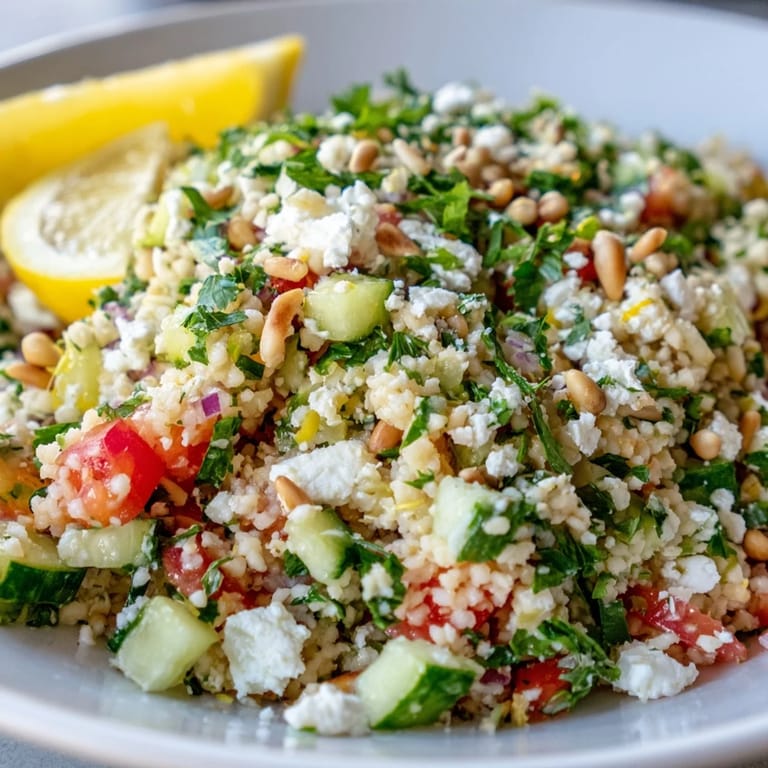
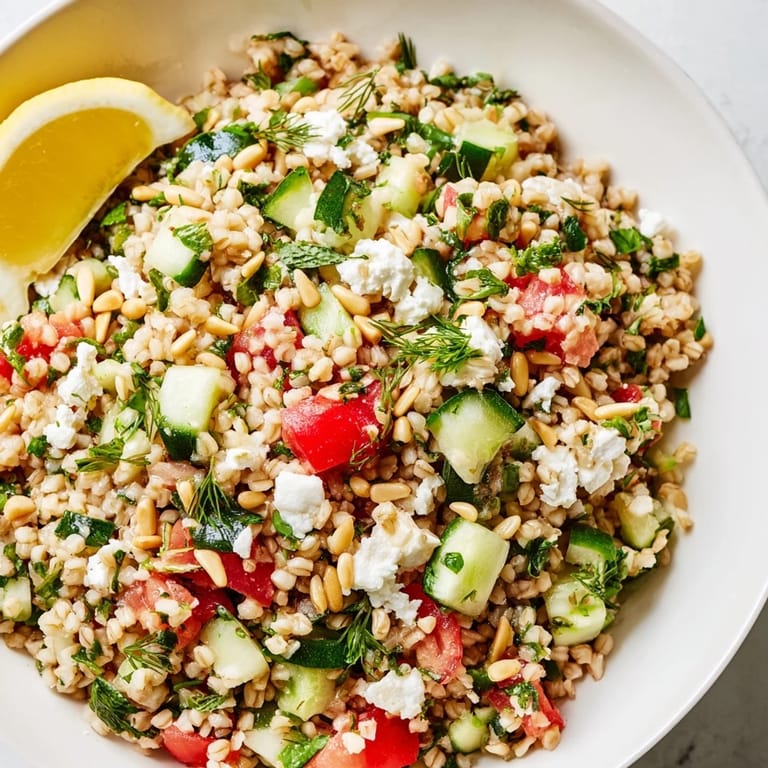
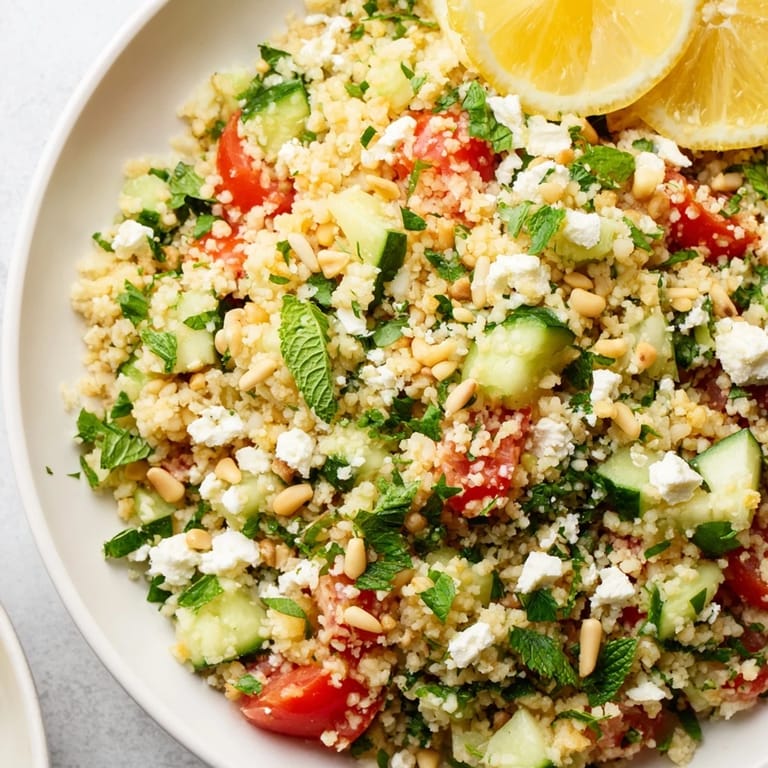
- Feta and pine nuts: Optional but worth it—they add richness and a sophisticated finishing touch if you want to turn this into something more indulgent.
Tired of Takeout? 🥡
Get 10 meals you can make faster than delivery arrives. Seriously.
One email. No spam. Unsubscribe anytime.
Instructions
- Hydrate the bulgur:
- Measure your bulgur into a large bowl, sprinkle salt over it, then pour boiling water across the top. Cover the bowl and step away for exactly 10 minutes—you'll hear the quiet sizzle as the grains drink in the water, and when you lift the lid, steam rises carrying a gentle grain-like aroma that promises something delicious.
- Let it cool:
- Fluff the bulgur with a fork and spread it on a plate or let it rest in the bowl until it reaches room temperature. This matters because warm grains will turn the herbs limp and dull the colors.
- Make the dressing:
- In a small bowl, whisk together olive oil, lemon juice, minced garlic, and pepper. Taste it straight from the whisk—it should make your mouth water with sharp citrus and rich oil in balance.
- Combine vegetables with bulgur:
- Dice your tomatoes and cucumber just before this step so they stay crisp and juicy. Add them to the cooled bulgur along with chopped parsley, mint, and sliced scallions, then toss everything gently but thoroughly to distribute the colors.
- Dress and adjust:
- Pour the dressing over everything and mix until the bulgur glistens and each grain tastes bright. Pinch a piece between your fingers and taste—this is where you add more lemon if it needs brightness or salt if it feels flat.
- Chill and serve:
- If you have time, refrigerate for 10 minutes so flavors meld together like old friends. Serve in bowls with lemon wedges, crumbled feta, and toasted pine nuts if you're feeling generous.
 Save to Pinterest
 My neighbor tasted this once and asked for the recipe immediately, then came back weeks later to tell me she'd been making it three times a week. That's when I realized this isn't just a salad—it's a recipe that quietly earns its place in your regular rotation, becoming the thing you crave and the thing people ask you to bring to gatherings.
Why This Tastes Like Summer
There's a reason tabbouleh appears on tables in the Mediterranean as temperatures climb—it's built for heat. The fresh herbs and bright citrus provide instant cooling relief while the bulgur sits heavy enough to satisfy, and there's no cooking required beyond boiling water, which means your kitchen stays blessedly cool. Every ingredient in this bowl was chosen because it thrives in warm months, making this the salad that makes you feel like you're eating exactly what the season demands.
Making It Your Own
The beauty of tabbouleh is how adaptable it becomes once you understand the core formula—bulgur, citrus dressing, and abundant fresh herbs. I've seen versions with pomegranate seeds that add jewel-like pops of tartness, others with chickpeas for protein that turns it into a complete meal, and even one memorable version a friend made with grilled chicken and sumac that tasted like a restaurant creation. The skeleton of the recipe stays the same, but the additions reflect what's available and what you're hungry for.
Storage and Make-Ahead Magic
This is one of those rare dishes that improves with a few hours of rest, making it ideal for meal prep or when you want to get dishes out of the way before guests arrive. The flavors meld and deepen, the dressing coats everything evenly, and you can store it covered in the refrigerator for up to two days without worry. I often make double batches on Sunday and portion it into containers for the week, knowing that lunch is already handled and requires nothing more than a fork.
- Keep leftover tabbouleh in an airtight container and it stays fresh and flavorful through day two, though the herbs will gradually lose their brightness.
- If you're making it ahead for a gathering, wait to add the pine nuts and feta until just before serving so they stay crisp and don't absorb moisture.
- Serve it chilled or at room temperature depending on the weather, but always with fresh lemon wedges so people can adjust the brightness to their taste.
 Save to Pinterest
 This salad has become my go-to when I want to feed people something that feels both nourishing and celebratory, the kind of food that makes everyone pause and ask for the recipe. Make it once and it becomes part of your kitchen's permanent vocabulary.
Recipe FAQs
- → What grain is used in this bowl?
Fine bulgur wheat is the primary grain, soaked in boiling water until tender with a slight chew.
- → Can I substitute bulgur for gluten-free options?
Yes, cooked quinoa can replace bulgur to make the dish gluten-free without compromising texture.
- → What fresh herbs enhance the flavors here?
Flat-leaf parsley and fresh mint provide bright, aromatic notes that complement the other ingredients.
- → How is the dressing prepared?
A simple mix of extra virgin olive oil, freshly squeezed lemon juice, minced garlic, and ground black pepper combines to create a zesty dressing.
- → Are there optional toppings to add?
Feta cheese and toasted pine nuts offer creamy and crunchy contrasts, with lemon wedges adding an extra citrus burst.
- → How long should the bowl chill before serving?
Chilling for about 10 minutes allows the flavors to meld, enhancing the overall taste experience.