 Save to Pinterest
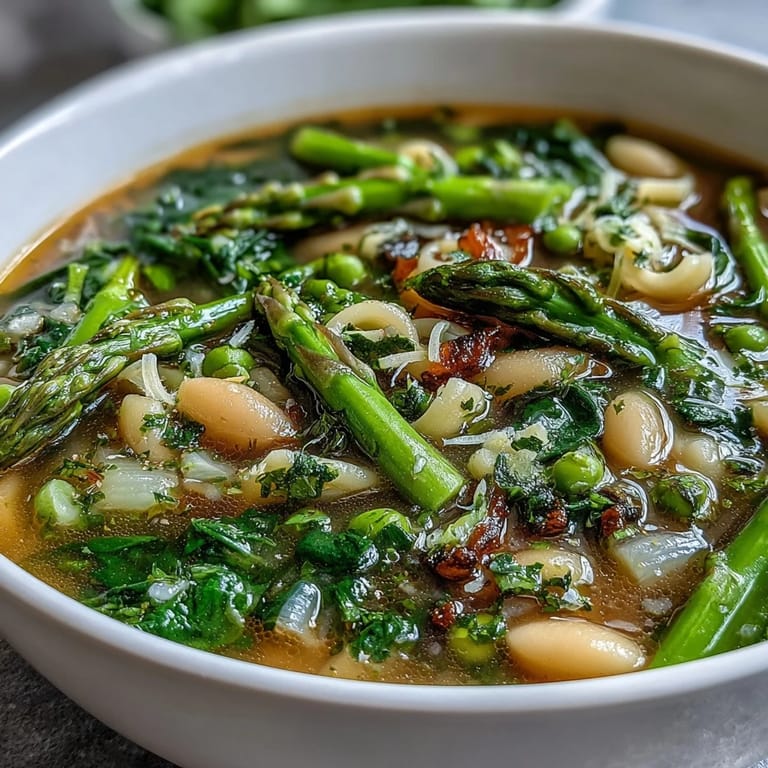
 There's something about the first warm day of spring that makes you crave soup—which sounds backwards, I know. But this minestrone isn't heavy or wintry; it's the kind of soup that tastes like the season itself, bright with asparagus and peas and that whisper of lemon at the end. I stumbled onto this version one April afternoon when my CSA box arrived overflowing with vegetables I didn't expect, and I realized I had exactly what I needed scattered across my counter. It became the dish I make when I want to celebrate that tender moment between winter and summer.
I made this for my neighbor last spring when she'd just recovered from being under the weather, and watching her face when she tasted it—that exhale of relief—reminded me why soup matters. She asked for the recipe three times that week, and now it's her go-to when she needs to feel like herself again.
Ingredients
- Olive oil: One tablespoon is all you need to build the base without making this heavy.
- Onion, carrots, and celery: The holy trinity that teaches you to slow down and let the soffritto develop its sweetness—don't rush this step.
- Garlic: Two cloves, minced fine, because you want them to dissolve into the broth rather than announce themselves.
- Zucchini: Choose one that's small and tender; the larger ones can turn watery and dilute the soup's character.
- Asparagus: Trim those woody ends—you'll feel the difference between tender and tough the moment you bite into it.
- Fresh peas: If you can find them in spring, use them; frozen work beautifully too and honestly taste fresher than sad fresh ones in winter.
- Baby spinach or Swiss chard: The greens add iron and that silky finish; spinach wilts faster if you're short on time.
- White beans: Cannellini beans are traditional, but Great Northern beans work just as well and have a subtle earthiness.
- Small pasta: Ditalini or shells catch the broth in their curves; don't use long noodles here or you'll be fishing around your bowl.
- Vegetable broth: Low-sodium matters because you're seasoning as you go, and store-bought salt sneaks up fast.
- Dried thyme and oregano: These are your foundation herbs—they open up as the soup simmers and become almost floral.
- Bay leaf: A small gesture that deepens everything; remove it before serving or it'll haunt a spoonful.
- Lemon zest: The secret ingredient that makes people say this is something special without knowing why—don't skip it.
- Fresh parsley: Stir it in at the very end so it stays green and alive rather than turning to shadows.
- Parmesan and extra virgin olive oil: Optional but not really—the cheese adds umami, and the oil creates that beautiful shimmer on the surface.
Tired of Takeout? 🥡
Get 10 meals you can make faster than delivery arrives. Seriously.
One email. No spam. Unsubscribe anytime.
Instructions
- Start your foundation:
- Heat the olive oil in a large pot over medium heat and add your diced onion, carrots, and celery. Let them soften for about 5 minutes, stirring occasionally—you're looking for the vegetables to lose their raw edges and start releasing their sweetness into the oil. This is the moment when your kitchen smells like something good is about to happen.
- Bloom the garlic:
- Stir in your minced garlic and cook for just 1 minute until it becomes fragrant and golden at the edges. This brief moment is crucial; any longer and garlic turns bitter, any shorter and it stays sharp.
- Add the tender vegetables:
- Add your diced zucchini and cook for 2 more minutes, letting it warm through without breaking down. You're building layers of flavor here, not making mush.
- Build the broth:
- Pour in your vegetable broth, then add the thyme, oregano, and bay leaf. Bring everything to a gentle boil—you'll see the surface shimmer and start to steam. This is where the soup really comes alive.
- Add the beans and pasta:
- Stir in your drained white beans and small pasta, then reduce the heat to a simmer. Let it cook for about 10 minutes until the pasta is nearly tender; it will continue cooking slightly as you add the other vegetables.
- Finish with spring vegetables:
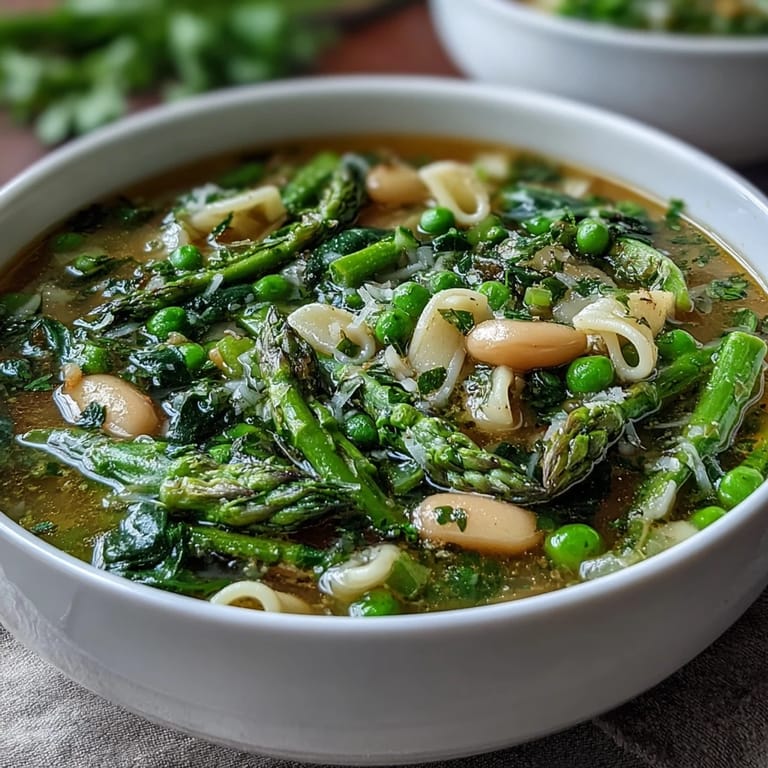
- Add your asparagus pieces and peas, cooking for another 5 to 7 minutes until everything is tender and the pasta is fully cooked. Taste the broth here—this is your moment to adjust the seasoning if needed.
- Wilt the greens and finish:
- Stir in your spinach or Swiss chard along with the lemon zest and fresh parsley, cooking for just 2 more minutes until the greens soften and curl. Season with salt and pepper, tasting as you go because everyone's broth is different.
- Serve and garnish:
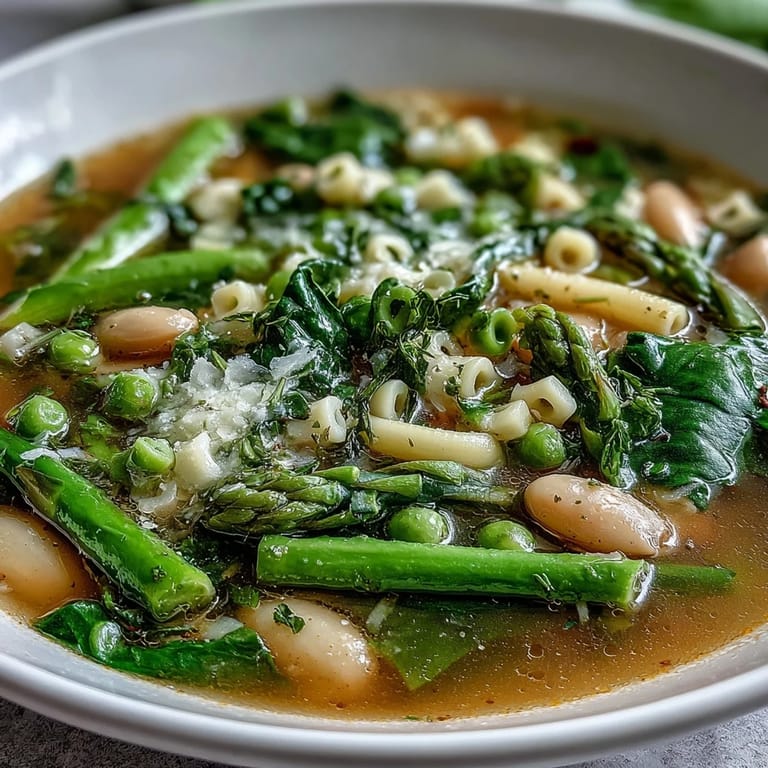
- Remove the bay leaf, ladle the soup into bowls, and finish with a generous sprinkle of Parmesan and a drizzle of extra virgin olive oil if you like. The oil creates a beautiful contrast to the bright broth.
 Save to Pinterest
 There's a moment in cooking when you realize you've made something that actually soothes people—not in a heavy way, but the way spring itself does. That's this soup to me, and it's why I keep making it even as the seasons turn.
When to Make This Soup
Spring minestrone is perfect for those weeks between winter and real summer when the weather can't decide what it wants to be. It's light enough to not weigh you down on a suddenly warm day, but substantial enough to feel like actual dinner rather than a side thought. I make it when I want my kitchen to smell like hope, or when someone needs reminding that healing doesn't always come from something complicated.
Variations That Still Feel True
The beauty of minestrone is its flexibility—it's literally a soup built on using what you have. One of my favorite versions swaps the white beans for chickpeas and adds halved cherry tomatoes at the very end so they stay bright and almost burst when you bite them. Another time I used fava beans instead of peas because that's what the market had, and the earthiness changed the entire feeling of the soup in a way I didn't expect but absolutely loved.
The Bread Question
Serve this with crusty bread—not because the soup needs it, but because the combination is one of those quiet moments of completeness. I always tear mine into pieces and let them soak up the broth at the bottom of the bowl, which my mother would say is bad manners but which I think is the whole point of soup. There's something primal about it, this mixing of bread and liquid into something even more nourishing than the parts alone.
- Toasted bread rubbed with garlic and a little olive oil transforms the meal into something that feels more intentional.
- If you're making this gluten-free, check your bread too—it deserves to be part of the celebration.
- Leftover soup tastes even better the next day when the flavors have had time to find each other.
 Save to Pinterest
 This soup is what I make when I want to feel like I'm cooking with intention but also like it's the easiest thing in the world. That's the gift of a good minestrone—it asks nothing of you except to pay attention.
Recipe FAQs
- → What vegetables are featured in this dish?
It includes carrots, celery, zucchini, asparagus, peas, and baby spinach or Swiss chard for a fresh, seasonal flavor.
- → Can gluten-free pasta be used?
Yes, substituting small gluten-free pasta shapes ensures the dish remains suitable for gluten-sensitive diets.
- → How do you enhance the flavor of the broth?
Using dried thyme, oregano, bay leaf, and lemon zest adds aromatic depth and a refreshing brightness to the broth.
- → Is it possible to make this dish vegan-friendly?
Omit the Parmesan garnish or replace it with plant-based alternatives to keep it vegan without compromising taste.
- → What cooking steps ensure the pasta and vegetables are tender?
Simmer the beans with pasta for 10 minutes, then add asparagus and peas, cooking until everything is tender but still vibrant.