 Save to Pinterest
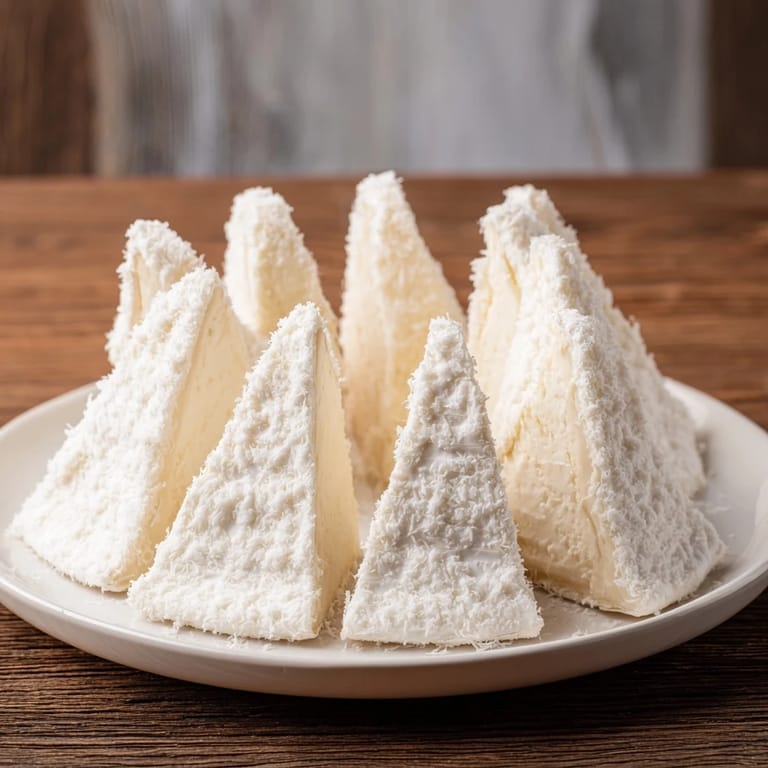
 I discovered this dish at a winter dinner party where my host arranged these little cheese wedges on a slate platter, and honestly, I was mesmerized before I even tasted them. There's something about the way they stand like tiny mountains, each one gleaming with a dusting of Parmesan, that makes people actually pause and look before eating. The beauty of it struck me first—the elegant simplicity of just two cheeses, barely any effort, but somehow it felt like an edible landscape someone had carefully composed.
I made this for a New Year's Eve gathering, and I remember standing in my kitchen at 6 PM, watching the winter light fade outside while I carefully cut and arranged each wedge. Someone asked what I was making, and when I explained the concept, they laughed—"Just cheese?"—but when those little mountains appeared on the table an hour later, they were the first ones gone. That's when I realized sometimes the most memorable dishes are the ones that feel unexpected in their restraint.
Ingredients
- Brie cheese (400g), well chilled: The star here, and coldness matters enormously—it's what lets you cut clean, precise wedges that actually stand upright instead of crumbling into frustration.
- Parmesan cheese (40g), finely grated: This is the snow that transforms the dish from simple to sculptural, and the fine grating matters because it clings to the Brie's curves rather than sliding off.
- Fresh thyme sprigs (optional): A whisper of green that suggests a alpine meadow; subtle enough to skip if you're short on time, but it adds a quiet sophistication.
Tired of Takeout? 🥡
Get 10 meals you can make faster than delivery arrives. Seriously.
One email. No spam. Unsubscribe anytime.
Instructions
- Chill your Brie properly:
- Pull that block from the coldest part of your fridge at least 30 minutes before cutting. A warm Brie is a sliding, messy affair; a cold one becomes almost waxy and cooperative under the knife.
- Cut with intention:
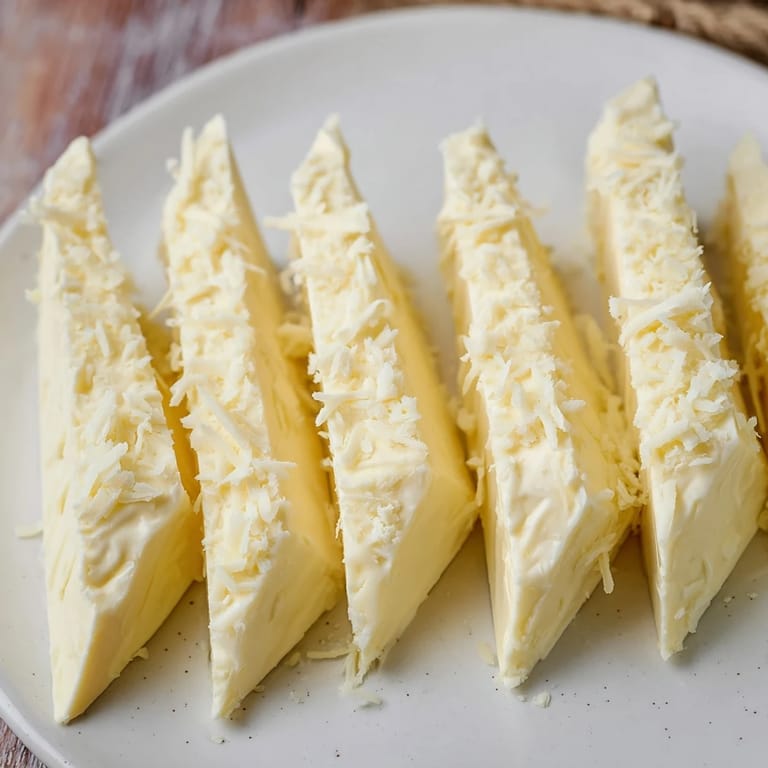
- Use a sharp knife and make clean, confident cuts to create 16 triangular wedges, each weighing about 25g. Wipe your blade between cuts if you need to—the cheese will tell you when you're doing it right.
- Build your mountain range:
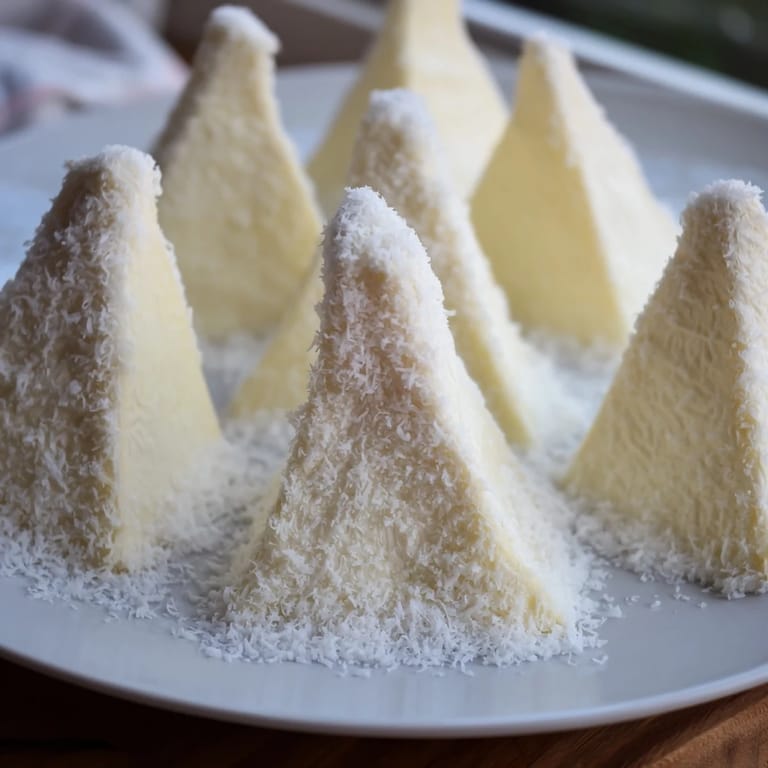
- Stand each wedge upright on your platter, pointed end facing up, arranging them in a loose cluster like peaks on a horizon. Step back and squint; it should feel almost accidental in how perfect it looks.
- Snow-dust the peaks:
- Dust each wedge generously with your grated Parmesan, letting it settle into the creases and cover the surface like freshly fallen snow. Be generous here—this is where the magic happens.
- Finish with thyme (if using):
- Tuck fresh thyme sprigs around the base or between the wedges, just a few scattered moments of green that make the whole composition feel alive.
- Serve right away:
- Bring crackers or thinly sliced baguette to the table alongside. The best moment for this dish is the first moment, when everything is pristine and the Brie is still cool enough to hold its shape.
 Save to Pinterest
 I remember my grandmother tasting one of these at that same dinner party, and the expression on her face shifted from polite interest to genuine delight. She asked me how I'd learned to make something so elegant, and I had to laugh—there's barely any technique involved, just respect for good cheese and the confidence to let simplicity be enough. That's when I understood why this dish works: it respects both the ingredients and the people eating them.
Why Temperature and Texture Matter Here
This dish is entirely about the contrast between the cool, dense Brie and the crispy, pungent Parmesan. When the Brie is properly chilled, it has an almost butter-like firmness that melts on your tongue, while the Parmesan provides a sharp, salty crunch. The temperature also matters for presentation—once the platter sits out and the cheese begins to warm, the wedges start to slouch and lose their architectural integrity. Timing is everything, so plan to assemble these within 15 minutes of serving.
Variations That Still Feel Right
I've tried this with Camembert in place of Brie when that's what was available, and it works beautifully if you appreciate a slightly earthier flavor. Triple-cream cheese takes it in a richer direction, almost indulgent, which is lovely if your crowd skews toward that kind of decadence. Even a good-quality soft Boursin would shift the flavor profile in an herbaceous direction that's equally valid.
Pairing and Serving Thoughts
The dish itself is so delicate that the accompaniments should support rather than overpower it. A crisp, mineral Chardonnay or a dry sparkling wine plays beautifully against the richness of the cheese, and the bubbles cleanse your palate between bites. Some people prefer neutral crackers that let the cheese shine, while others want a slightly sweet note from a water cracker or thin slices of a sourdough baguette.
- Serve this at the beginning of a meal, before heavier dishes, so your guests can truly savor each wedge.
- Make these just before your event—they're best within the first 30 minutes, when the visual appeal is undeniable.
- If you're hosting a larger party, you can prep multiple platefuls and swap them in as the first batch gets picked over.
 Save to Pinterest
 There's a generosity in serving something this beautiful that costs so little effort—it's the kind of dish that makes you feel like a gracious host without demanding hours in the kitchen. Every time I make it, I'm struck by how something so minimal can feel so memorable.
Recipe FAQs
- → What is the best way to cut Brie for this dish?
Use a sharp knife and ensure the Brie is well chilled to achieve clean, triangular wedges that hold their shape when arranged.
- → Can I toast the Parmesan before dusting?
Yes, toasting Parmesan gently in a dry pan enhances its flavor. Allow it to cool before dusting the Brie wedges.
- → Are there good cheese alternatives to Brie for this presentation?
Camembert or triple-cream cheeses work well as richer substitutes and maintain the creamy texture and elegant appearance.
- → How should this appetizer be served?
Arrange the wedges on a platter with pointed ends upward and garnish with fresh thyme. Serve alongside crackers or sliced baguette.
- → What drinks pair best with this dish?
A chilled Chardonnay or sparkling wine complements the creamy and savory flavors beautifully.