 Save to Pinterest
 The first time I arranged fruits by color, I wasn't trying to make art—I was just staring at a pomegranate on my counter and thinking about how beautiful it would look if everything around it told the same story. My daughter came in asking what I was doing, and when I explained the gradient idea, she immediately started hunting through the fruit bowl like it was a treasure hunt. That afternoon became less about feeding people and more about creating something that would make them pause before eating it.
I made this for a friend's garden party on the first truly warm Saturday of spring, and watching guests' faces as they approached the platter felt like I'd done something quietly right. Someone asked if it was too pretty to eat, and I loved that question so much I almost didn't answer. By the end of the afternoon, the pomegranate was still mostly intact, but the outer rings had been picked clean—they'd gone for the safe, pale fruits first, building confidence before reaching for the jewel tones.
Ingredients
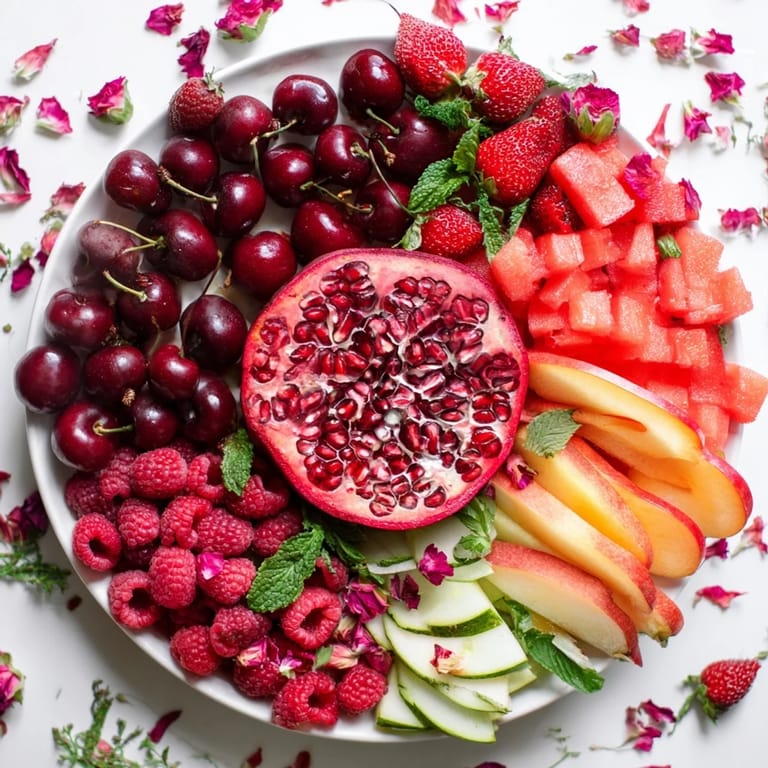
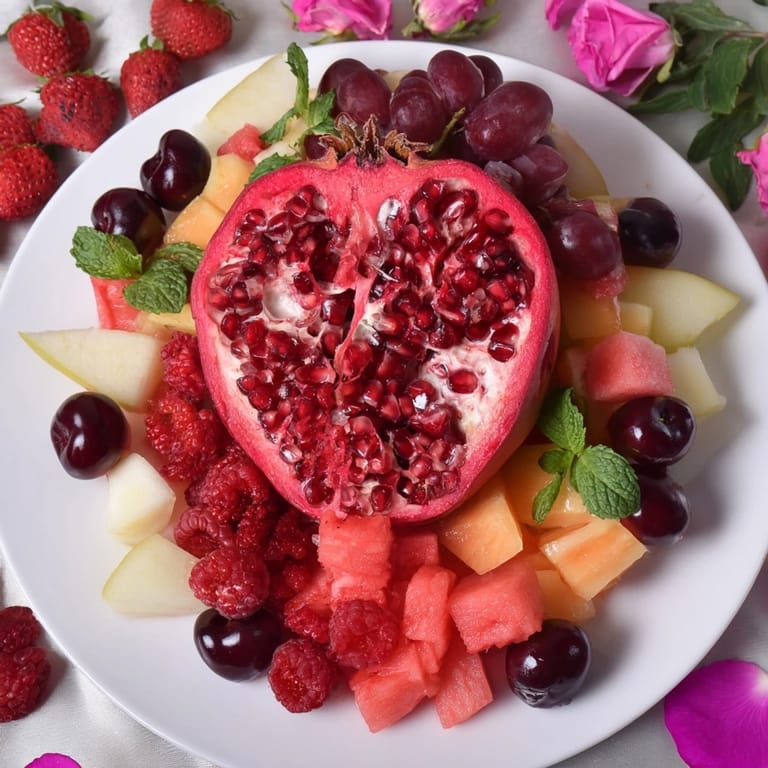
- 1 large pomegranate, halved: This is your anchor, your reason for the whole platter—choose one with thick, unblemished skin and let it sit cut-side up like a crown.
- Dark cherries (1 cup, pitted): They're the deepest note, nearly black in some lights, and they anchor the first ring with unmistakable authority.
- Red grapes (1 cup): Look for the smallest ones you can find; they nestle between other fruits like little glossy jewels.
- Strawberries (1 cup, hulled): Pick berries that are perfectly ripe but still firm enough to hold their shape through arrangement.
- Raspberries (1 cup): Handle these last before serving or they'll lose their bloom; their fragility is part of their beauty.
- Watermelon (1 cup, cubed): Cut just before arranging so it doesn't weep—that's the real secret to a clean platter.
- Pink grapefruit segments (1 cup): Peel them carefully, removing all the bitter white pith; they should feel like transparent candy in your fingers.
- Dragon fruit (1 cup, cubed): The surprise element, impossibly pale pink inside with those tiny black seeds that catch the light.
- Apple slices (1 cup, pink or blush varieties): Slice these just before assembly and toss lightly in lime juice to keep them from browning—a small step that matters more than you'd think.
- Pear slices (1 cup): Choose pears that are just barely ripe; underripe holds shape better, overripe turns to mush.
- Fresh mint leaves and edible rose petals (optional): These aren't decoration—they're the reminder that this is meant to be experienced with all the senses.
Tired of Takeout? 🥡
Get 10 meals you can make faster than delivery arrives. Seriously.
One email. No spam. Unsubscribe anytime.
Instructions
- Position Your Anchor:
- Place the halved pomegranate cut-side up in the dead center of your platter, letting it settle into its own gravity. This is where every line of fruit will eventually lead the eye.
- Build the Deep Ring:
- Arrange the dark cherries, red grapes, and strawberries in a crescent around the pomegranate, overlapping them slightly like roof shingles. Work in an arc rather than a perfect circle—it looks more natural, more intentional.
- Transition into Pink:
- Place raspberries, watermelon cubes, and grapefruit segments in the next layer outward, watching how the color shifts between layers. The raspberries will sit slightly higher than everything else, which is exactly what you want.
- Reach the Edges:
- Fill the outer ring with dragon fruit, apple slices, and pear slices, creating a pale frame that makes everything else glow. These lighter fruits don't compete—they celebrate what came before.
- Add the Whisper of Green:
- Tuck mint leaves into any gaps and scatter edible rose petals if you're feeling it, but only if they feel right to you. This step is about intuition, not rules.
- Rest and Serve:
- Let the platter sit at room temperature for no more than an hour, or cover and refrigerate if you're getting ahead. Bring it out just as people are ready to eat—that moment of first sight matters.
 Save to Pinterest
 The moment someone reaches for a fruit and suddenly sees the whole gradient shift under their fingers, the platter becomes interactive in a way that regular food never quite is. That's when you know the arrangement worked—not because it looked pretty, but because it made people conscious of their choices.
The Color Story
Color isn't just visual decoration on a platter like this—it's a language that tells people what to expect before they taste anything. When you move from deep red to pale pink to nearly white, you're creating a visual narrative that feels almost musical, like notes on a staff. I've learned that fruits arranged by color psychology actually taste better because your brain is already prepared for subtle transitions between flavors. The deep reds promise intensity; the pale fruits deliver delicate sweetness. It's about setting expectations and then delivering on them.
Timing and Temperature
This platter lives in that beautiful space between chilled and room temperature, and getting that balance right changes everything. If fruits are too cold, their natural sugars taste muted and flavors feel distant; if they're too warm, they start to lose their snap and juiciness. I usually prep everything in the fridge, then pull it out about fifteen minutes before serving to let them come to that perfect middle ground. The pomegranate, especially, seems to taste more itself when it's not ice-cold—something about the slight warmth brings out the tartness.
Seasonal Flexibility and Personal Touches
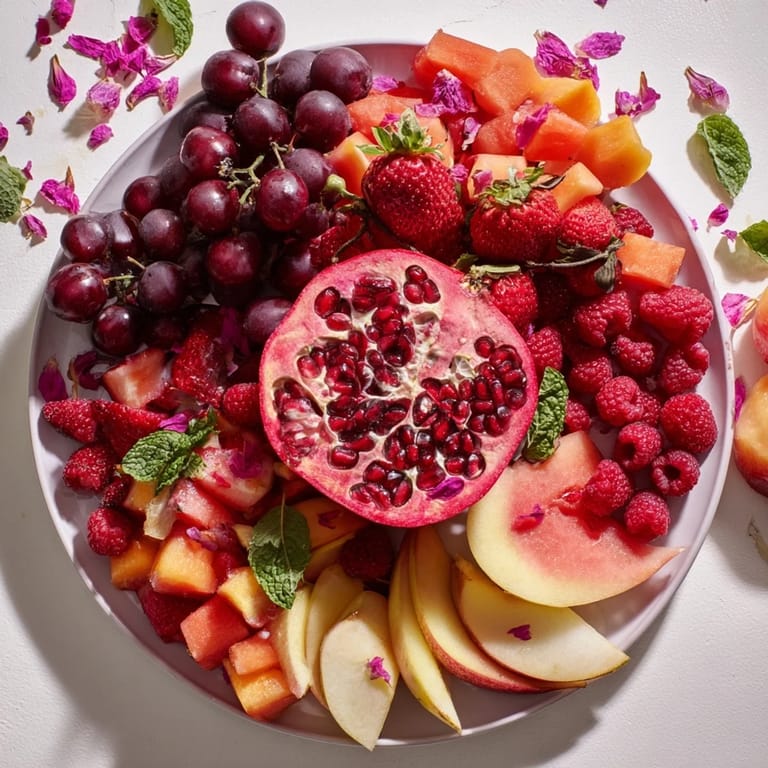
The beauty of this arrangement is that it doesn't demand specific fruits—it demands the same thinking applied to whatever's in season. Last summer I made it with peaches instead of apples, and in fall I've swapped in red currants when grapes weren't at their best. Each substitution shifts the whole emotional tone of the platter slightly, which keeps the recipe from ever feeling stale even after you've made it a dozen times.
- Try red currants, pomegranate seeds, or lychees as deep-color substitutes when grapes feel ordinary.
- Swap watermelon for guava or papaya in winter for the same pink-center idea with different flavor.
- A drizzle of pomegranate molasses around the base adds subtle complexity without disrupting the visual flow.
 Save to Pinterest
 This platter isn't really about the fruits at all—it's about the permission to make something beautiful just because it matters. Serve it cold, share it generously, and don't apologize for how much joy it brings to a table.
Recipe FAQs
- → How do I prevent fruit from browning on the platter?
Lightly drizzle lime juice over apple and pear slices to slow down browning and maintain freshness.
- → Can I substitute fruits based on season?
Yes, try red currants, pomegranate seeds, lychees, or peaches to keep the vibrant color palette and fresh taste.
- → What is the best way to arrange the fruits for visual impact?
Layer fruits in overlapping rows moving from deep red to pale pink shades, creating a smooth color gradient around the centerpiece.
- → Are the mint leaves and rose petals necessary?
They are optional but add fresh aroma and a decorative touch that enhances the platter's presentation.
- → Is this platter suitable for special diets?
Yes, it is naturally vegan, gluten-free, and contains no common allergens, making it suitable for various dietary needs.