 Save to Pinterest
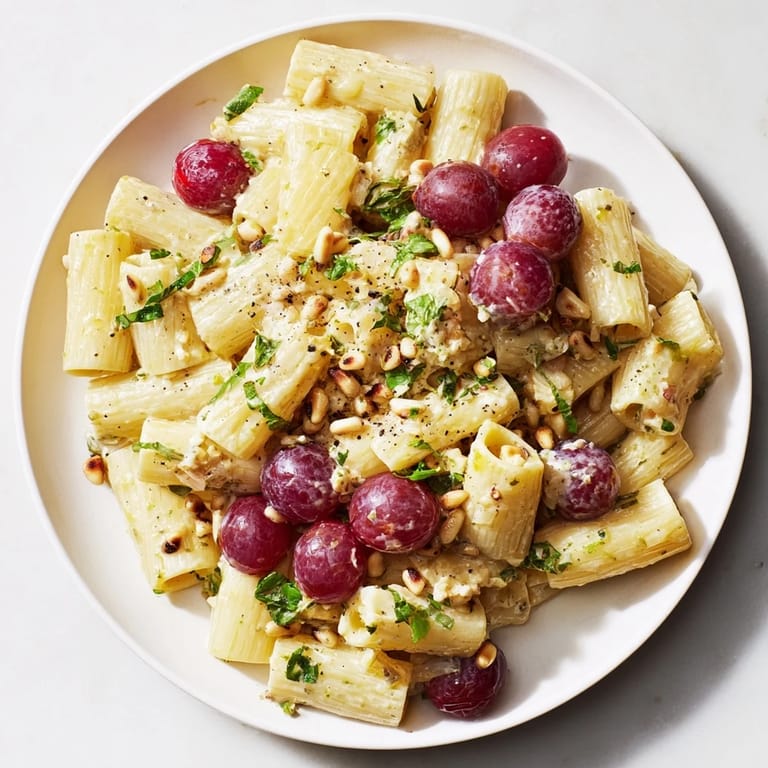
 I discovered this dish completely by accident one autumn afternoon when I had a bowl of grapes sitting on the counter that were about to turn soft. Rather than toss them, I roasted them on a whim, and the kitchen filled with this unexpected caramel sweetness. When I stirred them into a simple ricotta pasta with lemon, something magical happened—the grapes burst with jammy intensity while the cheese stayed silky and cool. It's become one of those recipes I return to whenever I want to feel like I've stumbled onto something special, even though it takes barely 45 minutes from start to finish.
I made this for a small dinner party on a September evening, and watching people's faces when they encountered the roasted grapes was worth every bit of the minimal prep work. One guest actually paused mid-bite and asked what the sweet burst was, and I loved seeing that moment of delighted confusion. Since then, it's become my go-to when I want to serve something that feels both familiar and unexpected.
Ingredients
- Dried short pasta (penne, rigatoni, or fusilli): 350 g (12 oz)—use whatever shape you have; the ridges catch the ricotta sauce beautifully.
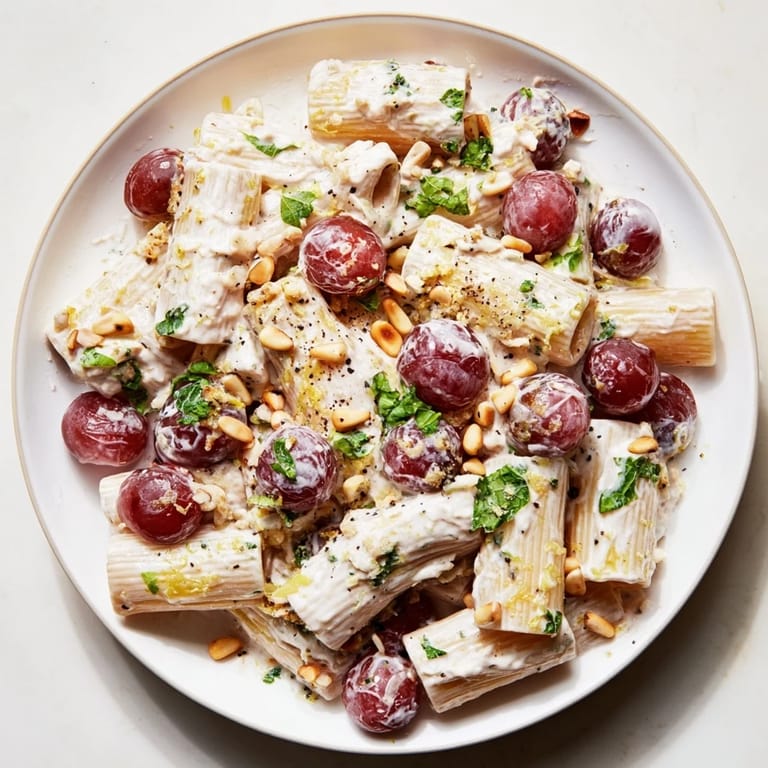
- Seedless red or black grapes: 300 g (2 cups), stems removed—this is your secret weapon, and the roasting is what makes them taste almost nothing like fresh grapes.
- Olive oil: 1 tbsp for roasting, plus 2 tbsp extra-virgin for finishing—don't skip the finishing oil; it brings everything into focus.
- Coarse salt and freshly ground black pepper: 1/2 tsp salt and 1/4 tsp pepper for the grapes, plus more to taste—salt draws out the grapes' natural juices as they roast.
- Fresh ricotta cheese: 250 g (1 cup)—seek out the freshest ricotta you can find; it should taste milky and delicate, not dense.
- Lemon zest and juice: 1/2 tsp zest and 1 tbsp juice—this is what keeps the dish from tasting sweet; it's your brightness.
- Fresh basil and parsley: 2 tbsp basil plus more for garnish, 1 tbsp parsley—both matter, so don't skip either one.
- Toasted pine nuts: 40 g (1/4 cup), optional—they add a buttery crunch, but the dish works without them if you prefer.
- Parmesan cheese: for serving, optional—grate it fresh if you use it; the sharp bite complements the sweetness.
Tired of Takeout? 🥡
Get 10 meals you can make faster than delivery arrives. Seriously.
One email. No spam. Unsubscribe anytime.
Instructions
- Start your grapes roasting:
- Preheat your oven to 220°C (425°F) and line a baking tray with parchment paper. The high heat is important—it concentrates the grapes' sugars and gives them those blistered edges that taste almost like jam.
- Coat and roast the grapes:
- Spread your grapes on the tray, drizzle with 1 tbsp olive oil, and scatter over 1/2 tsp salt and 1/4 tsp pepper. Toss everything together so each grape gets a light coating. Slide them into the oven and let them roast for 20–25 minutes, shaking the tray halfway through so they color evenly.
- Cook your pasta:
- While the grapes work their magic, bring a large pot of generously salted water to a rolling boil. Cook your pasta according to the package directions until it's tender but still has a slight bite—that al dente texture matters here because it won't turn mushy when you toss it with the warm ricotta. Before you drain it, scoop out about 120 ml (1/2 cup) of the starchy cooking water and set it aside.
- Build your ricotta sauce:
- In a bowl, combine your 250 g fresh ricotta with the lemon zest, lemon juice, chopped basil, parsley, and 1/4 tsp salt. Stir until everything is smooth and pale—this becomes your sauce, so take a moment to taste it and adjust the lemon if needed.
- Bring it all together gently:
- Return your drained pasta to its pot over low heat. Add the ricotta mixture and toss everything together slowly and gently, letting the warmth of the pasta soften the cheese into a silky sauce. If it feels too thick, add a splash or two of that reserved pasta water until it looks creamy and coats the pasta.
- Fold in the roasted grapes:
- Check on your grapes—they should be soft and blistered with caramelized edges. Gently add them to the pot along with all their juices and give everything one more light toss. Drizzle the whole thing with 2 tbsp of your best extra-virgin olive oil.
- Plate and finish:
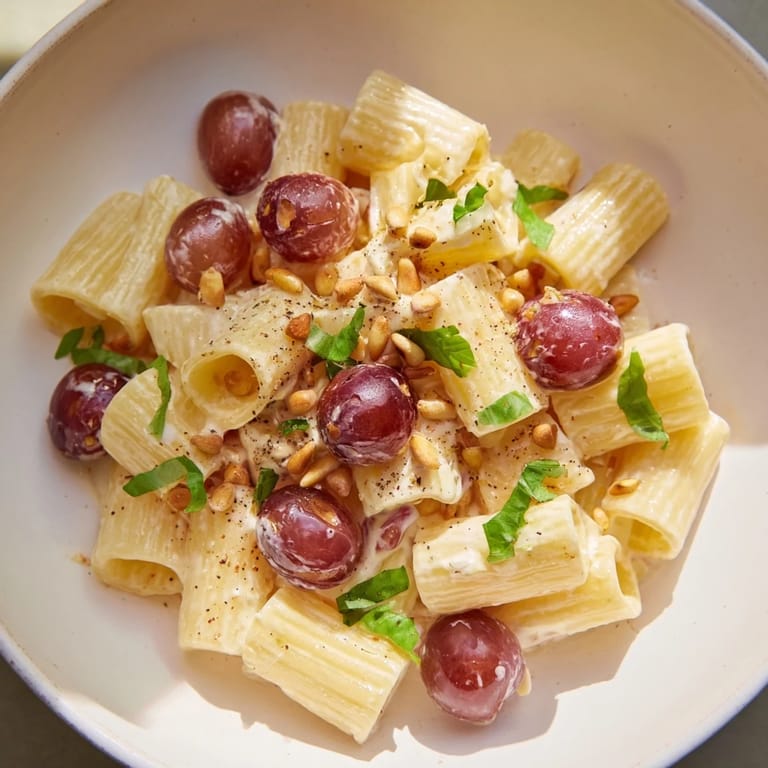
- Divide the pasta among plates while it's still warm. Top each serving with toasted pine nuts if you're using them, a crack of fresh black pepper, a few torn basil leaves, and a handful of grated Parmesan if you like. Serve immediately while everything is warm and the flavors are bright.
 Save to Pinterest
 I remember serving this to my sister one evening when she was going through a rough stretch, and she literally closed her eyes on the first bite. The contrast of sweet and bright and creamy seemed to matter more in that moment than any long, complicated meal could have. It's taught me that sometimes the most comforting food is the kind that surprises you gently.
Why Roasted Grapes Change Everything
Raw grapes are nice, but roasting them unlocks something different entirely. The natural sugars concentrate and caramelize, the skins soften, and the flavor becomes almost wine-like—jammy and complex in a way that feels fancy without any fuss. It's one of those cooking tricks that feels like a shortcut but actually creates something you couldn't achieve any other way. The grapes also release their juices as they roast, and those juices become part of the sauce, adding subtle sweetness and moisture without you having to do anything extra.
The Ricotta Matters More Than You'd Think
Fresh ricotta is the difference between this dish feeling creamy and luxurious versus grainy and flat. If you can find ricotta from a local cheese maker or a good Italian market, grab it—the flavor is noticeably milder and more delicate than the shelf-stable stuff. The quality of ricotta affects how easily it blends into a sauce and how much it lets the other flavors shine through. If your market only carries one type, just make sure it's refrigerated and not in a plastic tub that's been sitting around for months.
Lemon Is Your Secret Balance
The lemon zest and juice are what keep this dish from becoming cloying, even with the sweet grapes in every bite. Without them, the dish would taste one-note and heavy, but with them, everything feels bright and alive. I've learned to taste the ricotta mixture before I even combine it with the pasta—if it tastes too mild, add a touch more lemon juice; if it tastes sharp, dial it back slightly. A little tasting before you commit to the whole recipe takes out all the guesswork.
- Zest your lemon before you cut it in half to juice it, so you get all those bright oils.
- If your lemons feel hard, roll them on the counter with your palm before cutting; they'll yield more juice.
- Taste and adjust the lemon in the ricotta mixture before you combine everything with the pasta.
 Save to Pinterest
 This pasta has become my reminder that sometimes the most elegant dishes are the ones that feel almost accidental in their simplicity. It's proof that you don't need a long ingredient list or complicated technique to create something memorable.
Recipe FAQs
- → What type of pasta works best for this dish?
Short pasta shapes like penne, rigatoni, or fusilli hold the creamy sauce and roasted grapes well, providing the best texture and flavor balance.
- → How should grapes be prepared for roasting?
Use seedless red or black grapes, washed and dried, tossed with olive oil, salt, and pepper, then roasted at 220°C (425°F) until soft and caramelized.
- → Can pine nuts be omitted or substituted?
Yes, pine nuts are optional. They can be omitted for nut-free versions or substituted with toasted sunflower seeds for a similar crunch.
- → How to achieve the creamy texture in the sauce?
The ricotta mixture combined with reserved pasta water and fresh herbs creates a smooth, creamy sauce that coats the pasta evenly.
- → What herbs complement the flavors best?
Fresh basil and parsley bring bright, fragrant notes that enhance the sweet and tangy elements of the dish.