 Save to Pinterest
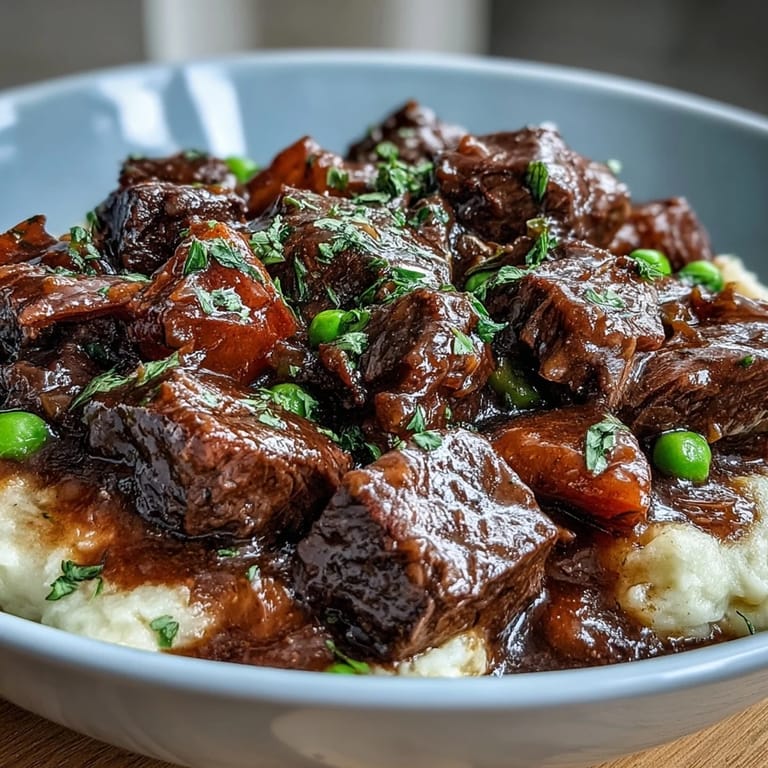
 There's something about the smell of beef browning in a hot pot that instantly transports me back to my grandmother's kitchen on a grey Dublin afternoon, except this version tells a different story. She'd make her stew thick and heavy, but I wanted to honor that same comfort while keeping things lighter, so I started experimenting with lean beef and swapping potatoes for cauliflower mash. The first time I served it to friends who'd grown up with traditional Irish stew, they actually paused mid-spoonful, surprised by how the cauliflower held its own against the deep, wine-dark broth. That moment made me realize this wasn't about replacing tradition—it was about giving it room to breathe.
I made this on a Sunday last November when my partner was recovering from a long week, and somehow the act of slow-cooking something this intentional felt like the perfect non-verbal apology for our hectic month. We ate it straight from bowls while watching the rain, and neither of us spoke much—we didn't need to. Food like this does the talking.
Ingredients
- Lean beef stew meat, 1 lb (450 g): Trimming every visible fat might feel tedious, but it's what keeps this from being heavy while still delivering that satisfying, meaty depth.
- Olive oil, 1 tbsp: Just enough to get the pan properly hot for a good sear—don't skimp or rush this step.
- Onion, 1 medium: The aromatic backbone; dice it consistently so it softens evenly into the broth.
- Carrots, 2: They add subtle sweetness that balances the wine and herbs, and they hold their shape beautifully through the long simmer.
- Celery, 2 stalks: This is the unsung hero that adds savory depth without being noticeable as itself.
- Garlic, 3 cloves: Mince it fine so it dissolves into the sauce rather than appearing as visible chunks.
- Low-sodium beef broth, 3 cups (700 ml): Low-sodium matters here because you'll be reducing the liquid and concentrating flavors—regular broth can become too salty.
- Dry red wine, 1 cup (240 ml): The wine is doing real work here, not just adding alcohol; it brings complexity and helps tenderize the beef, so use something you'd actually drink.
- Tomato paste, 2 tbsp: A small amount goes a long way; it adds umami and body without making the stew taste tomatoey.
- Worcestershire sauce, 2 tsp: This is a secret weapon for depth—it punches above its weight.
- Dried thyme and rosemary, 1 tsp each: Dried herbs work better here than fresh because they'll meld into the broth over the long cooking time.
- Bay leaves, 2: Don't forget to fish these out before serving, but while they're in there, they're quietly transforming everything.
- Salt and black pepper: Taste as you go; the broth will concentrate as it cooks.
- Frozen peas, 1 cup (150 g): They go in at the very end to keep their bright flavor and slight firmness.
- Cauliflower, 1 large head: Look for a head that feels dense and heavy for its size—that indicates fresher florets with better texture.
- Unsalted butter, 2 tbsp: This is what makes the mash taste luxurious without cream.
- Low-fat milk or alternative, 2 tbsp: Just enough to loosen the cauliflower into a silky consistency—add more if you prefer it lighter.
- Fresh chives: A small handful chopped over the top adds a whisper of onion flavor and visual brightness.
Tired of Takeout? 🥡
Get 10 meals you can make faster than delivery arrives. Seriously.
One email. No spam. Unsubscribe anytime.
Instructions
- Prepare the beef with intention:
- Pat each cube completely dry with paper towels—this is the unglamorous step that actually determines how well your beef browns. Season generously with salt and pepper while the pan heats.
- Achieve a proper sear:
- Let the oil shimmer until it just barely smokes, then add the beef in a single layer without crowding. Resist the urge to move it around; let each side make contact with the hot surface for at least two minutes to develop that golden crust. Work in batches if needed.
- Build your flavor base:
- Once the beef is set aside, add the onion, carrots, and celery to the same pot and let them soften for five minutes, scraping up those browned bits stuck to the bottom. This is where the real flavor begins.
- Wake up the aromatics:
- Add the minced garlic and let it cook just until it stops being harsh and smells sweet—about one minute is perfect. Don't let it brown.
- Deepen the broth with paste:
- Stir in the tomato paste along with thyme, rosemary, and bay leaves. Let this cook for a minute so the herbs release their oils and the paste starts to caramelize slightly.
- Deglaze with wine:
- Pour in the red wine and use a wooden spoon to scrape up every golden bit clinging to the pot's bottom. This is called deglazing, and it's where concentrated flavor lives.
- Return the beef and add broth:
- Put the beef back in along with the beef broth and Worcestershire sauce. Bring everything to a simmer, then lower the heat so it's barely bubbling—aggressive boiling will make the meat tough.
- The long, patient simmer:
- Cover the pot and let it cook for an hour and fifteen minutes, stirring occasionally. The beef should be so tender it falls apart when you press it with a wooden spoon. If it's still firm, keep cooking.
- Finish with brightness:
- Remove the lid and stir in the frozen peas. Simmer uncovered for another five to ten minutes just until the peas warm through and some of the liquid reduces. Taste and adjust salt and pepper.
- Make the cauliflower mash simultaneously:
- While the stew simmers, bring a pot of salted water to a boil and add cauliflower florets. They're done when a fork slides through with no resistance—about ten to twelve minutes.
- Create silky mash:
- Drain the cauliflower well in a colander, then transfer to a food processor with the butter and milk. Blend until completely smooth and creamy, scraping down the sides once. If using a potato masher, you'll need to mash very thoroughly to avoid lumps.
- Plate with care:
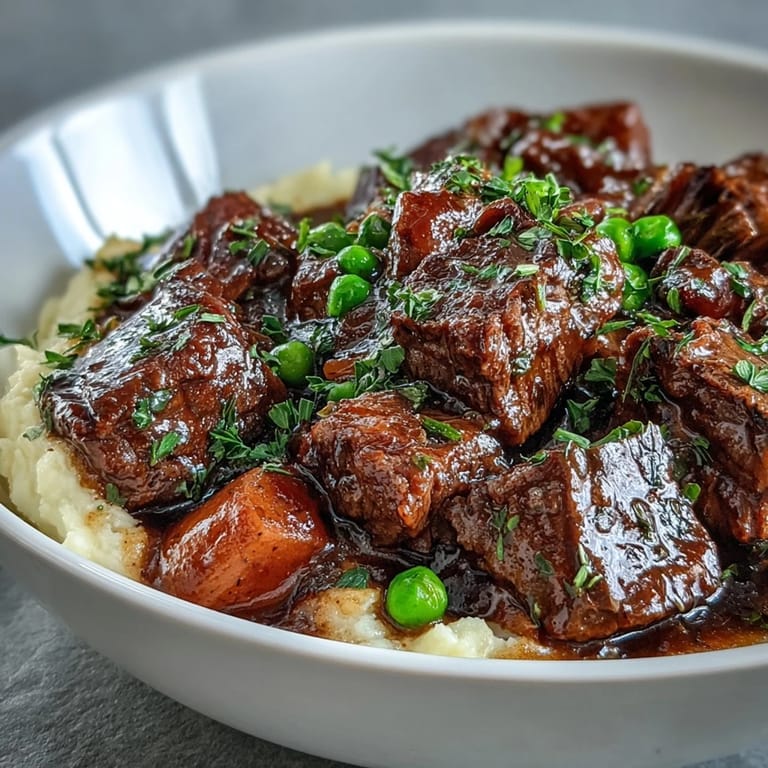
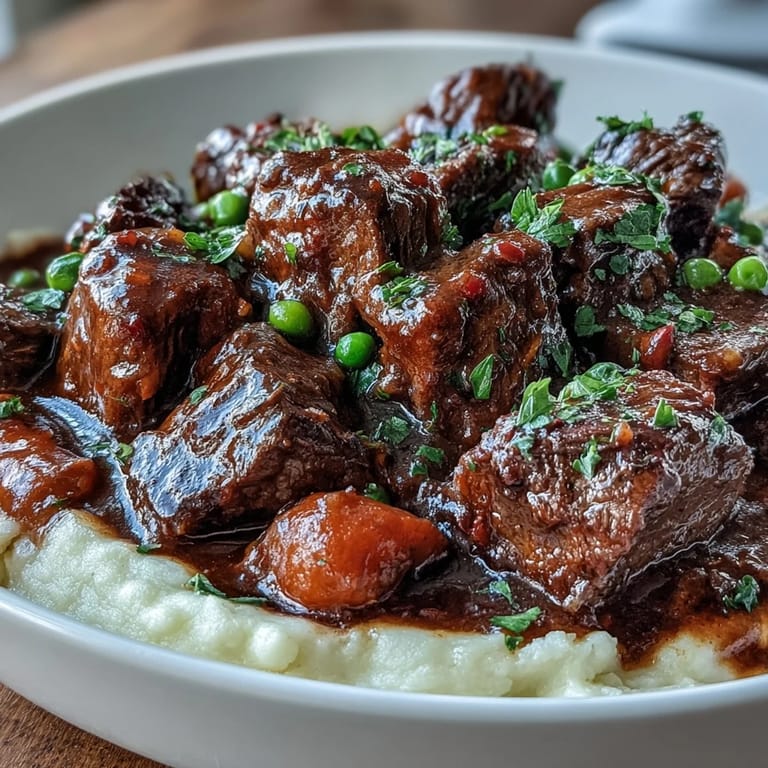
- Spoon a generous mound of cauliflower mash into the center of each bowl, then ladle the hot stew around it. Scatter chives over the top for color and a hint of fresh onion flavor.
 Save to Pinterest
 My mother tried this version and actually teared up a little, which surprised us both. She said it tasted like home but felt like someone was taking care of her, and I realized that's what lighter cooking should be—not deprivation, but generosity with a healthier aim.
The Secret to Depth Without Heaviness
When I first attempted to lighten traditional Irish stew, I thought removing potatoes meant sacrificing satisfaction. Then I understood that depth comes from technique, not bulk. The long, low simmer concentrates the broth until it tastes almost like reduction, the wine adds complexity that cheap beer never could, and lean beef actually absorbs flavors better than fattier cuts because there's less grease interfering with the seasoning. The cauliflower mash works because it's not trying to be potatoes—it's its own thing, creamy and mild enough to let the stew shine through.
Why This Stew Gets Better the Next Day
Make this a day ahead if you can. The flavors settle and marry overnight, the broth becomes even silkier, and somehow the whole thing tastes more intentional. When you reheat it gently on the stovetop (never blast it on high), the beef absorbs even more of the wine and herb flavors. Fresh cauliflower mash tastes better made on serving day, but the stew itself is genuinely improved by sitting.
Variations and Occasions
I've swapped ingredients based on mood and season, and this stew adapts beautifully. In autumn, I sometimes add diced parsnips alongside the carrots for earthier sweetness. On nights when I want even more richness, I use half Guinness and half broth instead of wine—it adds a subtle chocolate note that feels sophisticated without being heavy. For casual weeknight dinners, I'll roast the cauliflower instead of boiling it, then mash it with the butter and milk for a nuttier flavor. The cauliflower mash also freezes well separately, so you can make extra and have it ready for quick side dishes throughout the week.
- Try a splash of Guinness for a richer, subtly sweet undertone instead of red wine.
- Swap half the cauliflower mash for regular mashed potatoes if you want more carbs without going full traditional.
- Add diced mushrooms along with the onions for umami and earthiness without extra weight.
 Save to Pinterest
 This stew proves that comfort food doesn't need excess to feel generous. Serve it on a cold night with crusty bread for soaking up broth, and watch how quietly it works its way into people's hearts.
Recipe FAQs
- → What cut of beef works best for this stew?
Lean stew meat cut into 1-inch cubes is ideal as it becomes tender through slow cooking while keeping the dish light.
- → Can I substitute the red wine used in the stew?
Yes, a splash of Guinness or additional beef broth works well to maintain depth of flavor without alcohol.
- → How should the cauliflower mash be prepared for best texture?
Boil cauliflower florets until very tender, then blend with butter and low-fat milk for a smooth, creamy mash.
- → Is this dish suitable for gluten-free diets?
Yes, the use of gluten-free ingredients and careful selection of stock ensure it meets gluten-free requirements.
- → What herbs enhance the flavor of the stew?
Dried thyme, rosemary, and bay leaves offer aromatic earthiness that complements the savory beef and vegetables.