 Save to Pinterest
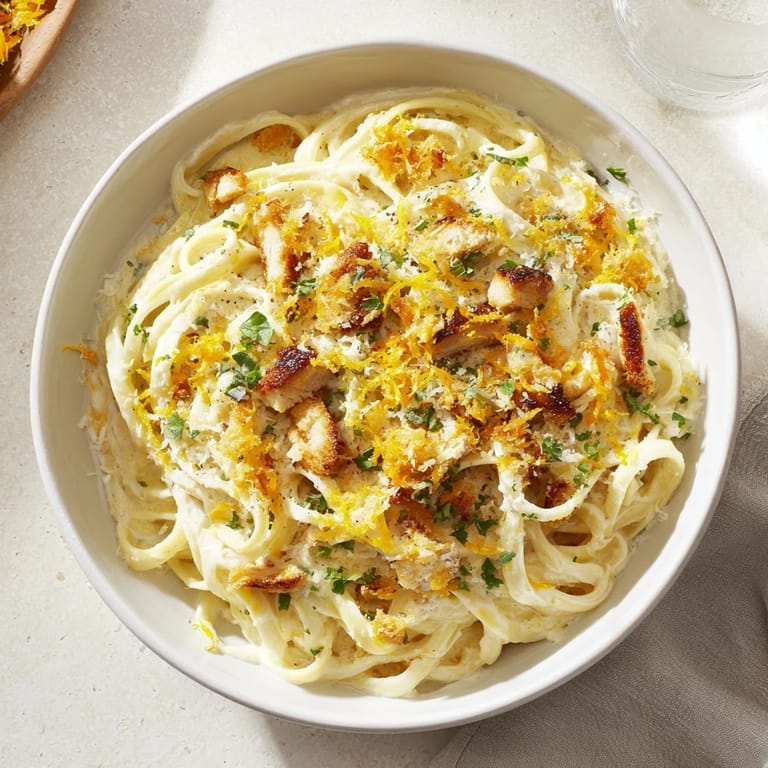
 The first time I made this dish, I was chasing a memory of lemon posset—that silky, sharp dessert that lingers on your tongue. I thought, why not bring that magic to pasta? The result was this bright, unexpected main course where caramelized sugar meets tender chicken and cream, and honestly, it changed how I think about dinner entirely.
I served this to friends who were skeptical about dessert flavors sneaking into dinner. Watching their faces when they tasted that caramelized lemon crust on the chicken was worth every minute. One friend actually went quiet for a moment, which is the highest compliment you can get at my table.
Ingredients
- Boneless, skinless chicken breasts: Two large ones give you enough protein without overwhelming the delicate sauce, and they cook quickly once you get that perfect sear.
- Granulated sugar: The hero of the brûlée—use fine granulated, not coarse, so it caramelizes into a thin, crackling shell.
- Fresh lemon zest: From two lemons for the sauce and one for the chicken; zest before juicing to make your life easier.
- Sea salt and freshly ground black pepper: Season aggressively here—the chicken needs it before that sugar hits the torch.
- Olive oil: High quality for cooking the chicken, regular for the sauce; the difference matters when heat is involved.
- Dried linguine or spaghetti: Linguine holds this sauce beautifully, but spaghetti works just as well if that's what you have.
- Unsalted butter and olive oil: Together they create the silkiest base for your sauce without any burnt edges.
- Garlic: Three cloves, minced fine so they dissolve into the cream rather than sitting in chunks.
- Lemon juice: Two lemons worth, and taste as you go—acidity is your friend here.
- Heavy cream: The luxurious foundation that ties the bright lemon and salty cheese into something irresistible.
- Parmigiano-Reggiano: Real aged cheese, not the green shaker bottle; it melts into silk and adds umami depth.
- Fresh parsley: A small handful chopped, for color and a gentle herbal note that balances the richness.
Tired of Takeout? 🥡
Get 10 meals you can make faster than delivery arrives. Seriously.
One email. No spam. Unsubscribe anytime.
Instructions
- Dry and season your chicken:
- Pat those chicken breasts completely dry with paper towels—moisture is the enemy of a good sear. Season generously with salt, pepper, and lemon zest, pressing it gently so it sticks.
- Sear until golden:
- Heat a large skillet over medium-high heat and get it hot before the oil goes in. Sear each chicken breast for 4 to 5 minutes per side; you want that golden-brown crust that tells you flavor is forming.
- Create the brûlée crust:
- Sprinkle 1 tablespoon of sugar evenly over each breast. If you have a kitchen torch, use it to watch the sugar melt and turn amber in real time—it takes about 30 seconds and is genuinely satisfying. If you're using a broiler, place the skillet under high heat for 1 to 2 minutes, but stay close because broilers can be unpredictable.
- Rest the chicken:
- Let it sit on a cutting board for a few minutes before slicing thinly. This keeps it tender and keeps those juices from running onto the plate.
- Cook pasta to al dente:
- Bring a large pot of well-salted water to a rolling boil and cook the pasta according to package timing, but start checking 1 minute before. Reserve half a cup of pasta water before draining—that starchy water is liquid gold for your sauce.
- Build your sauce:
- In a large clean skillet, melt butter with olive oil over medium heat. Add minced garlic and let it toast gently for about 1 minute until it smells incredible but is nowhere near brown.
- Add brightness and richness:
- Stir in the lemon zest and juice, letting the acidity do its thing. Pour in the heavy cream and bring everything to a gentle simmer, stirring occasionally.
- Melt in the cheese:
- Add the grated Parmigiano-Reggiano a handful at a time, stirring until each addition is completely smooth. Taste and season with salt and pepper to your liking.
- Bring it all together:
- Add the drained pasta to the sauce and toss gently, adding reserved pasta water a splash at a time until the sauce clings to each strand like silk. It should coat everything, not puddle at the bottom.
- Plate and crown:
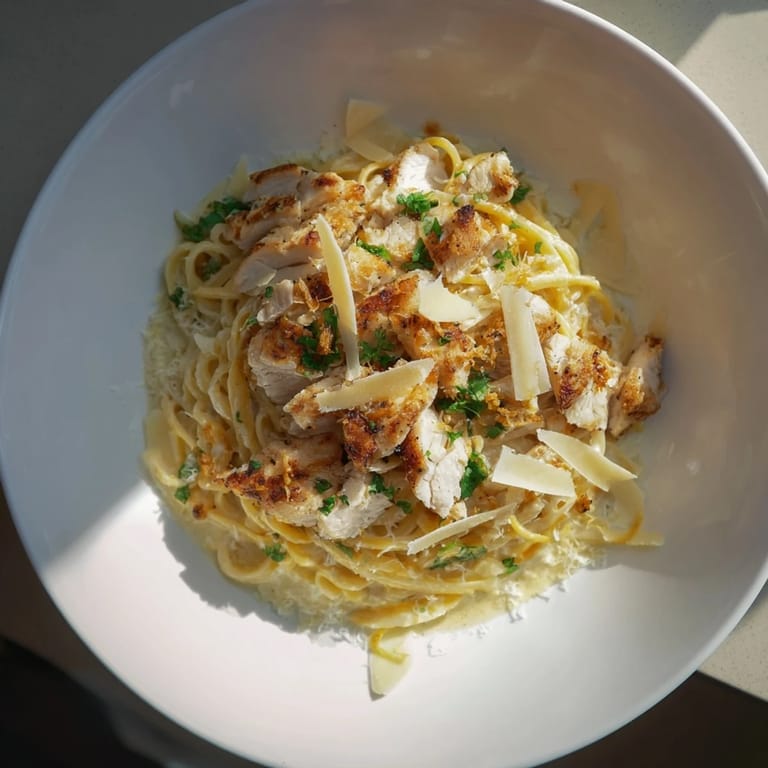
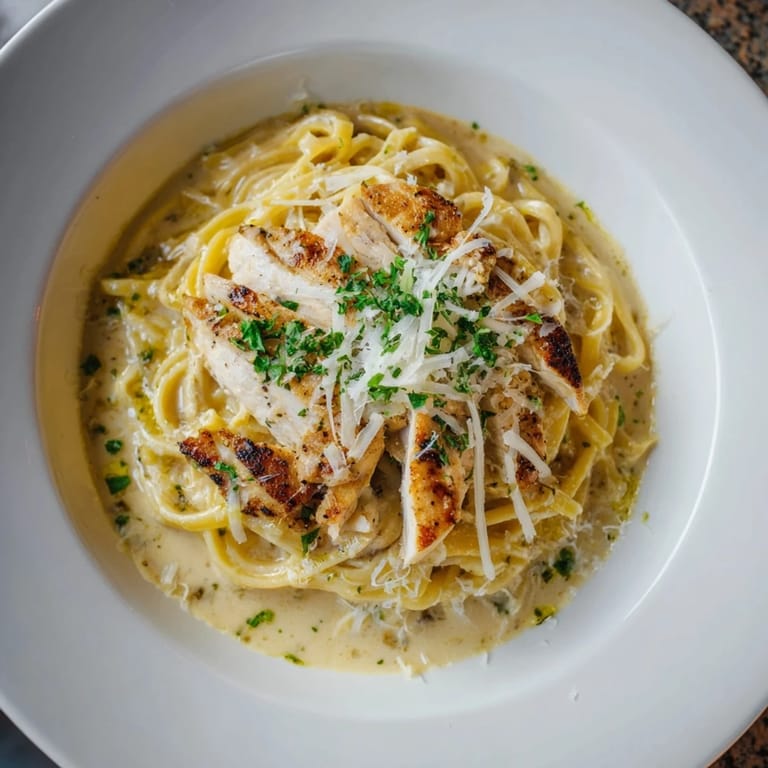
- Divide pasta among shallow bowls or plates, top with those sliced chicken pieces, and finish with extra lemon zest, more Parmigiano-Reggiano, and fresh parsley scattered over.
 Save to Pinterest
 There's something about that moment when you torch the sugar and it goes from granules to glass that makes you feel like you're doing something special. It's a small ritual, really, but it's the kind of detail that turns a weeknight dinner into something memorable.
Why This Combination Works
The pairing of dessert and dinner might sound strange until you taste it. Lemon posset taught me that sugar and citrus can be elegant and grown-up when balanced with cream and restraint. Here, the caramelized crust on the chicken is subtle—just 1 tablespoon per breast—so it enhances rather than overwhelms. The pasta sauce is creamy but bright, never heavy, and the Parmigiano adds a savory anchor that keeps everything grounded. It's about contrast and harmony at the same time.
Timing and Technique
This dish comes together faster than you'd expect, which is part of its charm. The chicken cooks while your pasta water heats, and the sauce takes minutes once your garlic hits the pan. The only moment that needs focus is the brûléeing—whether with torch or broiler, you want to stay present so you catch that golden moment before it becomes bitter. Everything else is confidence and good judgment.
Make It Your Own
The framework here is flexible once you understand how the flavors talk to each other. A dash of white wine in the sauce adds depth, toasted pine nuts scattered over top add crunch, and if you're not a cream person, crème fraîche makes it brighter and more complex. Some nights I add a tiny pinch of red pepper flakes or a whisper of fresh thyme to the sauce, and it never feels wrong.
- Toast breadcrumbs in butter and scatter them over the top for texture and a subtle nuttiness.
- Substitute half the heavy cream with crème fraîche if you want tanginess without losing richness.
- Pair this with a crisp Sauvignon Blanc or Pinot Grigio that echoes the lemon theme throughout your meal.
 Save to Pinterest
 This dish reminds me that cooking doesn't have to choose between comfort and surprise. It can be both, and when it is, that's when people linger at the table a little longer.
Recipe FAQs
- → How do I create the caramelized crust on the chicken?
After searing the chicken, sprinkle granulated sugar on top and use a kitchen torch or broiler to caramelize the sugar until it forms a golden crust.
- → What pasta types work best for this dish?
Linguine or spaghetti are ideal as they hold the creamy lemon sauce well and complement the chicken's texture.
- → Can I substitute heavy cream in the sauce?
You can swap heavy cream for crème fraîche to add a tangier flavor while maintaining creamy consistency.
- → How do I keep the pasta sauce silky without it becoming too thick?
Reserve some pasta cooking water and gradually add it to the sauce to loosen and achieve a smooth, glossy texture.
- → What are good garnishes to enhance this dish?
Extra lemon zest, fresh parsley, and additional grated Parmigiano-Reggiano add fresh aromas and depth of flavor.
- → Can I prepare this dish ahead of time?
While best served fresh, you can prepare chicken and sauce in advance and reheat gently before tossing with freshly cooked pasta.