 Save to Pinterest
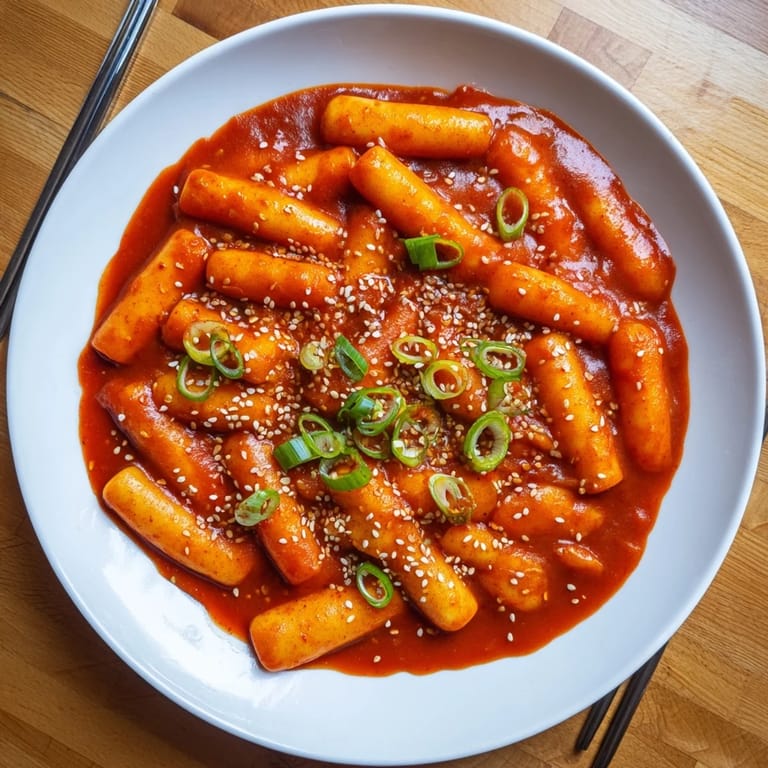
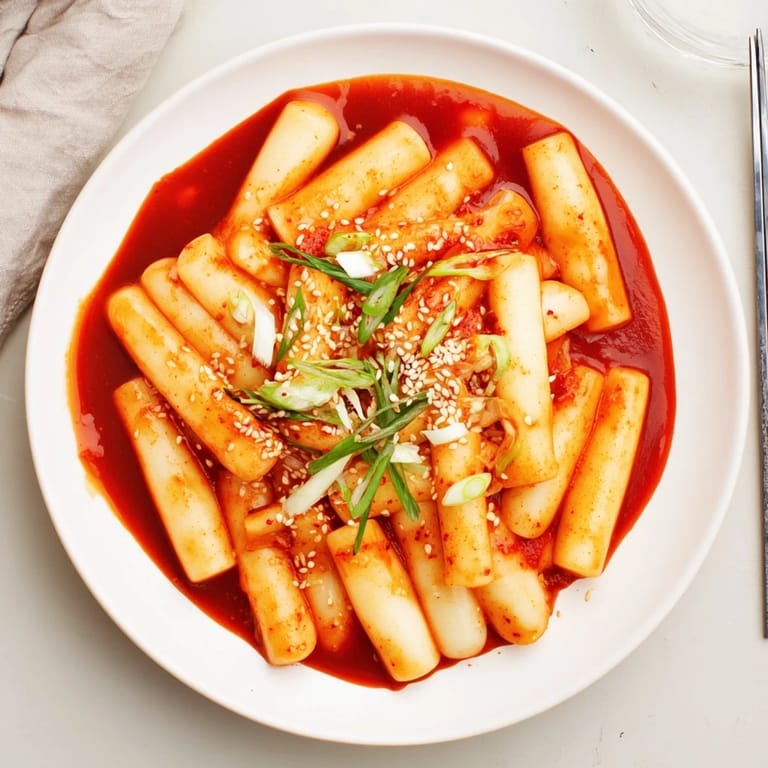
 The steam rising from a paper cup of tteokbokki at a Seoul night market is what convinced me that street food could be profound. I watched the vendor stir her giant wok with effortless rhythm, the gochujang sauce clinging to each rice cake like a glossy, crimson hug. When I took my first bite, the chew was unlike anything I'd experienced: resilient, playful, deeply satisfying. That texture, paired with the sauce's balance of heat, sweetness, and umami, made me realize why entire neighborhoods gather around tteokbokki carts after dark.
I first made this for a group of friends who'd never heard of tteokbokki, and I was nervous they wouldn't understand the appeal of chewy cylinders in red sauce. But the moment the pot started bubbling and that sweet-spicy aroma filled the kitchen, they crowded around like moths to a flame. One friend declared it comfort food she didn't know she needed. Another kept fishing out the soft onions soaked in sauce. That night, tteokbokki became our unofficial gathering dish.
Ingredients
- Korean rice cakes (tteok): These cylindrical beauties are the soul of the dish; soak them if they're cold or hard so they soften evenly without turning mushy.
- Gochujang: This fermented chili paste brings depth, sweetness, and a mellow heat that builds gradually rather than slapping you in the face.
- Gochugaru: Korean chili flakes add a brighter, sharper heat and that signature red color; don't swap for regular red pepper flakes.
- Soy sauce: It deepens the umami and balances the sweetness; use a good quality one if you can.
- Sugar and honey: Together they create a glossy, caramelized sweetness that tempers the chili and makes the sauce cling beautifully.
- Garlic: Fresh minced garlic is non-negotiable; it adds a pungent backbone that ties everything together.
- Dried kelp (kombu) and anchovies: They build a broth with oceanic depth; skip the anchovies for vegetarian, but keep the kelp.
- Green onions: Slice them on the diagonal for visual appeal and a fresh, sharp bite that cuts through the richness.
- Onion and cabbage: They soak up the sauce and add subtle sweetness and texture.
- Boiled eggs: Optional but highly recommended; they become flavor sponges and add protein.
- Sesame seeds: A final sprinkle adds nuttiness and a gentle crunch.
Tired of Takeout? 🥡
Get 10 meals you can make faster than delivery arrives. Seriously.
One email. No spam. Unsubscribe anytime.
Instructions
- Wake Up the Rice Cakes:
- Soak them in warm water for 10 minutes if they've been chilling in the fridge. This prevents them from cooking unevenly or staying hard in the center.
- Build the Broth:
- Simmer water with kelp and anchovies for 10 minutes, letting their flavors meld into something quietly oceanic. Remove the solids and keep the broth; this base is what makes the sauce sing.
- Mix the Sauce:
- Stir gochujang, gochugaru, soy sauce, sugar, honey, and garlic into the warm broth until the paste dissolves completely. You want a silky, unified liquid with no clumps lurking at the bottom.
- Add Rice Cakes and Veggies:
- Drop in the drained rice cakes, onion, and cabbage, then bring it to a gentle boil. Stir occasionally so nothing sticks to the bottom and burns.
- Simmer Until Glossy:
- Let everything bubble for 10 to 15 minutes until the sauce thickens into a glossy coating and the rice cakes turn tender and chewy. The sauce should cling to each piece like a second skin.
- Finish with Freshness:
- Toss in green onions and boiled eggs during the last 2 minutes. This keeps the onions vibrant and lets the eggs soak up just enough sauce.
- Serve Hot:
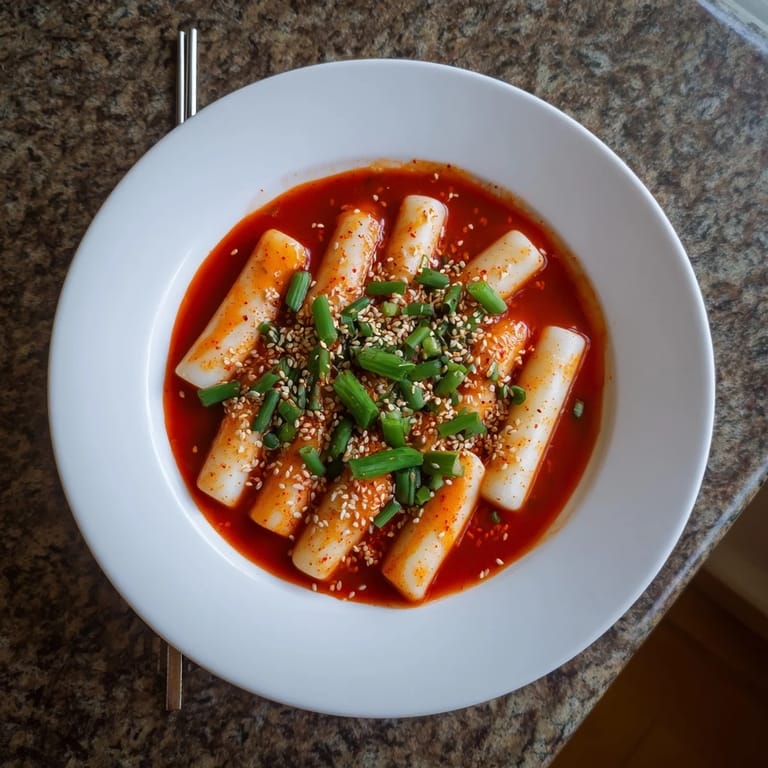
- Transfer to a platter, shower with sesame seeds, and serve immediately while the rice cakes are still at peak chew.
 Save to Pinterest
 One rainy afternoon, I made a double batch of tteokbokki and ate it straight from the pot while watching the rain streak down the window. The heat from the gochugaru warmed me from the inside, and the chewiness of each rice cake felt like a small, satisfying meditation. That day, tteokbokki stopped being just a recipe and became a ritual, a way to comfort myself when the world felt grey.
Adjusting the Heat
The beauty of tteokbokki is that you control the fire. Start with less gochugaru if you're cautious, then taste and add more as the sauce simmers. I learned this after making a batch so spicy my friend's eyes watered and she had to fan her mouth with a napkin. Now I always offer extra chili flakes on the side so everyone can dial in their own adventure. The gochujang provides the base heat, but the gochugaru is where the real punch lives.
Add-Ins and Variations
Once you nail the basic recipe, tteokbokki becomes a canvas. I love adding fish cakes sliced into ribbons; they soak up the sauce and add a bouncy texture that contrasts with the rice cakes. Ramen noodles stirred in during the last few minutes turn it into rabokki, a mashup that's dangerously addictive. Sometimes I throw in mushrooms, Korean glass noodles, or even mozzarella for a stretchy, cheesy twist that feels indulgent and wrong in the best way.
Serving Suggestions
Tteokbokki shines as a main dish, but it also plays well with others. I always serve it with pickled radish on the side; the tart crunch cuts through the richness and resets your palate between bites. Steamed dumplings, kimbap, or a simple cucumber salad round out the meal beautifully. If you're feeling extra, fry up some Korean fried chicken and make it a full street food feast. Just don't forget cold drinks; the heat sneaks up on you.
- Pair with pickled radish or kimchi for palate-cleansing crunch.
- Serve alongside steamed dumplings or kimbap for a complete Korean meal.
- Keep cold water or milk nearby; dairy tames the heat better than anything else.
 Save to Pinterest
 Every time I make tteokbokki, I'm reminded that the best dishes are the ones that make you slow down and savor every chewy, spicy, sweet bite. This one never gets old, and it always brings people together.
Recipe FAQs
- → Can I make tteokbokki without anchovies?
Yes, you can make a vegetarian version by using only kelp for the broth or simply using water with the seasonings. The gochujang sauce provides plenty of umami flavor on its own.
- → Why are my rice cakes not getting soft?
If your rice cakes are hard or refrigerated, soak them in warm water for 10 minutes before cooking. Simmer them for the full 10-15 minutes to ensure they become soft and chewy throughout.
- → How can I adjust the spice level?
Control the heat by adjusting the amount of gochugaru (Korean chili flakes). Start with less if you're sensitive to spice, or add more for extra kick. The gochujang provides base heat and flavor.
- → What can I add to make tteokbokki more filling?
Add fish cakes sliced into strips, boiled eggs, dumplings, or vegetables like cabbage and mushrooms. These additions make it a more substantial meal while complementing the spicy sauce.
- → Can I store leftover tteokbokki?
Store leftovers in an airtight container in the refrigerator for up to 2 days. The rice cakes may harden when cold, so reheat gently with a splash of water to restore their chewy texture.
- → Where can I find Korean rice cakes?
Look for cylindrical tteok in the refrigerated or frozen section of Korean or Asian grocery stores. You can also find them online. Fresh rice cakes work best, but frozen ones are perfectly acceptable.