 Save to Pinterest
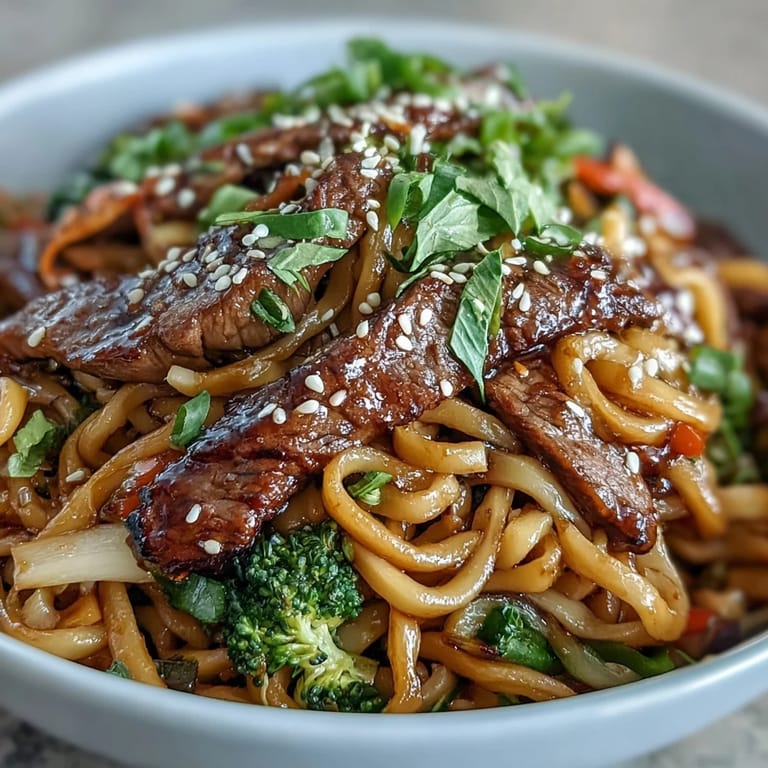
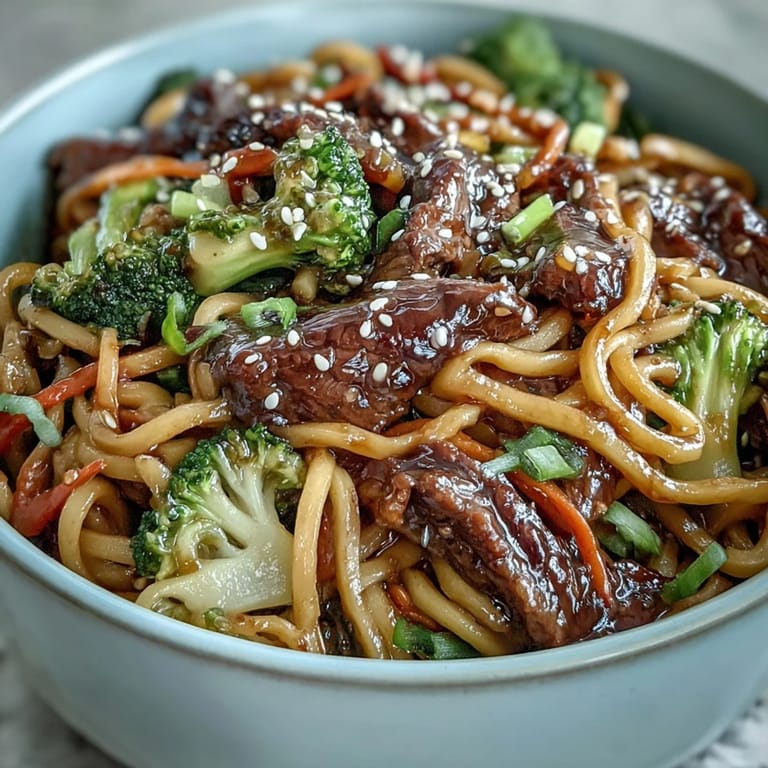
 The skillet was still crackling when my neighbor leaned over the fence and asked what smelled so good. I had just dumped in the garlic and ginger, and that sharp, sweet aroma was drifting across the yard like an invitation. Korean beef noodles became my weeknight answer to takeout cravings, the kind of dish that looks impressive but comes together faster than delivery. There is something deeply satisfying about watching flank steak sear hard and fast, then tossing it with glossy noodles and vegetables that still have snap.
I made this for a friend who was convinced she didn't like beef, and she went back for seconds without a word. The key was slicing the flank steak thin enough that it practically melted into the sauce. We sat on the porch with our bowls, and she kept picking out the caramelized bits of garlic stuck to the noodles. That night taught me that texture matters as much as flavor, and that a good sear can convert even the skeptics.
Ingredients
- Rice noodles: These turn silky and slippery when tossed with the sauce, and they soak up flavor without getting mushy if you don't overcook them.
- Flank steak: Slicing against the grain is non-negotiable here, it keeps the meat tender and prevents chewing through rubber bands.
- Broccoli florets: They add a slight bitterness that balances the sweetness of the sauce, and they hold up well under high heat.
- Bell pepper: Red or yellow brings a pop of color and a mild sweetness that doesn't compete with the other flavors.
- Carrot: Julienned thin, it cooks quickly and adds a gentle crunch that contrasts with the noodles.
- Green onions: Chopped fresh at the end, they bring a sharp, grassy note that wakes up the whole dish.
- Garlic: Minced fine so it disperses evenly and perfumes the oil the moment it hits the pan.
- Ginger: Grated fresh, it adds a warm, slightly spicy undertone that makes the sauce feel alive.
- Soy sauce: The salty backbone of the sauce, it deepens everything it touches.
- Brown sugar: Just enough to round out the soy and create a glossy coating without turning the dish into dessert.
- Sesame oil: A few drops go a long way, adding a toasty, nutty finish that lingers.
- Vegetable oil: High smoke point means you can get the skillet screaming hot without burning anything.
- Sesame seeds: Toasted and sprinkled on top, they add a final layer of nuttiness and a little crunch.
Tired of Takeout? 🥡
Get 10 meals you can make faster than delivery arrives. Seriously.
One email. No spam. Unsubscribe anytime.
Instructions
- Prep the noodles:
- Cook the rice noodles according to the package, then drain and rinse them under cold water to stop the cooking. This keeps them from turning into a gummy clump later.
- Sear the beef:
- Heat the vegetable oil in a large skillet or wok until it shimmers, then add the sliced flank steak in a single layer. Let it sit undisturbed for a minute or two so it gets a nice brown crust, then flip and cook another minute before pulling it out.
- Bloom the aromatics:
- Toss the garlic and ginger into the same hot skillet and stir constantly for about 30 seconds. You will know it is ready when the smell hits you and your eyes start to water a little.
- Stir-fry the vegetables:
- Add the broccoli, bell pepper, and carrot, and keep everything moving in the pan. They should soften but still have some bite after about 5 minutes.
- Mix the sauce:
- While the vegetables cook, whisk together the soy sauce, brown sugar, and sesame oil in a small bowl until the sugar dissolves completely. Taste it and adjust if you want more sweetness or salt.
- Bring it all together:
- Return the beef to the skillet and pour the sauce over everything, stirring to coat. Then add the cooked noodles and toss gently with tongs until every strand is glossy and heated through, about 2 minutes.
- Garnish and serve:
- Scatter the chopped green onions and sesame seeds over the top and serve immediately while everything is still hot. The contrast between the warm noodles and the fresh garnish is part of the magic.
 Save to Pinterest
 The first time I brought this to a potluck, someone asked if I had ordered it from a restaurant. I didn't correct them right away because it felt good to know that something I made in twenty minutes could hold its own next to dishes people spent hours on. Later, I shared the recipe, and now it's become a regular in three other kitchens I know of.
Choosing Your Vegetables
I have thrown snap peas, zucchini, and even thinly sliced cabbage into this skillet depending on what was about to go bad in the fridge. The key is cutting everything to a similar size so it cooks evenly. If you use something watery like zucchini, add it toward the end so it doesn't turn mushy and dilute the sauce.
Making It Spicy
A spoonful of gochujang stirred into the sauce transforms this into something with real heat and a deeper, fermented funk that feels more authentically Korean. If you don't have gochujang, a squeeze of sriracha works too, though it won't have the same complexity. Start with a teaspoon and taste as you go, because it is easier to add heat than to take it away.
Storing and Reheating
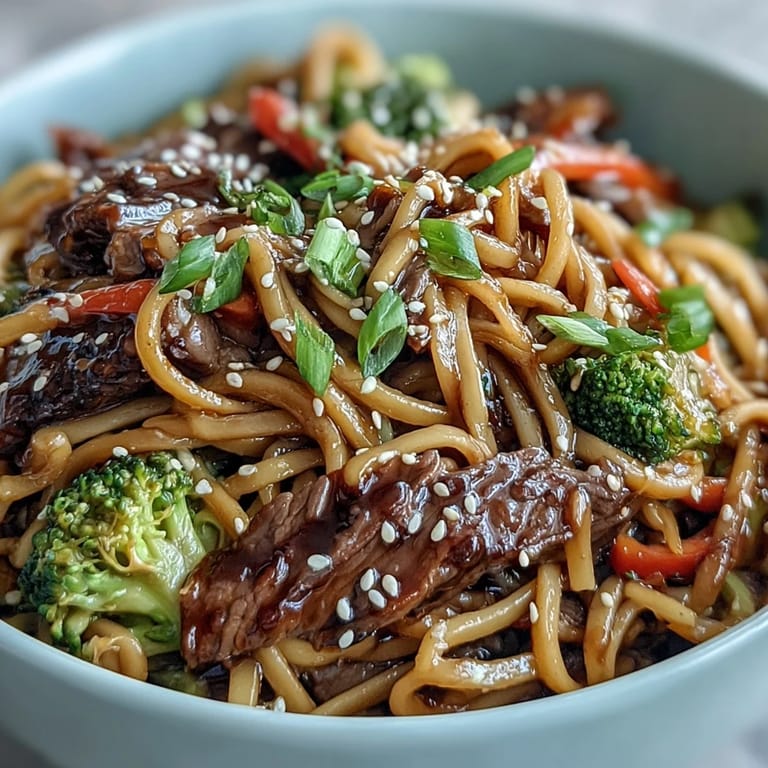
Leftovers keep well in an airtight container for up to three days, and I have found they taste even better the next day once the flavors have had time to settle. Reheat gently in a skillet with a splash of water to loosen the noodles, or microwave in short bursts, stirring between each one.
- Add a drizzle of sesame oil before reheating to bring back some of that toasty aroma.
- If the noodles seem dry, a tablespoon of soy sauce or broth will revive them.
- Garnish with fresh green onions again after reheating so it doesn't taste like leftovers.
 Save to Pinterest
 This dish has pulled me out of more weeknight slumps than I can count, and it never feels like a compromise. Every time I make it, I remember that good food doesn't have to be complicated, it just has to be made with attention.
Recipe FAQs
- → Can I use a different cut of beef?
Yes, you can substitute sirloin, skirt steak, or ribeye for flank steak. Slice thinly against the grain for tender results.
- → What type of rice noodles work best?
Medium-width rice stick noodles or pad thai-style noodles are ideal. Follow package instructions for cooking times as they vary by brand.
- → How can I make this spicier?
Add 1-2 tablespoons of gochujang or sriracha to the sauce mixture, or sprinkle red pepper flakes while stir-frying the vegetables.
- → Can I prepare components ahead of time?
Yes, slice the beef and vegetables up to 24 hours in advance. Mix the sauce and store separately. Cook and combine everything when ready to serve.
- → Is this gluten-free?
Use tamari or certified gluten-free soy sauce and verify your rice noodles are gluten-free. Most rice noodles are naturally gluten-free.
- → What vegetables can I substitute?
Snap peas, zucchini, bok choy, or mushrooms work well. Keep cooking times similar to maintain the crisp-tender texture.