 Save to Pinterest
 The steam rising from these savory pancakes always takes me back to a tiny street stall in Osaka, where I watched an elderly grandmother flip okonomiyaki with practiced hands. She pressed the batter down with her spatula, singing softly to herself while the cabbage sizzled and caramelized. That night, rain poured down outside, and inside, the smell of dashi and cooking pork filled every corner of the narrow shop. I've been chasing that perfect crisp-edged, tender-centered pancake ever since.
Last winter, my sister and I made an assembly line in my tiny kitchen, cooking batch after batch while snow piled up outside the windows. We argued over whether the bacon should go inside the batter or pressed on top (she won that debate). By the time we sat down to eat, stacks of okonomiyaki towered between us, sauce-drizzled and steaming, while we toasted with cold cans of Japanese beer. Sometimes the messiest cooking nights become the best memories.
Ingredients
- 1 cup all-purpose flour: Forms the tender base that holds everything together while staying light and fluffy
- 2/3 cup dashi stock or water: Dashi adds that essential umami depth that water alone cannot provide
- 2 large eggs: Bind the batter and create structure, so do not skimp here or your pancakes may fall apart
- 1/2 tsp salt: Enhances all the other flavors without making the pancakes taste salty
- 1/2 tsp baking powder: Gives the interior that appealing puff and tenderness
- 3 cups finely shredded green cabbage: The star of the show, providing crunch and sweetness while keeping the pancake moist
- 1/4 cup green onions, thinly sliced: Add mild onion flavor and pops of bright green color throughout
- 1 small carrot, julienned: Brings subtle sweetness and beautiful orange flecks to the mix
- 1/2 cup bean sprouts: Optional but adds satisfying crunch and fresh texture contrast
- 4 strips bacon or pork belly, halved: Rendering directly on top infuses the whole pancake with smoky, savory richness
- 1/2 cup cooked shrimp, chopped: Optional protein addition that pairs beautifully with the other flavors
- 1/4 cup okonomiyaki sauce: This sweet-tangy condiment is absolutely essential for the authentic experience
- 1/4 cup Japanese mayonnaise: Creamier and richer than American mayo, it balances the sauce perfectly
- 1/4 cup bonito flakes: Smoky, intensely savory shaved fish that curl and dance on the hot pancakes
- 2 tbsp aonori: Dried seaweed flakes add ocean flavor and a gorgeous deep green finish
- 2 tbsp pickled ginger: Bright, acidic contrast that cuts through the richness of the toppings
Tired of Takeout? 🥡
Get 10 meals you can make faster than delivery arrives. Seriously.
One email. No spam. Unsubscribe anytime.
Instructions
- Whisk the batter base:
- In a large bowl, combine flour, dashi, eggs, salt, and baking powder until completely smooth and free of lumps. The mixture should be thick enough to coat the vegetables but thin enough to pour easily.
- Fold in the vegetables:
- Gently mix in cabbage, green onions, carrot, bean sprouts, and shrimp until every piece is lightly coated in batter. Be careful not to overwork the mixture or the cabbage will lose its crunch.
- Heat your pan:
- Warm a large nonstick skillet over medium heat and add just enough oil to lightly film the surface. The pan is ready when a drop of batter sizzles gently on contact.
- Shape and top:
- Pour one quarter of the batter onto the skillet and spread into a round about 1/2 inch thick. Lay two bacon halves across the top, pressing them lightly into the batter.
- Cook the first side:
- Let the pancake cook undisturbed for 4 to 5 minutes until the bottom is deep golden brown and crispy. Resist the urge to peek too early or the bacon will not cook properly.
- Flip and finish:
- Carefully slide a spatula underneath and flip in one confident motion. Cook another 4 to 5 minutes until the bacon is crisp and the pancake feels firm when pressed.
- Repeat and serve:
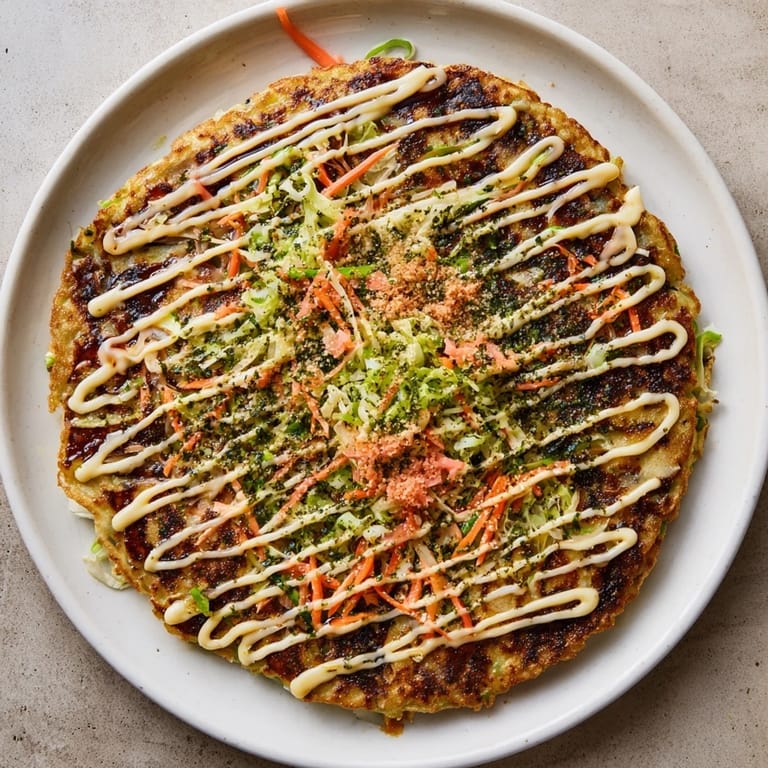
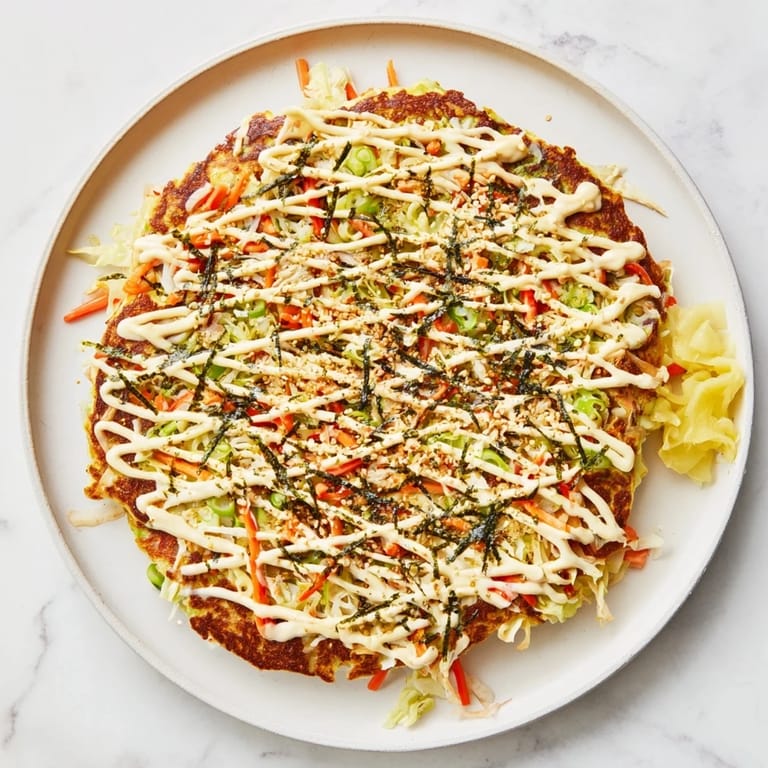
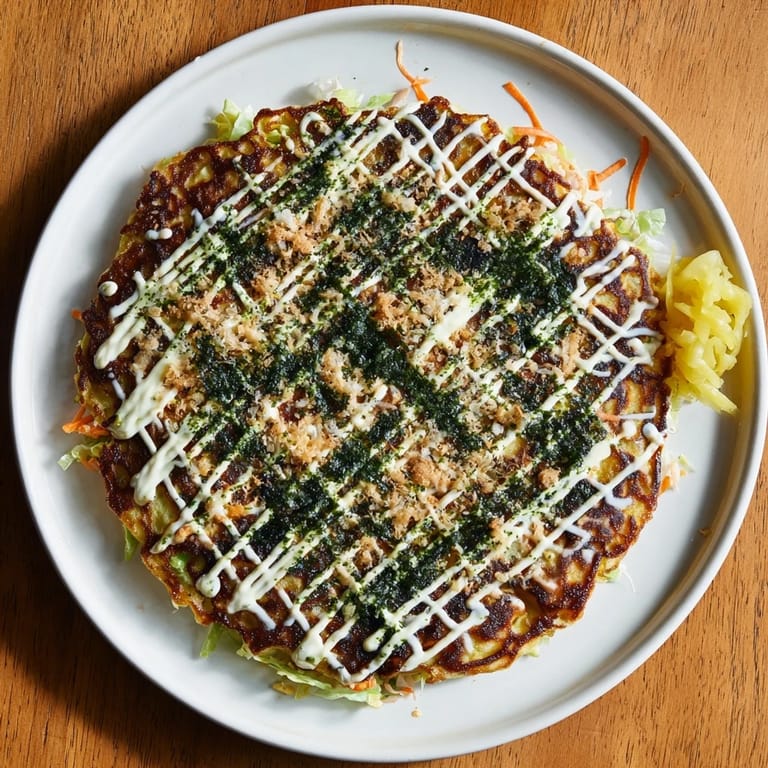
- Cook the remaining pancakes and transfer all to serving plates. Drizzle with sauce and mayonnaise in a crisscross pattern, then top with bonito, aonori, and pickled ginger.
 Save to Pinterest
 These pancakes became my go-to comfort food during graduate school, when time and money were both scarce but I still wanted something that felt special. I would make a massive batch on Sunday nights and eat them for breakfast, lunch, and dinner until they were gone. Now, the smell of cabbage caramelizing in butter instantly transports me back to those late-night study sessions, okonomiyaki in one hand and highlighter in the other.
Getting the Perfect Texture
The trick lies in how finely you shred your cabbage. Too coarse and the pancake will not hold together, too fine and you lose that signature crunch. I use a sharp knife and aim for thin, uniform strips, almost like coleslaw but slightly thicker. The contrast between tender batter and crisp cabbage is what makes okonomiyaki so addictive.
Making It Your Own
In Japan, every family has their own version, and you should feel free to develop yours too. I have added corn kernels for sweetness, grated cheese for richness, even leftover roasted vegetables when that was all I had. The batter is remarkably forgiving as long as you keep the ratios roughly the same.
Sauce Secrets
While store-bought okonomiyaki sauce works perfectly well, I have started making my own by whisking together ketchup, Worcestershire, soy sauce, and a touch of sugar. It comes together in seconds and tastes fresher than anything from a bottle. Adjust the proportions until it hits that perfect balance of sweet, tangy, and savory.
- Keep leftover sauce in a sealed jar in the refrigerator for up to a month
- The flavor actually develops and improves after a few days of sitting
- Double the batch because you will want to put it on everything
 Save to Pinterest
 Whether you are cooking for a crowd or just treating yourself on a Tuesday night, these pancakes have a way of making any meal feel like a celebration. Gather your favorite toppings and make them your own.
Recipe FAQs
- → What does okonomiyaki mean?
Okonomiyaki translates to "grilled as you like it"—okonomi means "what you like" and yaki means "grilled." This reflects the dish's customizable nature with various fillings and toppings.
- → Can I make okonomiyaki vegetarian?
Absolutely. Simply omit the bacon, pork, shrimp, and bonito flakes. The cabbage pancake itself is naturally vegetarian and delicious with just sauce, mayonnaise, aonori seaweed, and pickled ginger.
- → What can I substitute for okonomiyaki sauce?
Mix equal parts Worcestershire sauce, ketchup, and a splash of soy sauce with a teaspoon of sugar. This homemade version closely mimics the sweet-tangy flavor of traditional okonomiyaki sauce.
- → Why is my okonomiyaki falling apart?
The batter should be thick enough to hold the cabbage together. If it's too loose, add another tablespoon of flour. Also, let the pancake cook fully before flipping—about 5 minutes per side ensures proper structure.
- → Can I prepare okonomiyaki ahead of time?
You can shred vegetables and mix the batter a few hours ahead. Cooked okonomiyaki keeps well in the refrigerator for 2-3 days—reheat in a skillet to restore crispiness before adding fresh toppings.