 Save to Pinterest
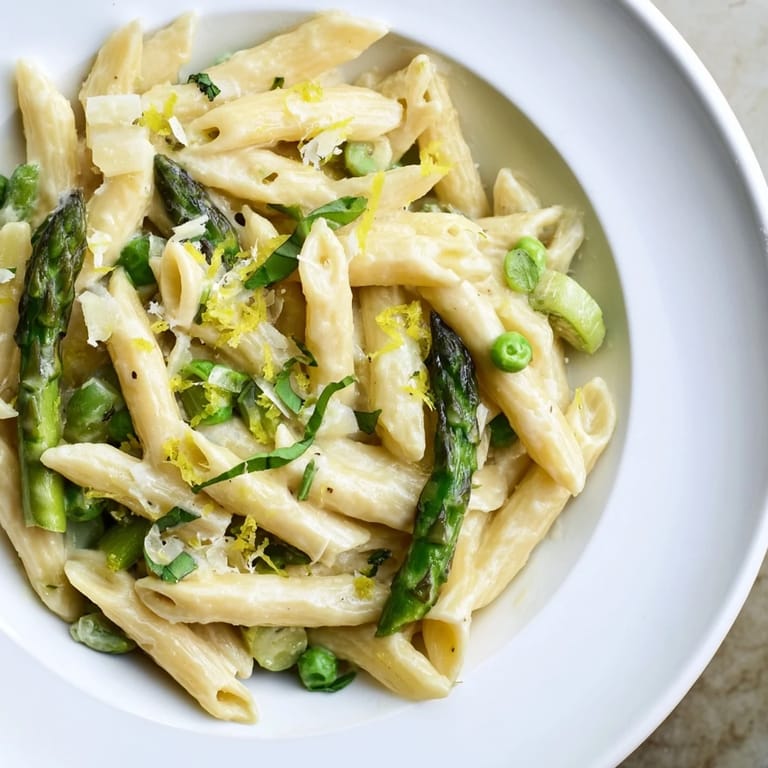
 The first time I made this pasta, I'd grabbed vegetables from the farmers market without a real plan. My kitchen counter was piled high with asparagus and snap peas, and something about the bright green colors just felt like spring on a plate. I threw together a quick cream sauce with garlic and Parmesan, mostly because those were the things I always had in my fridge. When I took that first bite, standing over the stove with a wooden spoon, I knew this random assortment had become something I'd make again and again.
Last April, my sister came over for dinner and I made this on impulse. She's usually skeptical about vegetarian pasta, but she took one bite and literally went quiet for a full minute. The way the lemon zest cuts through the cream, she said, makes it taste like something from a restaurant but better. Now she texts me every spring asking when I'm going to make it again.
Ingredients
- 350 g (12 oz) penne pasta: The ridges catch the sauce beautifully, and I've found penne holds up better than spaghetti when you're tossing it with vegetables
- 200 g (7 oz) asparagus: Choose spears that are firm and bright green, snapping off the woody ends before cutting into pieces
- 150 g (1 cup) fresh or frozen peas: Fresh peas are wonderful if you can find them, but frozen work perfectly fine and are often sweeter
- 150 g (1 cup) green beans: Trim the ends and cut them the same size as your asparagus so everything cooks evenly
- 2 tbsp olive oil: This creates the base for sautéing the garlic and vegetables, adding a subtle fruity note
- 3 cloves garlic, finely minced: Fresh garlic is non-negotiable here, the jarred stuff just doesn't have the same punch
- 60 ml (1/4 cup) vegetable broth: This helps deglaze the pan and adds depth to the cream sauce
- 120 ml (1/2 cup) heavy cream: Creates that luxurious silky coating that clings to every piece of pasta
- 60 g (2/3 cup) freshly grated Parmesan cheese: Buy a wedge and grate it yourself, pre-grated cheese has anti-caking agents that prevent smooth melting
- 1/2 tsp freshly ground black pepper: Freshly cracked pepper makes a huge difference in flavor complexity
- 1/4 tsp salt: Start with this and adjust at the end, remembering the Parmesan is already salty
- Zest of 1 lemon: This brightens the entire dish and cuts through the richness
- 1 tbsp fresh lemon juice: Adds just enough acidity to balance the cream
- Extra grated Parmesan and fresh herbs: Basil or parsley adds a fresh finish and makes everything look inviting
Tired of Takeout? 🥡
Get 10 meals you can make faster than delivery arrives. Seriously.
One email. No spam. Unsubscribe anytime.
Instructions
- Get your pasta water going first:
- Bring a large pot of salted water to boil and cook the penne until al dente, reserving that 120 ml of pasta water before draining. This starchy liquid is pure gold for bringing your sauce together.
- Sauté the garlic until fragrant:
- Heat olive oil in your large skillet over medium heat and add the minced garlic, cooking for just one minute until you can smell it. Watch closely because garlic goes from fragrant to burnt faster than you'd think.
- Add the vegetables:
- Toss in the asparagus, green beans, and peas, sautéing for 3 to 4 minutes. You want them tender but still vibrant green, not sad and olive-colored.
- Create the sauce base:
- Pour in the vegetable broth and let it bubble for 2 minutes, scraping up any flavorful bits from the bottom of the pan.
- Make it creamy:
- Reduce heat to low and stir in the heavy cream and Parmesan, keeping it at a gentle simmer until the cheese melts completely into a smooth sauce.
- Bring it all together:
- Add the cooked penne to the skillet and toss everything together, using that reserved pasta water as needed to achieve a silky, coating consistency.
- Season and finish:
- Sprinkle in the black pepper, salt, lemon zest, and lemon juice, tossing one final time to distribute all those bright flavors evenly.
- Serve it up:
- Plate immediately while it's piping hot, generously topped with extra Parmesan and those fresh chopped herbs you prepped earlier.
 Save to Pinterest
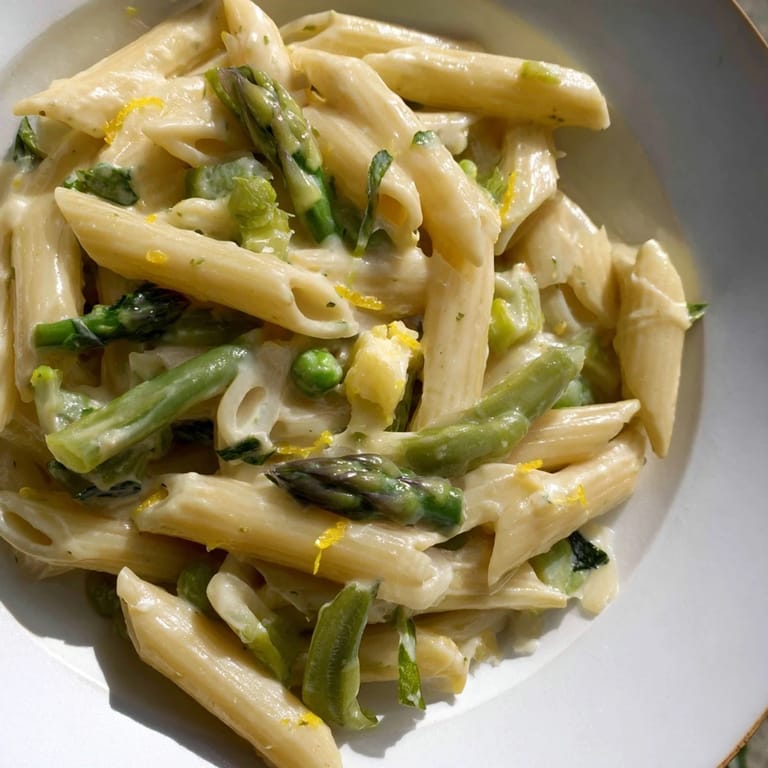
 This recipe became a regular in our rotation partly because it's forgiving. I've made it when the asparagus was slightly past its prime, I've used frozen peas when fresh were nowhere to be found, and somehow it always comes out tasting like spring. There's something about the combination of bright vegetables and creamy sauce that just works.
Making It Lighter
Half-and-half works beautifully if you're watching your intake, and I honestly can barely tell the difference once all the other flavors come together. The key is still that lemon zest and juice to keep things bright and prevent the dish from feeling too heavy.
Adding Some Heat
A pinch of red pepper flakes in the oil with the garlic transforms this into something entirely different. I started doing this when my partner requested a bit of kick, and now it's become the default way I make it for ourselves.
Getting Ahead
You can chop all your vegetables ahead of time and keep them in the fridge. The sauce comes together so quickly that having everything prepped makes this feel like almost no work at all. I often do this on Sunday for an easy Monday dinner.
- The pasta water trick works for almost any cream sauce recipe
- If your sauce gets too thick, a splash more pasta water fixes it instantly
- Leftovers reheat surprisingly well with a tiny splash of cream or milk
 Save to Pinterest
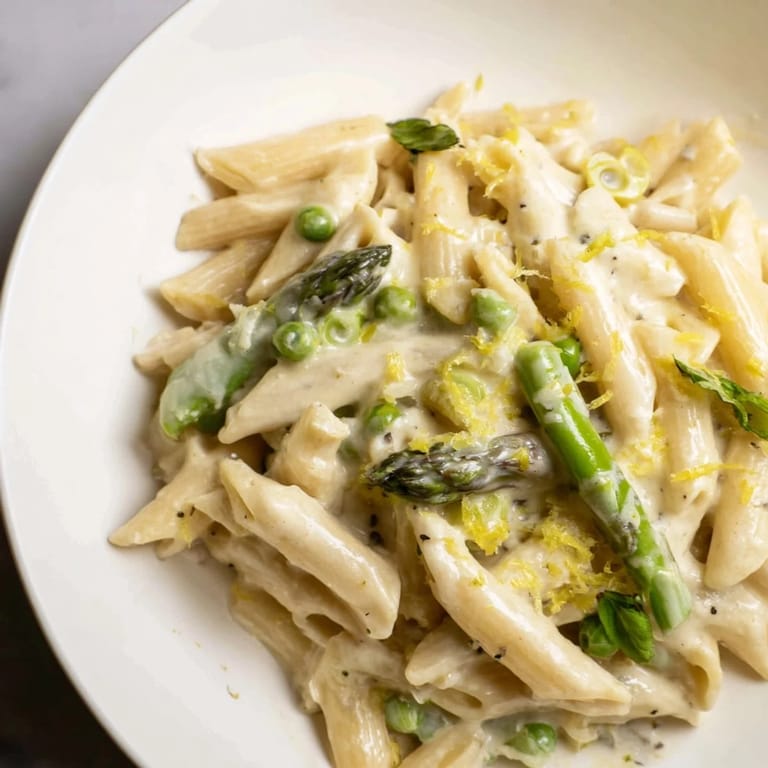
 There's something so satisfying about a dish that celebrates vegetables without making them feel like an afterthought. This pasta has become my go-to for bringing a little spring brightness to the table, and I hope it finds its way into your regular rotation too.
Recipe FAQs
- → Can I prepare this dish ahead of time?
This pasta is best served immediately after tossing. However, you can prep ingredients earlier—trim vegetables and mince garlic up to 2 hours ahead, storing in separate containers.
- → What vegetables can I substitute?
Spring vegetables work beautifully here. Try zucchini, snow peas, or broccoli in place of any listed vegetable. Maintain similar cooking times for tender results.
- → How do I achieve a silky sauce?
Reserved pasta water is key—it contains starch that emulsifies with cream and cheese. Add it gradually while tossing, creating a velvety coating rather than a heavy sauce.
- → Is this suitable for dietary restrictions?
Naturally vegetarian. For vegan, use plant-based cream and vegan Parmesan. Substitute wheat pasta for gluten-free needs. Always verify product labels for allergens.
- → What's the best way to zest a lemon?
Use a microplane zester for fine, fluffy zest without the bitter white pith. Alternatively, a vegetable peeler followed by mincing works well. Fresh zest adds bright, essential flavor.
- → Can I make this with frozen vegetables?
Yes, frozen peas, asparagus, and green beans work excellently. Thaw them first or cook slightly longer until tender. Quality is comparable to fresh for this preparation method.