 Save to Pinterest
 I discovered this salad on a sweltering afternoon when my fridge felt depressingly empty except for some leftover noodles and a pile of vegetables I'd forgotten about. Rather than order takeout, I decided to improvise—whisking together whatever oils and sauces seemed reasonable, tossing in some garlic because, well, garlic fixes almost everything. Twenty minutes later, I was shocked at how vibrant and satisfying it turned out to be, so much so that it became my go-to lunch on days when I wanted something that felt fresh without requiring any actual cooking skill.
I made this for a potluck one summer, and it was the first dish to empty while hot pasta salads sat mostly untouched. Someone asked for the recipe, then someone else, and suddenly I realized I'd accidentally created something people actually wanted to eat—not because it was complicated, but because the combination of savory, garlicky, and bright just works.
Ingredients
- Dried wheat noodles (250 g): Lo mein or spaghetti work beautifully, though I've had great results with soba if you want something slightly earthier—just make sure to rinse them really well so they don't clump together.
- Neutral oil (3 tbsp): Grapeseed or vegetable oil are your best friends here because they won't overpower the garlic or become heavy in a cold salad.
- Garlic cloves (5 large, minced): Don't skip the mincing step—large chunks are overpowering, but tiny pieces disperse evenly and mellow as they cool.
- Toasted sesame oil (1 tsp): This is non-negotiable for flavor; it's the secret that makes people ask what you did differently.
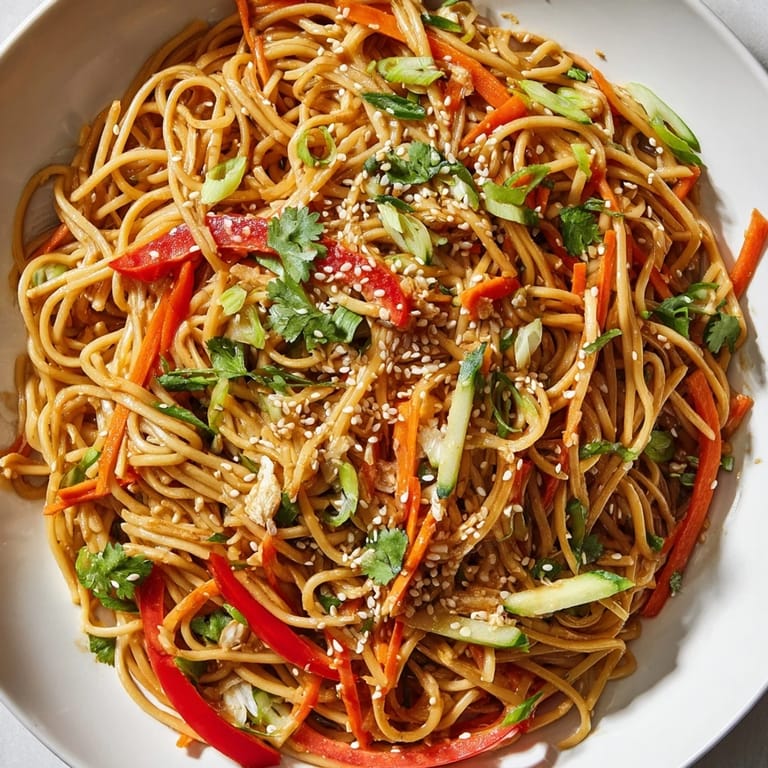
- Carrots (1 cup, julienned): The julienne matters because thin strands coat better with dressing and have a nicer texture than chunks.
- Red bell pepper (1 cup, thinly sliced): Red peppers are sweeter than green, which balances the saltiness of the soy sauce perfectly.
- Cucumber (1 cup, deseeded and julienned): Deseeding prevents the salad from becoming watery as it sits—a lesson I learned the hard way.
- Spring onions (2, thinly sliced): These add a gentle onion sharpness that keeps the salad from feeling one-note.
- Fresh cilantro (1/2 cup, roughly chopped): If cilantro tastes like soap to you, mint or fresh parsley work just as well.
- Soy sauce (3 tbsp): Low-sodium is worth it if you're watching salt, but don't go so light that the salad tastes flat.
- Rice vinegar (1 tbsp): This adds brightness without harshness—regular vinegar will taste too aggressive.
- Honey or maple syrup (1 tsp): A tiny amount of sweetness rounds out the flavors and tames the spice if you use chili flakes.
- Chili flakes (1/2 tsp, optional): Use this if you want heat, but add it to taste—I've made this salad both ways depending on my mood.
- Toasted sesame seeds (2 tbsp): Toast them yourself if you can; the difference between store-bought toasted and fresh-toasted is noticeable.
Tired of Takeout? 🥡
Get 10 meals you can make faster than delivery arrives. Seriously.
One email. No spam. Unsubscribe anytime.
Instructions
- Cook your noodles until tender:
- Boil according to the package timing, then drain and rinse under cold running water until they're completely cool and won't stick together. I usually toss them with a tiny drizzle of oil as they cool so they don't clump.
- Make the garlic oil slowly:
- Heat the neutral oil on medium-low heat and let the minced garlic gently turn golden—you're infusing the oil, not frying it until it's brown and bitter. It should smell incredible after about 2 to 3 minutes, then stir in the sesame oil and let it cool slightly off the heat.
- Whisk the dressing together:
- In a small bowl, combine soy sauce, rice vinegar, honey, chili flakes if using, and a crack of black pepper. Taste it and adjust—it should be balanced between salty, tangy, and slightly sweet.
- Bring everything together gently:
- Pour the cooled garlic oil and dressing over the noodles and toss until every strand is coated. The oil should shine on the noodles, not pool at the bottom of the bowl.
- Layer in your vegetables:
- Add the carrots, bell pepper, cucumber, spring onions, and cilantro and toss gently so you don't bruise the vegetables or break up the noodles into tiny pieces.
- Finish and serve:
- Transfer to a platter or individual bowls, sprinkle with toasted sesame seeds, and serve with lime wedges on the side so people can brighten it up to their taste.
 Save to Pinterest
 I'll always remember bringing this to a friend's backyard gathering on a sweltering day when everyone was too hot to eat anything heavy. Watching people go back for thirds of a cold noodle salad while ignoring the elaborate barbecue made me realize that sometimes the simplest solutions are the most welcome.
Why the Garlic Oil Is the Star
The magic of this salad lives in that fragrant garlic oil—it's not just a dressing component, it's the whole personality of the dish. The gentle cooking mellows the garlic so it's aromatic and sweet rather than sharp and raw, while the sesame oil adds a toasty depth that you can't achieve any other way. I've tried making versions with jarred minced garlic or garlic powder, and it's genuinely not the same; your five minutes of actual attention at the stove makes an enormous difference.
The Art of Vegetable Prep
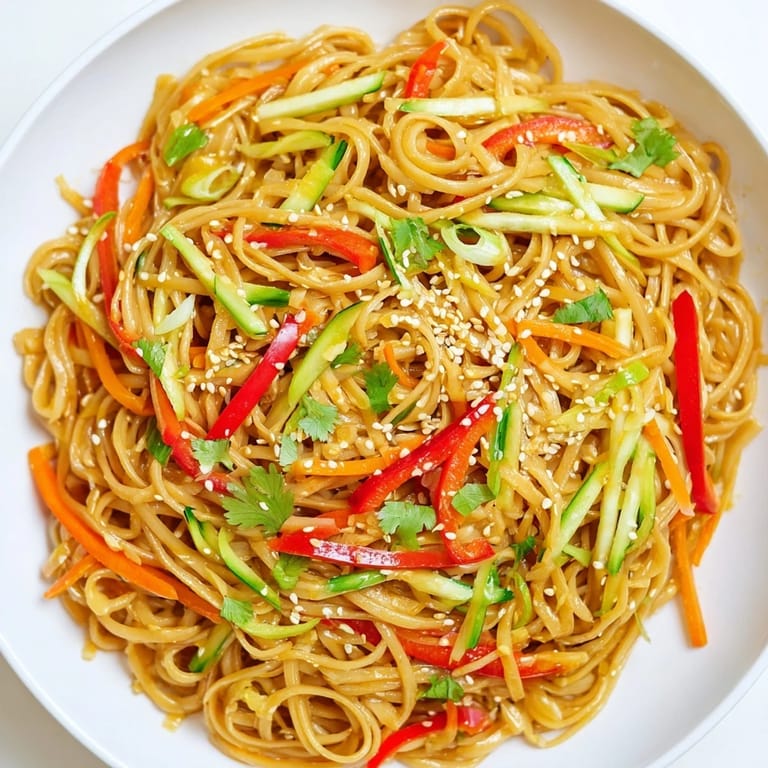
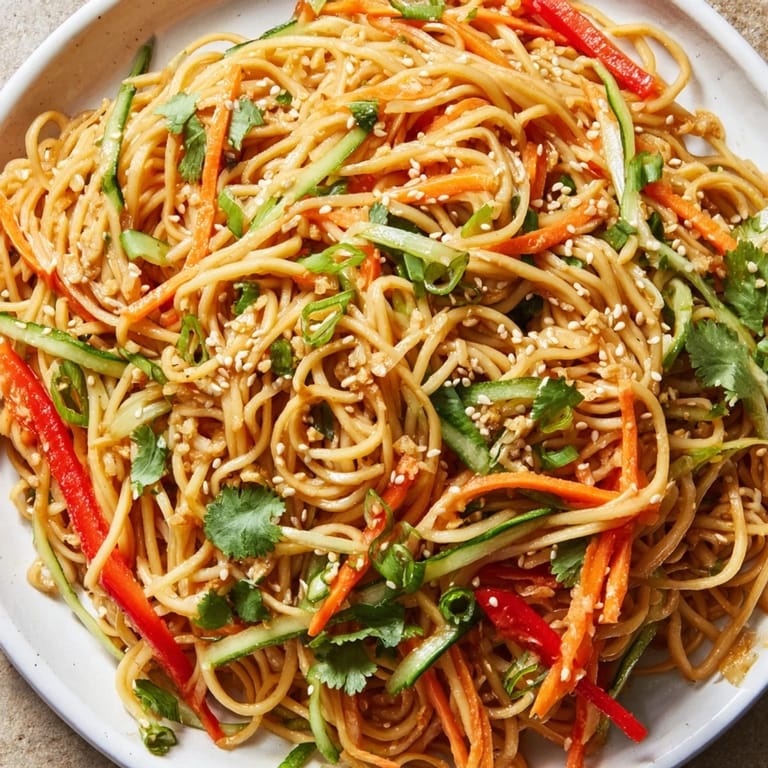
The vegetable choices aren't random—they're all picked for texture contrast and how they absorb the dressing. Carrots and cucumbers julienned thin catch the oil and flavors beautifully, bell peppers sliced thin stay crisp, and spring onions add a whisper of sharpness. I once made this with roughly chopped vegetables to save time, and it turned into a different dish entirely—less elegant, less cohesive. The julienne and thin slices matter.
Make It Your Own
This salad is honestly a template more than a prescription, which is partly why I love it so much. I've made it with shredded cabbage instead of cucumber when I'm out of fresh produce, swapped cilantro for mint on evenings when cilantro soapiness strikes, and even added shredded cooked chicken when I wanted something more substantial. The core—the garlic oil, the noodles, the soy-vinegar dressing—holds everything together.
- Add shredded rotisserie chicken, crispy tofu, or steamed edamame if you want protein without extra cooking.
- Snap peas, radishes, or shredded daikon add interesting crunch if you have them on hand.
- Leftovers keep for up to two days in the fridge, though the noodles will absorb more oil and become softer—which some people actually prefer.
 Save to Pinterest
 This is the kind of recipe that taught me that simplicity and intention are often better than complexity and fuss. It's become my reliable friend on hot days, my contribution to potlucks, and proof that five minutes with a hot pan and some garlic can create something genuinely delicious.
Recipe FAQs
- → What type of noodles work best?
Dried wheat noodles like lo mein, spaghetti, or soba are ideal. For gluten-free, substitute soba or rice noodles.
- → How is the garlic oil prepared?
Neutral oil is gently heated with minced garlic until golden and fragrant, then mixed with toasted sesame oil to add depth.
- → Can I add protein to this dish?
Yes, shredded cooked chicken, tofu, or edamame can be mixed in to boost protein content.
- → What vegetables are included?
Julienned carrots, red bell pepper, cucumber, sliced spring onions, and chopped cilantro provide color and crunch.
- → How should leftovers be stored?
Keep leftovers refrigerated in an airtight container for up to two days to preserve freshness.
- → Is this dish spicy?
Chili flakes are optional, allowing you to adjust the heat level to your preference.