 Save to Pinterest
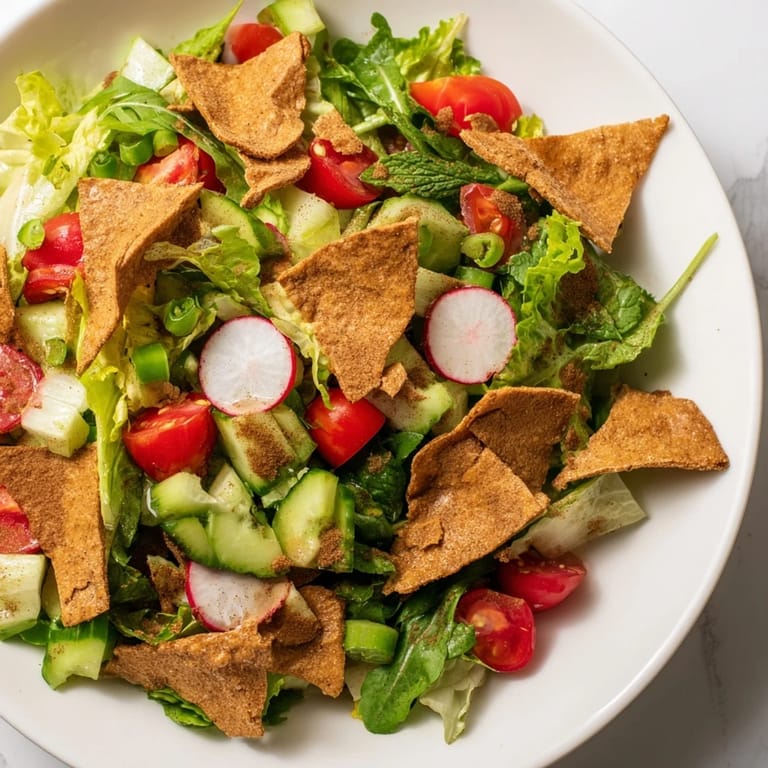
 The first time I made fattoush was on a sticky summer evening when my neighbor brought back a container from a Lebanese restaurant, insisting I try it. What struck me wasn't just the taste but the sound—that satisfying crunch of the pita chips against the soft greens, a texture I'd never found in any salad before. I spent the next week chasing that memory, experimenting in my kitchen until I figured out the magic: perfectly toasted sumac-dusted chips added at the last possible moment, a whisper of lemon and garlic in the dressing, and enough fresh herbs to make every bite feel alive.
I served this at a small dinner party last spring, and what I remember most is watching my guests slow down mid-conversation to appreciate each forkful. Someone asked if the bright flavor was the sumac, and that simple question made me realize how little most people encounter this ingredient outside of restaurant settings. Since then, it's become my go-to when I want to introduce someone to Middle Eastern flavors in the most approachable way possible.
Ingredients
- Mixed greens (4 cups): Use a combination of romaine, arugula, and spinach for layers of flavor and texture; tender greens wilt quickly, so save the heartier romaine for the bottom of your bowl.
- Cherry tomatoes (1 cup, halved): These burst with sweetness and juice, balancing the sharp lemon in the dressing.
- Cucumber (1, diced): Choose firm ones without soft spots; they'll hold their crunch longer once dressed.
- Bell pepper (1, diced): Red or yellow peppers add natural sweetness and vibrant color that makes the whole salad feel celebratory.
- Radishes (4, thinly sliced): They're your secret weapon for peppery bite and structural crunch.
- Green onions (3, sliced): Use both the white and green parts for a layered onion flavor that's less harsh than raw red onions.
- Fresh parsley (1/4 cup, chopped): This isn't just garnish—it's essential to the bright, grassy character of the dish.
- Fresh mint (1/4 cup, chopped): Mint brings cooling sweetness that makes sumac taste even more complex.
- Pita breads (2): Look for the thicker, pillowy kind rather than thin wraps; they'll fry up crispier and hold their structure.
- Olive oil (for chips, 2 tbsp plus 1/4 cup for dressing): Use extra-virgin for the dressing where you taste it directly, but regular olive oil works fine for toasting the pita.
- Sea salt (1 tsp total): Kosher salt works too, but sea salt dissolves more evenly into the dressing.
- Ground sumac (1.5 tsp total): This is the soul of the recipe—tart, lemony, and irreplaceable; buy it from a spice shop or online if your grocery store doesn't carry it.
- Fresh lemon juice (2 tbsp): Bottled lemon juice makes the dressing taste thin; fresh lemons cost almost nothing and make a genuine difference.
- Red wine vinegar (1 tbsp): It adds depth and a whisper of tannin that keeps the dressing from being one-note.
- Garlic clove (1, minced): One clove is plenty; garlic can easily overpower the delicate herbs if you're not careful.
- Black pepper (1/4 tsp, freshly ground): Fresh pepper smells sharper and tastes brighter than pre-ground.
Tired of Takeout? 🥡
Get 10 meals you can make faster than delivery arrives. Seriously.
One email. No spam. Unsubscribe anytime.
Instructions
- Toast your pita until it sings:
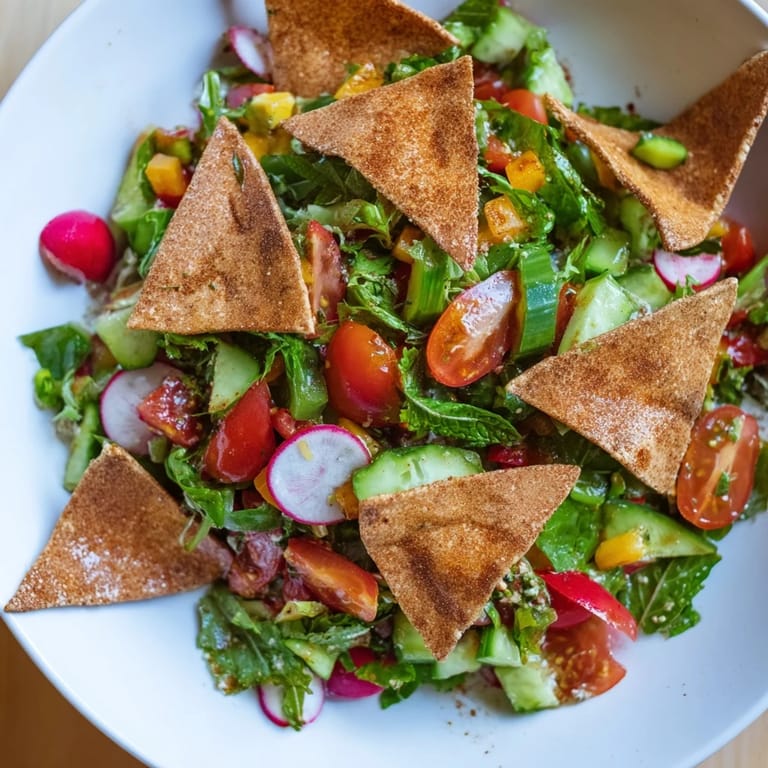
- Preheat your oven to 375°F and cut the pita breads into bite-sized pieces—think roughly the size of a large crouton. Toss them in a bowl with olive oil, sea salt, and sumac, making sure every piece gets a light coating. Spread them on a baking sheet in a single layer and slide them into the oven for 8 to 10 minutes, giving them a gentle stir halfway through. You'll know they're done when they're golden brown and crisp enough to snap in half; they'll continue to harden slightly as they cool, so pull them out while they still look a touch tender.
- Build your dressing with intention:
- In a small bowl, whisk together the olive oil, fresh lemon juice, red wine vinegar, ground sumac, minced garlic, salt, and pepper until it tastes bright and balanced—taste it as you go, because dressings are very forgiving. The sumac should be the star, giving it a lemony tartness, so adjust accordingly if your version tastes too oily or too sharp.
- Compose your salad base:
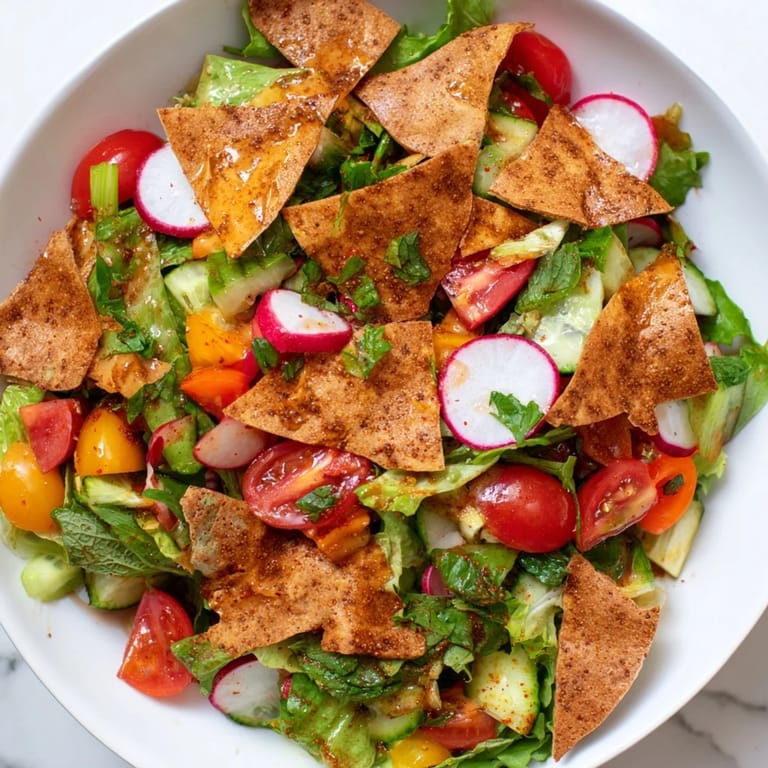
- In a large salad bowl, combine all your greens, tomatoes, cucumber, bell pepper, radishes, green onions, parsley, and mint. This is where you can be generous with the herbs; they're what make fattoush distinct from any other green salad.
- Dress and toss with care:
- Drizzle your dressing over the greens and toss everything gently but thoroughly, using your hands if you have to in order to make sure every leaf gets a whisper of that tangy coating. The whole process should take 30 seconds, not more.
- Crown it with crunch:
- Top the salad with your cooled pita chips just before serving—this is non-negotiable if you want them to stay crispy rather than softening into chewy sadness. Serve immediately and watch people light up.
 Save to Pinterest
 There's something about eating a properly made fattoush that feels like a small act of care—for yourself, for your guests, for the ritual of sitting down to something bright and alive. It's one of those rare dishes that tastes both simple and special at the same time.
The Secret Life of Sumac
Sumac gets mistaken for its toxic cousin by people who don't cook much, which is a shame because it's one of the most underrated ingredients in any kitchen. It tastes like bottled sunshine and lemon had a baby—tart, slightly fruity, and utterly irreplaceable. Once you start cooking with sumac, you'll find yourself reaching for it in places you never expected: on roasted vegetables, on fish, even sprinkled over scrambled eggs. The thing about sumac is that it's been used in Middle Eastern cooking for centuries, and yet it only recently started showing up in mainstream grocery stores, which means most home cooks have no idea what they're missing.
Why Pita Chips Matter More Than You Think
The difference between a good fattoush and a forgettable one lives entirely in those pita chips. I learned this the hard way when I once tried to cut corners by buying pre-made croutons, and the salad fell completely flat—there was no personality, no connection to the Middle Eastern roots of the dish. Homemade pita chips, toasted with sumac and salt, taste like nothing else: they're herbaceous, crispy, and genuinely delicious enough to eat on their own. The sumac on the chips is just as important as the sumac in the dressing; it creates a flavor echo that ties the whole dish together.
Building Your Salad Like You Mean It
The beauty of fattoush is that it's forgiving—you can use whatever greens and vegetables you have, whatever herbs look fresh that day. The formula that matters is this: something green and tender, something crunchy, something bright and herbaceous, and something that adds bite or sweetness. The dressing and the pita chips are your anchors; everything else is negotiable. If you have radishes, use them; if you have cucumber instead of bell pepper, that works too. I've made versions with shredded carrots, with blanched green beans, with pomegranate seeds when I'm feeling fancy.
- Don't dress the salad until you're ready to serve it, or the greens will begin to wilt.
- If you're making this ahead for an event, toast the chips, make the dressing, and prep all the vegetables separately; then assemble 10 minutes before guests arrive.
- Taste the dressing on a piece of lettuce before you commit it to the whole bowl; it should taste bright enough to make your mouth water.
 Save to Pinterest
 Fattoush is the kind of salad that reminds you why people bother cooking at all—it's alive with flavor, generous with texture, and it makes whatever meal it's part of taste intentional. Make it once and you'll understand why my neighbor was so eager to share it.
Recipe FAQs
- → What gives the salad its distinctive tangy flavor?
The tangy flavor comes from a sumac-based dressing, combining lemon juice, red wine vinegar, olive oil, garlic, and ground sumac.
- → How can I make the pita chips crispy?
Coat pita pieces in olive oil, sea salt, and sumac, then bake at 375°F for 8–10 minutes until golden and crunchy.
- → Can I customize the greens used in the dish?
Yes, mixed greens like romaine, arugula, or spinach provide a fresh base and can be adjusted to your preference.
- → Are there any suggested additions to enhance flavor?
Adding crumbled feta or sliced olives can boost flavor, but the dish is vibrant and complete on its own.
- → Is this dish suitable for a gluten-free diet?
Substitute gluten-free pita or omit pita chips to accommodate gluten-free needs without altering the fresh vegetable mix.
- → What herbs contribute to the fresh taste?
Fresh parsley and mint add bright, herbal notes that complement the crisp vegetables and tangy dressing.