 Save to Pinterest
 The first time I made falafel from scratch, my kitchen filled with the most incredible aroma—a blend of cumin, cilantro, and something almost magical that only happens when you fry fresh herbs and spices in golden oil. I'd watched my neighbor make them years ago, remembered her saying the chickpeas had to be soaked, and somehow I'd finally worked up the courage to try it myself. That batch wasn't perfect, but when I wrapped those crispy green balls in warm pita and bit through that crunch into the tender, herby center, I understood why this dish has fed people across the Middle East for generations.
I made this for a potluck once, unsure if anyone would actually eat it, and ended up watching three people go back for seconds while asking for the recipe. That's when I realized falafel wasn't some intimidating restaurant dish—it was just honest, delicious food that happens to look more impressive than it is to make.
Ingredients
- Dried chickpeas (1 ½ cups, soaked overnight): Using dried chickpeas instead of canned is the secret—they stay drier and create a better texture when processed.
- Fresh parsley and cilantro (½ cup each): These aren't optional garnish; they're what makes falafel green and fragrant, so don't skimp.
- Onion and garlic (½ small onion, 3 cloves): They add depth and hold the mixture together, but keep them small so you don't end up with wet spots that won't fry properly.
- Ground cumin and coriander (1 tsp each): Toast these in a dry pan first if you have time—it wakes up their flavor in ways you'll taste immediately.
- Baking powder (½ tsp): This tiny amount creates lift, making falafel light instead of dense.
- All-purpose flour (2 tbsp): Just enough to help the mixture hold its shape without making it dense.
- Tahini (½ cup for sauce): Buy good tahini if you can; it makes the sauce taste like something special instead of just peanut butter adjacent.
- Lemon juice (2 tbsp for sauce): This brightens everything and keeps the sauce from tasting one-dimensional.
- Pita bread (4, warmed): Warm them wrapped in foil in the oven, or briefly char them over a gas flame for that toasted moment.
- Fresh vegetables (lettuce, tomatoes, cucumber, red onion): The fresher these are, the more contrast you get against the warm, crispy falafel.
Tired of Takeout? 🥡
Get 10 meals you can make faster than delivery arrives. Seriously.
One email. No spam. Unsubscribe anytime.
Instructions
- Drain and dry your soaked chickpeas:
- Pat them really well with a kitchen towel—any moisture clinging to them will make your final mixture wet and heavy. This is the unglamorous step that makes all the difference.
- Pulse everything into coarse crumbs:
- In a food processor, combine drained chickpeas, onion, garlic, parsley, cilantro, cumin, coriander, cayenne if you want that kick, and salt. You want it to look like wet sand that just barely holds together when squeezed, not a smooth paste.
- Fold in the binder and chill:
- Transfer to a bowl and stir in baking powder and flour. If you have time, cover and refrigerate for thirty minutes—this makes the mixture easier to handle, but honestly, it's not strictly necessary if you're patient with wet hands.
- Heat your oil to the right temperature:
- Two inches of vegetable oil in a deep skillet should reach about 350°F; if you don't have a thermometer, drop a tiny piece of mixture in—it should sizzle immediately and float.
- Form and fry in batches:
- Wet your hands or use a falafel scoop to form balls about the size of a walnut. Fry a few at a time for about two to three minutes per side until they're deep golden brown and smell absolutely irresistible. Don't crowd the pan or they'll steam instead of fry.
- Make your tahini sauce:
- Whisk tahini, lemon juice, minced garlic, and salt together, then slowly add cold water a tablespoon at a time until it's pourable and creamy—this gradual approach keeps it from getting grainy.
- Assemble and serve:
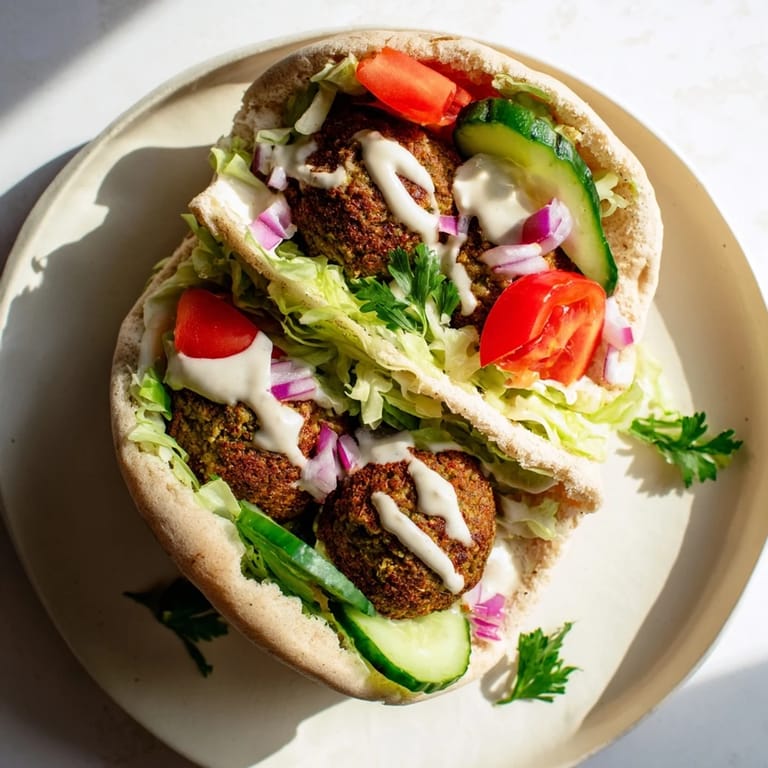
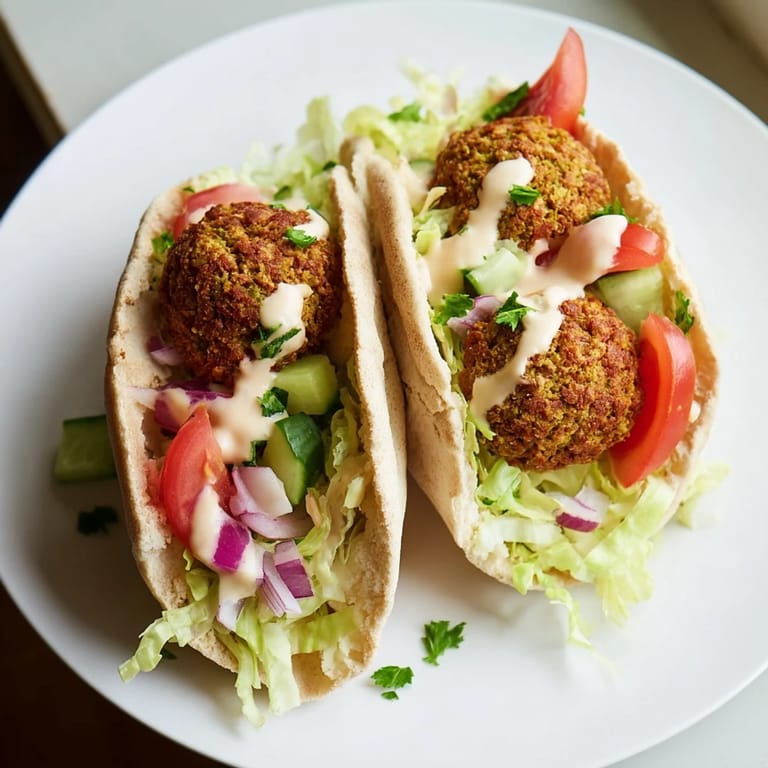
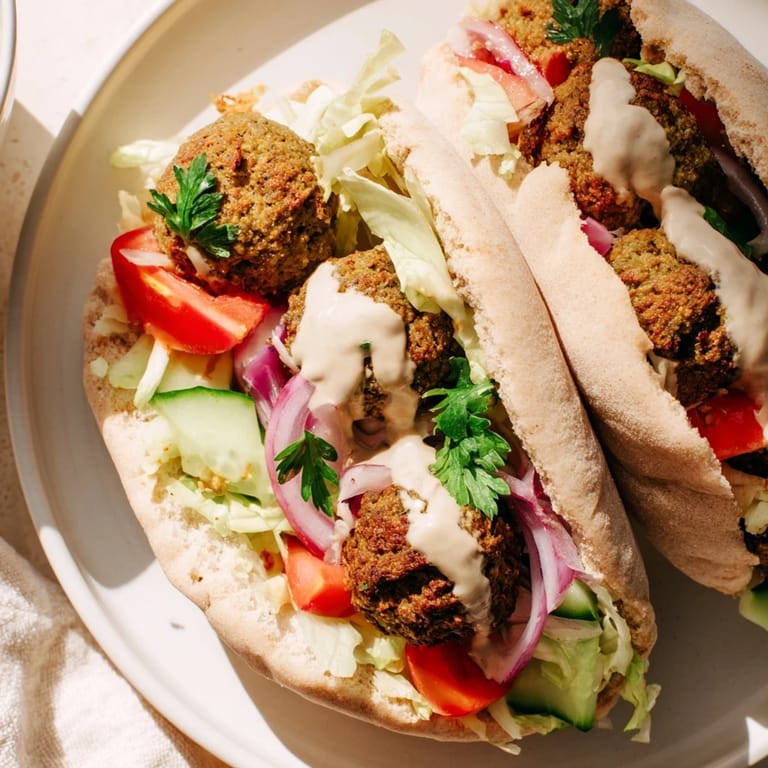
- Cut warm pita in half to create a pocket, stuff with lettuce, tomatoes, cucumber, and red onion, then tuck in three or four warm falafel pieces. Drizzle generously with tahini sauce and sprinkle parsley on top.
 Save to Pinterest
 There's something almost meditative about the moment a batch of falafel comes out of the oil—that golden color, that sound of the sizzle fading, and knowing that in the next few minutes you get to actually eat something you made with your own hands. That's when it stops being a recipe and becomes dinner.
Why Falafel Works
Falafel succeeds because it's built on a simple principle: fresh herbs and spices deserve a crispy shell to protect them. Everything that makes this dish special happens in that contrast between the crunchy exterior and the tender, bright green interior. The chickpeas are just the vehicle; the real magic is in how the spices and fresh herbs bloom when you fry them. Once you understand that, you can play with the ratio of herbs or adjust the spice level to match what you love.
Building Your Pita
The assembly is where everyone gets to be their own chef. Some people pile the vegetables high, others go light. Some drench everything in tahini sauce, others use it sparingly. I've learned to set out the components and let people build their own because there's no one right way, and that's kind of the point. The pita is just the frame; you're creating something personal.
Beyond the Basics
Once you've made this version a few times, you'll start seeing variations everywhere. Some cooks add a pinch of ground cinnamon for warmth, others toss in fresh dill or mint if that's what they have on hand. I've seen people top their pitas with pickled turnips for a sharp, briny contrast, and that actually changed how I think about the whole dish. The base recipe is solid, but it's also flexible enough to become yours.
- Try baking falafel at 400°F for twenty to twenty-five minutes if you want something less oil-heavy but still crispy.
- Make extra tahini sauce and keep it in the refrigerator—it's magic on grains, salads, or even roasted vegetables.
- If your falafel mixture falls apart when frying, it's too wet; add a touch more flour and chill it longer next time.
 Save to Pinterest
 This is the kind of meal that makes people happy because it's warm, satisfying, and tastes like someone cared enough to make it properly. Once you've made falafel in your own kitchen, you'll find yourself wanting to do it again.
Recipe FAQs
- → How can I make the falafel mixture hold together better?
- → Is it possible to bake the falafel instead of frying?
- → What can I serve alongside falafel pita pockets?
They pair well with pickled vegetables, hot sauce, or a squeeze of fresh lemon juice to enhance flavors.
- → How do I prepare the tahini sauce for the filling?
Whisk tahini with lemon juice, minced garlic, and salt. Slowly add cold water until smooth and pourable.
- → Are there common allergens in this dish?
Yes, it contains sesame (in tahini) and wheat (in pita and flour). Gluten-free alternatives can be used as needed.