 Save to Pinterest
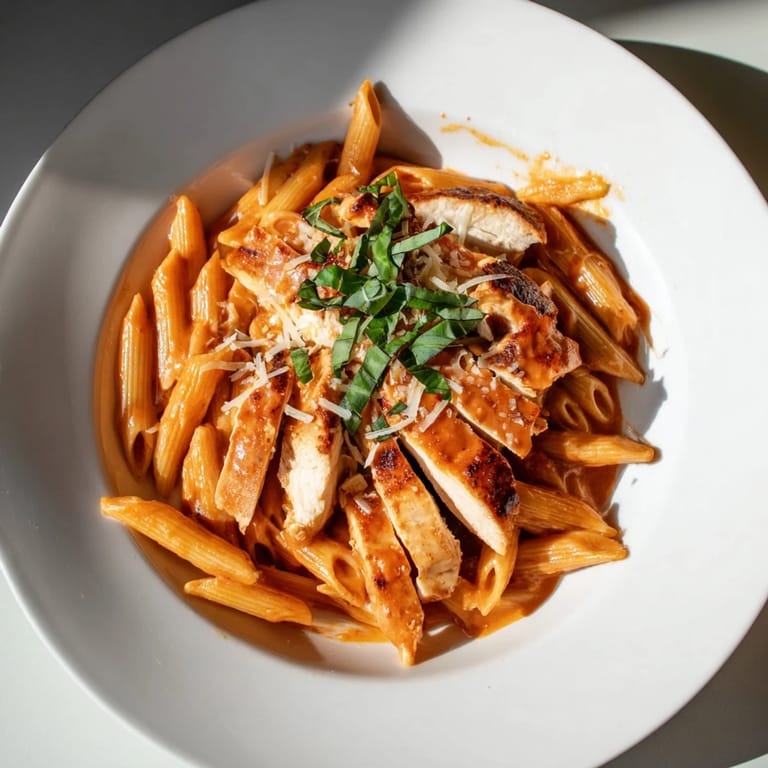
 There's something about the smell of garlic hitting hot butter that makes you feel like you actually know what you're doing in the kitchen. I stumbled onto this tomato basil chicken pasta on a random weeknight when I had just enough ingredients to make something that felt intentional, and somehow it turned into the dish I make whenever I want to impress without stress. The sauce comes together in the time it takes pasta to cook, and there's this magical moment when cream softens the tomato's brightness into something almost silky. It became my go-to when friends dropped by unexpectedly, or when I needed comfort food that didn't require a long list of specialty items.
I remember making this for a small dinner party where someone had just broken up with their long-term partner, and we all sat around eating pasta and laughing at terrible jokes. It was the kind of meal where nobody thought twice about seconds, and the conversation just flowed naturally. Something about cooking chicken and stirring cream sauce together gives you permission to just be present without overthinking. That night, I realized comfort food isn't about fancy ingredients—it's about showing up for people with something warm in a bowl.
Ingredients
- Penne pasta (12 oz): The ridges catch sauce like tiny hands reaching for flavor, so don't swap this for something too smooth.
- Boneless, skinless chicken breasts (1 lb): Pound them slightly thinner if you want them cooked through faster without getting tough.
- Salt and black pepper: Season the chicken generously before it hits the pan—this is where the flavor foundation gets built.
- Olive oil (1 tbsp): Use something you actually like the taste of; cheap oil here gets tasted in every bite.
- Unsalted butter (2 tbsp): This is where the sauce gets its soul, so don't skip it or go margarine.
- Yellow onion (1 medium): Sweet and mellow when cooked, which balances the brightness of tomato perfectly.
- Garlic cloves (3), minced: The moment it hits the hot butter is when you know good things are happening.
- Red pepper flakes (1/2 tsp, optional): Just a whisper of heat if you want it, but the dish is gentle enough without.
- Crushed tomatoes (1 can, 14 oz): The backbone of the sauce—pick a good brand because this is the main character here.
- Heavy cream (1/2 cup): This transforms sharp tomato into something velvety; there's no substitute that works quite the same.
- Parmesan cheese, freshly grated (1/3 cup): Grate it yourself right before using; pre-grated has additives that keep it from melting smoothly.
- Fresh basil (1/2 cup chopped): Add it in two stages so some stays bright and fresh-tasting.
Tired of Takeout? 🥡
Get 10 meals you can make faster than delivery arrives. Seriously.
One email. No spam. Unsubscribe anytime.
Instructions
- Get the pasta going:
- Fill a large pot with salted water and bring it to a rolling boil while you prep everything else. Once it's boiling, add penne and stir occasionally so nothing sticks. Cook until it's just tender with a tiny bit of bite left—usually about 9-11 minutes depending on your pasta brand.
- Season and sear the chicken:
- Pat the chicken breasts dry with paper towels, then sprinkle both sides generously with salt and pepper. Heat olive oil in a large skillet over medium-high heat until it shimmers, then lay the chicken in carefully and resist the urge to move it around—let it get golden and crusty on the first side for about 5-6 minutes before flipping.
- Cook the chicken through:
- After you flip it, the second side usually takes about 5-6 minutes, but check by cutting into the thickest part to make sure there's no pink inside. Transfer the cooked chicken to a plate and let it rest for a few minutes while you start the sauce—those few minutes let the juices relax back into the meat.
- Build the sauce base:
- In the same skillet (don't wash it, all those brown bits are liquid gold), reduce the heat to medium and add butter along with your chopped onion. Stir occasionally for about 3-4 minutes until the onion goes soft and translucent, then add the minced garlic and red pepper flakes if you're using them. After about 1 minute, you'll smell that incredible garlic-butter aroma that tells you everything is working.
- Add tomatoes and simmer:
- Pour in the crushed tomatoes and stir everything together, letting it bubble gently for about 5 minutes so the flavors start getting acquainted. The sauce will look fairly bright red at this point, which is perfect.
- Cream it into something special:
- Turn the heat down slightly, then slowly pour in the heavy cream while stirring constantly so it incorporates smoothly instead of curdling. Let it simmer gently for about 2-3 minutes until the sauce loses that raw cream look and becomes silky and slightly thickened.
- Finish with cheese and basil:
- Sprinkle in the parmesan cheese and add about half of your chopped fresh basil, stirring until the cheese melts completely into the sauce. Taste it and add salt and pepper until it tastes like something you'd actually want to eat.
- Bring everything together:
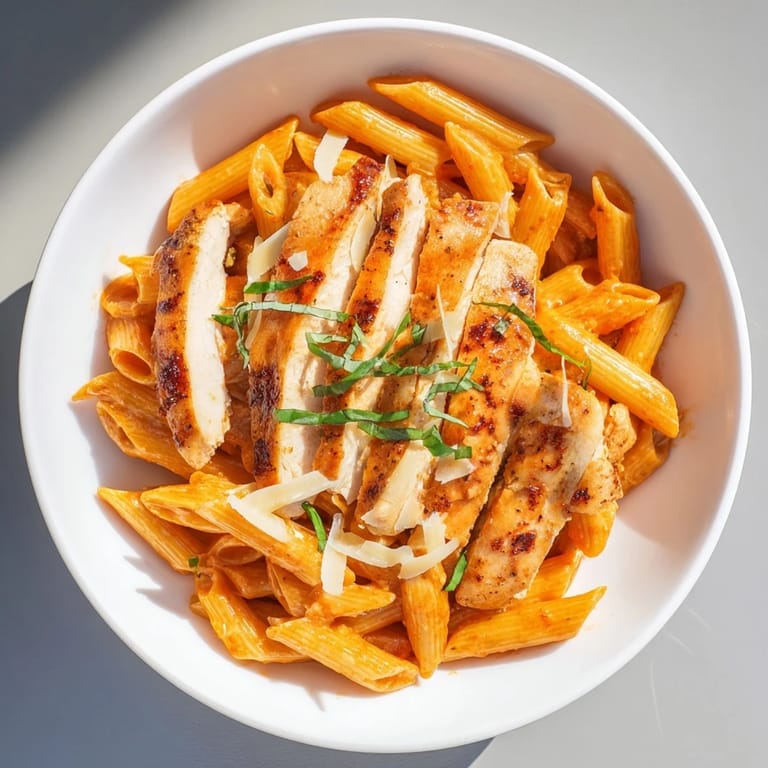
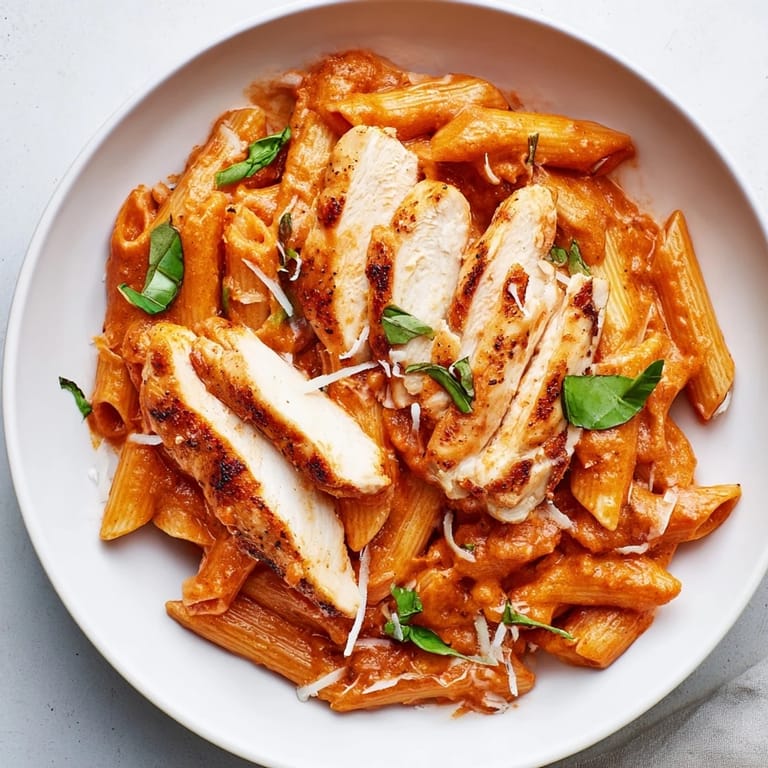
- Slice the rested chicken into strips, then add it back to the pan along with your drained pasta. Toss everything together gently, and if the sauce seems too thick, add a little splash of that pasta water you reserved—it'll loosen things up into a silky coating without watering down the flavor.
- Plate and serve:
- Divide the pasta among bowls while everything is still hot, then scatter the remaining fresh basil on top and grate a little more parmesan over each bowl if you feel like it. Serve immediately while it's warm and the basil is still fresh-smelling.
 Save to Pinterest
 One evening I made this for someone learning to cook, and I watched their face when they tasted it and realized they'd made something genuinely delicious with their own hands. That moment—when a person realizes cooking isn't magic or chemistry, just timing and a few good ingredients treated with respect—never gets old.
The Magic of the Sauce
The genius of this sauce is that it's only four main components—tomatoes, cream, butter, and cheese—but the order you combine them matters more than the recipe card wants to admit. The butter melts the onion into sweetness that acts as a buffer between the tomato's acidity and the cream's richness. When you add tomatoes first and let them simmer alone for a moment, they get mellow and less sharp-tasting. Then the cream comes in at the end to soften everything into something almost dessert-like in how smooth it is. This isn't fancy cooking; it's just understanding that flavors need time and temperature to get along.
Why Fresh Basil Changes Everything
Dried basil tastes like grass clippings in comparison to fresh, and I learned this the hard way by trying to stretch a recipe with what I had in the pantry. Fresh basil has this peppery brightness that cream would normally muffle, so adding it in two waves—some while cooking and some at the end—gives you the cooked herbal notes mixed with that raw, alive taste. If you can't find fresh basil, just add extra parmesan and accept that you're making a different dish, not a inferior version of this one. Herb substitutions rarely work out the way you hope.
Variations and When to Make Them
This recipe is more flexible than it looks, and I've made versions that work just as well depending on what's in the fridge. Once you understand how the sauce works, you can play with it without everything falling apart.
- For a lighter version, use half-and-half instead of heavy cream, or even chicken broth mixed with a little cream for something that tastes rich without sitting in your stomach like a stone.
- Mushrooms, zucchini, or fresh spinach all work beautifully added to the pan before the cream goes in, and they don't require any adjustment to the rest of the recipe.
- A splash of white wine added right after the onions get soft gives everything an extra layer of depth, though it's not necessary if you don't have it open.
 Save to Pinterest
 This is the kind of dish that reminds you why cooking at home matters—it costs about the same as takeout, tastes ten times better, and gives you something to do with your hands while you think. Make it for someone you want to impress, or make it for yourself on a Tuesday when you need to feel like you have your life together.
Recipe FAQs
- → What pasta works best for this dish?
Penne is ideal due to its shape, which holds the creamy tomato-basil sauce well, but rigatoni or fusilli can also be used.
- → How can I ensure the chicken stays tender?
Cook the chicken breasts over medium-high heat until golden and no longer pink inside, then rest before slicing to retain juices.
- → Can I make the sauce spicier?
Yes, add extra red pepper flakes or a pinch of cayenne when sautéing the garlic to boost heat.
- → Is it possible to substitute fresh basil?
If fresh basil isn't available, dried basil can be used but add it earlier in cooking to release flavors.
- → How do I achieve a smooth sauce consistency?
Use reserved pasta cooking water to loosen the sauce as needed, stirring gently until silky and well combined.