 Save to Pinterest
 There's a particular Wednesday evening I keep coming back to—the kind where the kitchen smells like caramelizing beef and sesame oil before you've even finished prepping. My friend brought over a bag of Asian pears from the market, insisting they belonged in something savory, and that's when this bulgogi bowl came together. It wasn't planned, just ingredients calling to each other, and thirty minutes later we were eating something so bright and alive it felt like a small victory.
I made this for my sister when she was between jobs and needed a moment to just sit and eat something good. She took one bite, closed her eyes, and said it tasted like someone actually cared. That's when I realized this dish does that—it feels generous without requiring hours of labor.
Ingredients
- Beef sirloin or ribeye, thinly sliced (500g): The thinner you slice it, the faster it cooks and the better it absorbs the marinade; a sharp knife or your freezer for ten minutes makes all the difference.
- Soy sauce (3 tbsp): This is your backbone—use a good one if you can, and tamari if you're avoiding gluten.
- Brown sugar (2 tbsp): It dissolves into the marinade and creates those little caramelized edges when the beef hits the heat.
- Sesame oil (1 tbsp): A little goes a long way; this isn't the cooking oil, it's the finishing touch that makes everything taste intentional.
- Rice vinegar (1 tbsp): Just enough acid to keep things from tasting one-note and sweet.
- Garlic and ginger (2 cloves and 1 thumb-sized piece): Minced and grated respectively—these two create warmth that lingers on your tongue.
- Asian pear, grated (1 whole): This was my revelation; it sweetens and tenderizes the beef while adding a subtle floral note that regular sugar never could.
- Gochujang (1 tbsp, optional): Only add this if you want the heat to announce itself; it's not shy.
- Scallions and sesame seeds (2 scallions sliced, 1 tbsp seeds): These finish the marinade and every component after, bringing texture and a toasted aroma.
- Black pepper (1/4 tsp): A whisper, not a shout.
- Cooked rice (2 cups): The canvas everything else gets to live on.
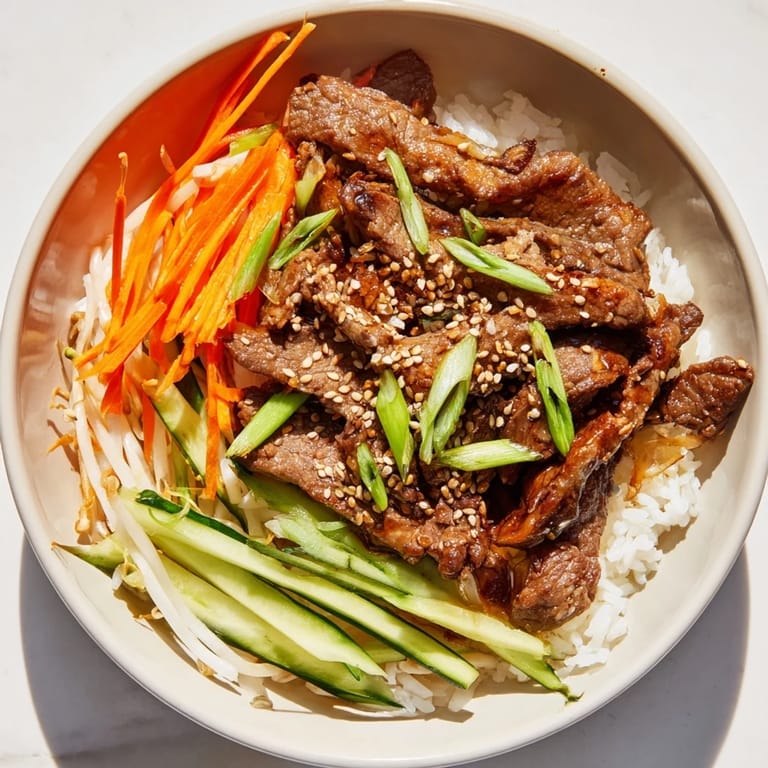
- Carrot, cucumber, and bean sprouts: Julienned and sliced vegetables that stay cool and crisp against the warm beef, making every bite interesting.
- Kimchi (1 cup, optional): If you want fermented funk and extra heat, this is it.
Tired of Takeout? 🥡
Get 10 meals you can make faster than delivery arrives. Seriously.
One email. No spam. Unsubscribe anytime.
Instructions
- Combine the marinade:
- In a large bowl, whisk together soy sauce, brown sugar, sesame oil, rice vinegar, minced garlic, grated ginger, the grated pear, gochujang if you're using it, half the scallions, and sesame seeds. The mixture should smell like something you want to eat immediately.
- Marinate the beef:
- Add your thinly sliced beef to the bowl and toss it until every piece gets coated. Cover it and let it sit for at least fifteen minutes, though an hour is even better if you have the time; the pear's enzymes will keep tenderizing the meat while you do other things.
- Get the pan screaming hot:
- Heat a large skillet or wok over high heat until it's so hot a drop of water sizzles immediately. If you crowd the pan with beef, you'll steam it instead of searing it, so work in batches if needed.
- Sear the beef until caramelized:
- Add the beef directly to the hot pan (save the marinade) and let it sit undisturbed for about a minute so it can brown properly. Then stir-fry everything for another minute or two until the edges are dark and the meat is cooked through. Pour in any remaining marinade right at the end and toss everything together, letting it reduce slightly and cling to the beef.
- Build your bowls:
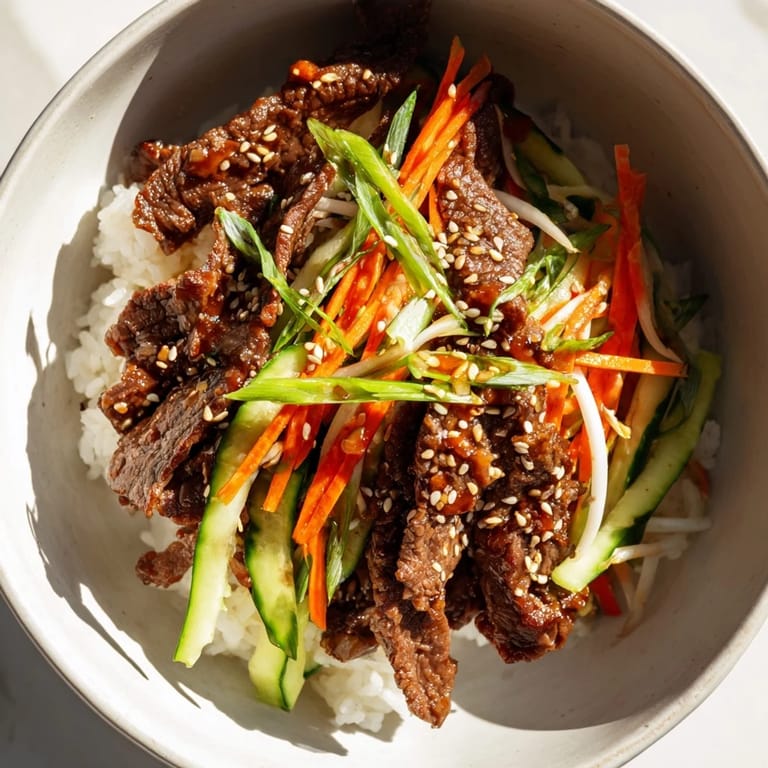
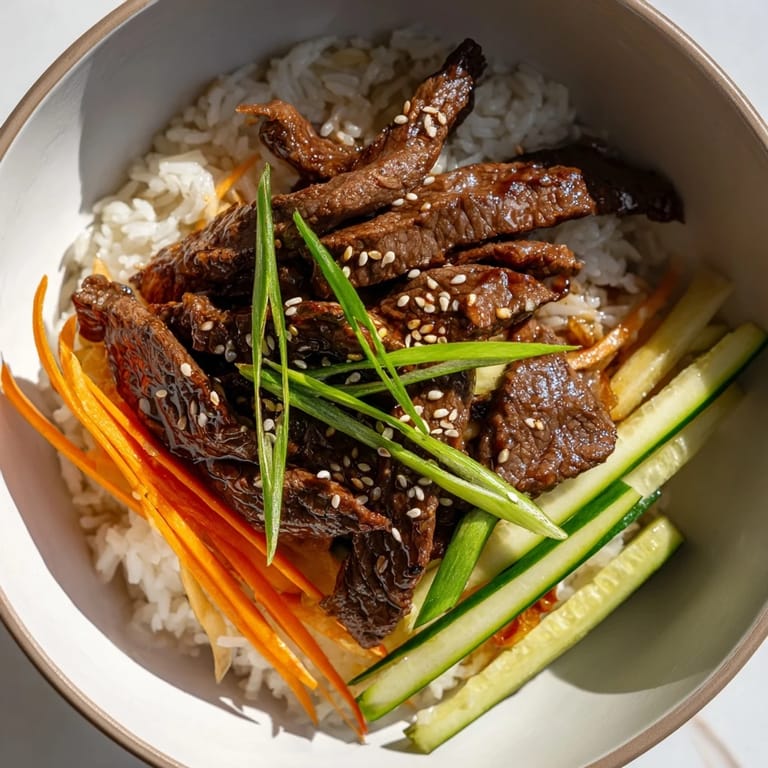
- Divide the cooked rice among four bowls, then arrange the warm beef on top. Create little clusters of carrot, cucumber, bean sprouts, and kimchi around it, leaving some rice visible.
- Finish it:
- Scatter the remaining scallions and sesame seeds over everything. Serve immediately while the rice is warm and the vegetables are still cool.
 Save to Pinterest
 The real magic happens when someone you care about takes that first bite and you watch their expression shift. Suddenly it's not just dinner, it's a conversation about how good food should taste, and why taking fifteen minutes to do something right matters.
The Power of a Proper Marinade
I spent years making beef bowls that were just... fine. Then I learned that patience with the marinade changes everything. The soy sauce and sugar create a base, sure, but the pear juice and ginger are working on the meat's proteins while you're not even watching. By the time the beef hits the pan, it's already been transformed. That's when I started understanding that cooking isn't always about speed or technique—sometimes it's about letting ingredients do their job.
Building Your Perfect Bowl
There's something deeply satisfying about assembling your own bowl instead of having someone hand it to you finished. You get to decide if you want more vegetables or less, if the kimchi should sit right next to the beef or keep its distance. One person in my kitchen always piles the sprouts high, another barely adds vegetables at all. The dish doesn't break under these preferences—it welcomes them.
Variations Worth Exploring
Once you understand how this bowl works, you start seeing possibilities. I've added a fried egg on top when I wanted richness, swapped the rice for cauliflower rice when I wanted to feel lighter, and even tossed in roasted mushrooms because that's what was in the fridge. The marinade is sturdy enough to carry whatever you add to it.
- A perfectly cooked egg yolk becomes your sauce when you break it into the warm rice.
- Cauliflower rice or barley work beautifully if you want something different under the beef.
- Roasted mushrooms, bok choy, or broccoli all fit naturally into the flavor story without needing any adjustment.
 Save to Pinterest
 This bowl has become the dish I make when I want to feed people something that feels special without pretending to be fancy. It's approachable, fast, and somehow always tastes like care.
Recipe FAQs
- → What cut of beef works best for this dish?
Use tender, quick-cooking cuts like ribeye or sirloin for the best texture and flavor.
- → How long should the beef marinate?
Marinate for at least 15 minutes; up to an hour enhances flavor depth without losing tenderness.
- → Can I adjust the spice level?
Yes, modify the amount of gochujang or omit it entirely for milder taste.
- → What rice is recommended for the bowl?
Jasmine or short-grain rice works best to complement the savory beef and crisp veggies.
- → Are there gluten-free variations?
Substitute regular soy sauce with tamari and ensure gochujang is gluten-free to accommodate gluten sensitivities.
- → How can I add more texture to the dish?
Garnish with toasted sesame seeds and add crunchy vegetables like cucumber and bean sprouts for contrast.