 Save to Pinterest
 I discovered the magic of architectural plating at a gallery opening where a friend had arranged cheeses like a miniature city skyline. The geometric precision felt so intentional, so deliberate, that I found myself staring at it longer than the actual art on the walls. That night, I realized that food could be a design statement, not just sustenance, and I became obsessed with recreating that moment of visual surprise and delight.
I made this platter for my partner's work colleagues, and watching them pause before eating, actually pausing, to photograph it was worth every carefully arranged slice. Someone asked if I'd gone to culinary school, and I almost didn't correct them.
Ingredients
- Aged cheddar, thinly sliced: The sharpness cuts through rich accompaniments and holds its structure when fanned, creating clean lines that photograph beautifully.
- Gruyère, thinly sliced: Its nutty sweetness anchors the composition and adds depth that mild cheeses simply cannot match.
- Manchego, thinly sliced: This Spanish cheese brings a slightly salty, caramel note that feels unexpectedly luxurious when arranged with intention.
- Creamy brie, cut into wedges: The soft texture forms the architectural base, grounding each arch so it doesn't topple during assembly or plating.
- Blue cheese, cut into small triangles: These crown each arch like Art Deco spires, adding visual drama and a peppery accent that surprises on the palate.
- Seedless green and red grapes: They nestle between arches, providing pops of color and juicy relief from the richness of aged cheese.
- Pear and apple, thinly sliced: Slice these just before serving so they stay crisp and don't brown, bridging the gap between cheese and fruit with subtle sweetness.
- Roasted almonds: Their toasted crunch becomes the textural anchor that prevents the platter from feeling one-note.
- Dried apricots, halved: These chewy morsels offer concentrated fruit flavor without the moisture that fresh fruit might introduce.
- Honeycomb or honey: A drizzle near the brie creates a touch of sweetness that ties the savory and the indulgent together.
- Baguette slices and assorted crackers: Toast the baguette lightly so it doesn't go soggy, and choose crackers with enough structure to support cheese without crumbling.
Tired of Takeout? 🥡
Get 10 meals you can make faster than delivery arrives. Seriously.
One email. No spam. Unsubscribe anytime.
Instructions
- Slice your cheeses with surgical precision:
- Use a wire cheese slicer to get consistent thickness, and work on a slightly cool surface so the cheese doesn't stick. Thin, uniform slices are what make the fanned shapes read as intentional rather than haphazard.
- Build your first arch:
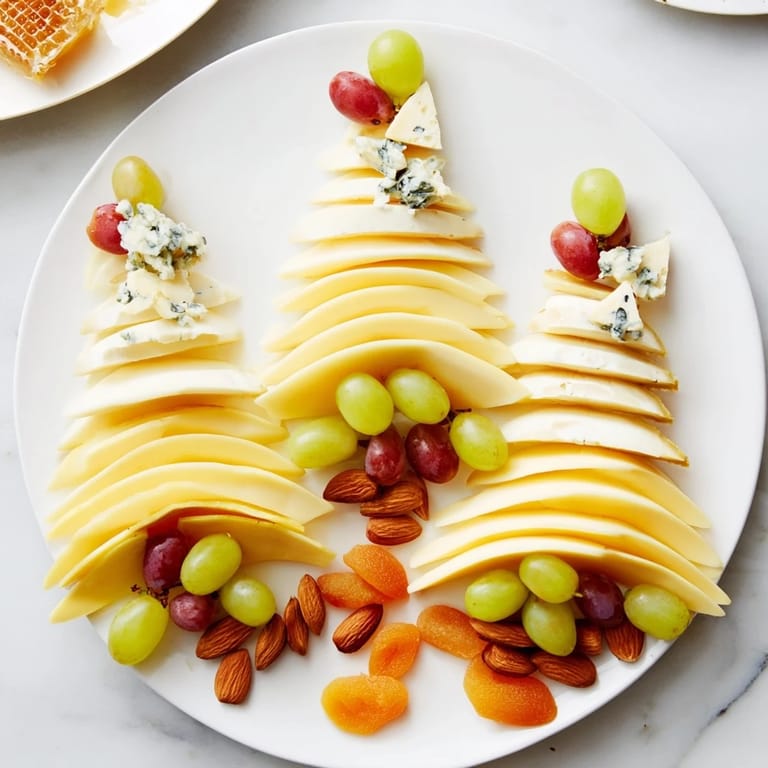
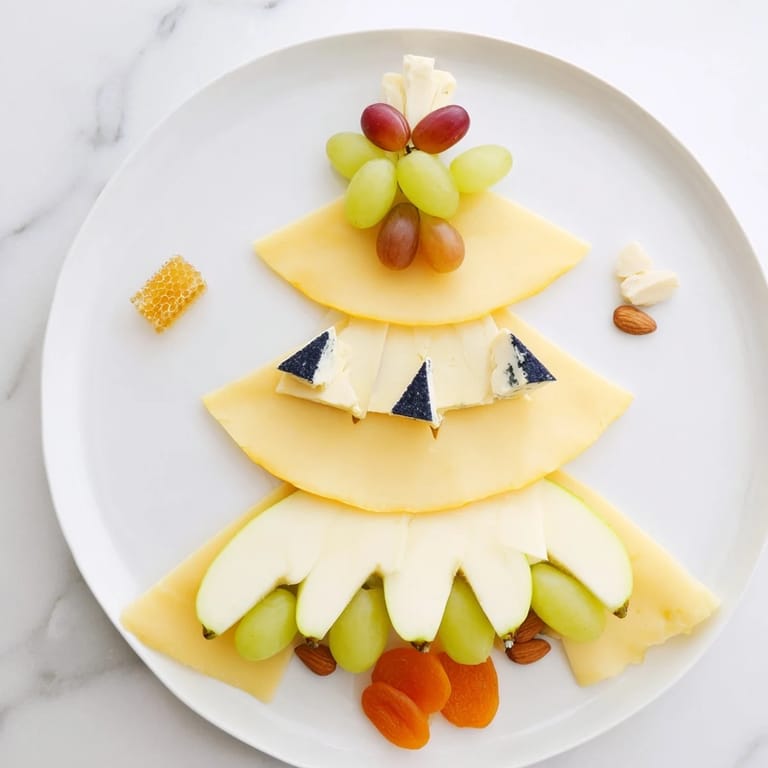
- Start with cheddar slices, overlapping each one just slightly at about a forty-five degree angle, working in a gentle curve. The overlaps create that iconic fan effect, and slight imperfection is actually more forgiving than you'd think.
- Layer the second and third arches:
- Repeat with Gruyère and Manchego, keeping them close enough to suggest architectural unity but far enough apart that each cheese sings on its own. Three arches creates visual rhythm without overwhelming the board.
- Anchor with brie:
- Place brie wedges at the base of each arch, letting them settle naturally into the curves. Their soft edges soften the geometric precision just enough to keep things from feeling too sterile.
- Crown with blue cheese:
- Position blue cheese triangles at the apex of each arch, clustering them where the curves peak. This is where the Art Deco reference becomes undeniable.
- Fill the negative space:
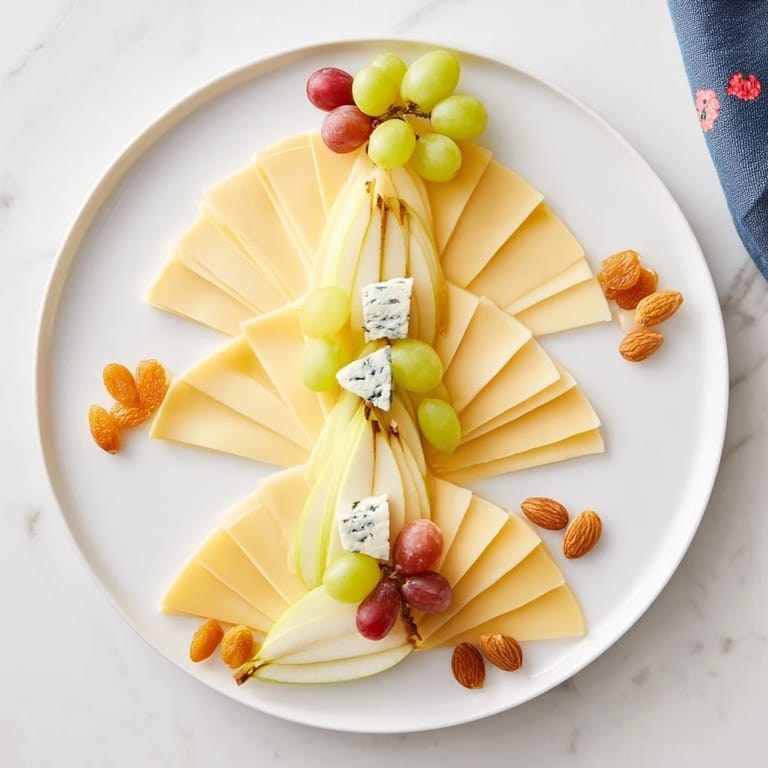
- Tuck grape bunches, pear slices, and apple slices into the spaces between arches, creating secondary arrangements that feel both accidental and carefully considered. Let fruit colors flow naturally around the geometry.
- Scatter nuts and dried fruit:
- Distribute roasted almonds and apricot halves asymmetrically around the board, avoiding the center so the architectural lines remain the focal point. Think jazz improvisation around a rigid structure.
- Drizzle with intention:
- Place honeycomb or a small pool of honey near the brie, anchoring one corner and inviting guests to combine sweetness with creamy cheese. A tiny bowl alongside the board feels more refined than drizzling directly.
- Frame with bread and crackers:
- Arrange baguette slices and crackers along the platter's perimeter, leaving them slightly separated so guests can easily grab one without disturbing the arrangement. Think of this as the frame around a painting.
- Chill or serve:
- If assembled more than thirty minutes ahead, cover loosely with plastic wrap and refrigerate so the cheeses stay firm and the fruit stays crisp. Bring to room temperature for about ten minutes before serving so flavors open up.
 Save to Pinterest
 The real moment came when my nephew, usually glued to his phone, asked if he could help me arrange the next platter. We worked in quiet concentration, him placing grapes while I fanned the cheddar, and suddenly it felt less like food prep and more like collaboration. That's when I understood why this platter works: it invites people into the process, even just by looking.
The Geometry of Generosity
There's something unexpectedly generous about arranging cheese this way, even though it takes longer than simply dumping everything onto a board. When you spend time on presentation, you're essentially saying that the people you're serving are worth the extra effort, and somehow guests feel that message even if they can't quite articulate it. The Art Deco geometry isn't pretentious; it's thoughtful, and there's a world of difference.
Cheese Selection as Storytelling
Each cheese tells a different story: the cheddar speaks of tradition and straightforwardness, the Gruyère brings continental refinement, the Manchego nods to Spanish sun and time. When you arrange them this way, you're not just serving cheese; you're presenting a narrative arc that guests can taste. Mixing aged and creamy, sharp and nutty, creates a conversation across the platter that keeps people engaged bite after bite.
Timing and Temperature Matter More Than You'd Think
Cheese is surprisingly temperature sensitive, and I learned this the hard way when my carefully fanned slices began to soften and slide during a summer party. Serving at a cool room temperature, just pulled from a brief chill, keeps everything structurally sound while still letting flavors bloom fully. The fruit stays crisp, the crackers don't absorb moisture from the cheese, and your geometric composition holds its dignity from first glance to final crumb.
- If your kitchen runs warm, assemble on a marble or granite board that you've chilled in the refrigerator for ten minutes.
- Serve within two hours of assembly for peak visual impact and optimal texture.
- Remove from the refrigerator about five to ten minutes before guests arrive so the cheeses warm just enough to release their full flavor.
 Save to Pinterest
 This platter sits at the intersection of art and appetite, where presentation feeds something beyond just hunger. Once you've made it once, you'll find yourself reaching for it whenever you want to turn an ordinary gathering into something people will actually remember.
Recipe FAQs
- → How do you create the arch shapes with cheese slices?
Arrange thin cheese slices in overlapping, tiered fan patterns to form symmetrical arches on a flat surface.
- → What cheeses work best for this platter?
Aged cheddar, Gruyère, Manchego, creamy brie, and blue cheese provide a balanced flavor and textural contrast.
- → Can I substitute any ingredients for dietary needs?
Yes, plant-based cheeses can replace dairy options and honey can be omitted for vegan preferences.
- → What accompaniments enhance the platter?
Fresh grapes, sliced pears and apples, roasted almonds, dried apricots, and honeycomb add color and complementary flavors.
- → How should the platter be served or stored?
Serve immediately or cover and chill up to one hour before serving to maintain freshness.
- → Which tools help assemble the platter?
A sharp cheese slicer ensures clean, even slices while a large serving board provides ample space to arrange components artistically.