 Save to Pinterest
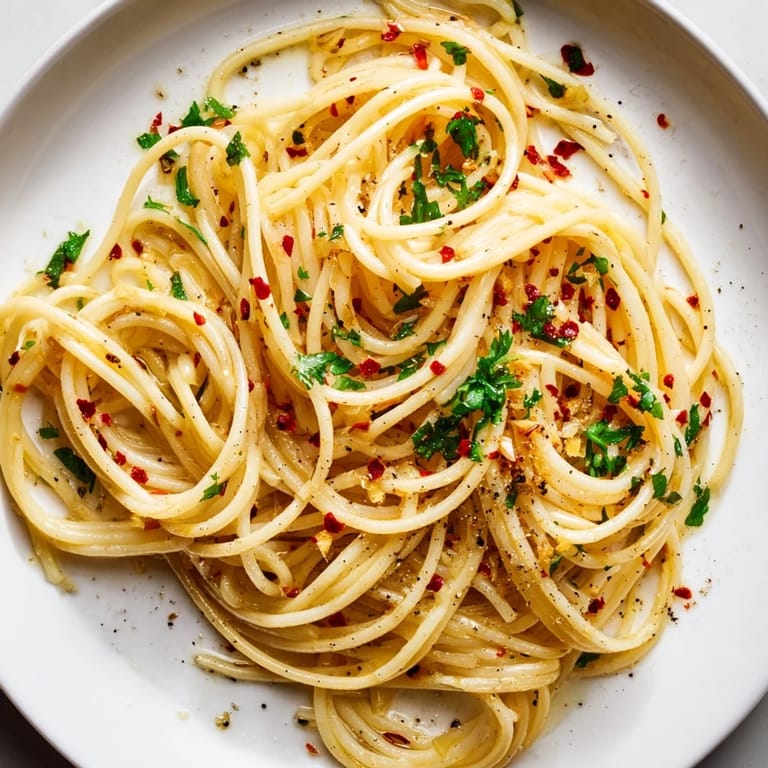
 One Tuesday evening, I was starving and had maybe fifteen minutes before a friend stopped by. My pantry was nearly empty—just a box of spaghetti, some garlic, good olive oil, and chili flakes. I threw it all together out of pure necessity, and what came together was so unexpectedly perfect that I've been making it ever since. There's something almost magical about how four simple ingredients can transform into something that tastes like you've spent hours in the kitchen.
I made this for my roommate during that chaotic period when we were both working double shifts. We'd come home completely drained, and I'd have a steaming bowl of this on the table in the time it took to change out of our work clothes. She still texts me asking for it whenever she's had a rough day.
Ingredients
- Spaghetti (200g): Dried spaghetti works best here because the thinner strands catch the oil beautifully and cook fast—fresh pasta will turn mushy before the oil even heats through.
- Extra-virgin olive oil (4 tbsp): Don't skimp on quality here; it's literally half the dish, so a good fruity oil makes all the difference.
- Garlic cloves (4 large, thinly sliced): Slice them thin so they cook evenly and become those sweet, tender little morsels instead of hard chunks or burnt bits.
- Red chili flakes (1 tsp): Start with less if you're sensitive to heat—you can always add more once you taste it, but you can't take it back.
- Fresh parsley (2 tbsp, chopped): This adds a brightness at the end that stops the dish from feeling too heavy and greasy.
- Freshly ground black pepper: Use the grinder yourself instead of the pre-ground stuff; the flavor is sharper and fresher.
- Sea salt: For the pasta water and finishing—it brings everything into focus.
- Parmesan cheese (2 tbsp, optional): If you use it, grate it fresh; pre-grated tastes like something else entirely.
Tired of Takeout? 🥡
Get 10 meals you can make faster than delivery arrives. Seriously.
One email. No spam. Unsubscribe anytime.
Instructions
- Start the pasta water:
- Fill a large pot about three-quarters full with water and add enough salt that it tastes like the sea. Once it's rolling at a hard boil, add your spaghetti and stir it around so nothing sticks together.
- Cook the spaghetti:
- Let it cook according to the package timing, but taste it a minute or two before that—you want it tender but still with a tiny bit of firmness when you bite it. Right before you drain it, scoop out about half a cup of that starchy pasta water and set it aside.
- Infuse the oil gently:
- While the pasta's cooking, pour your olive oil into a large skillet and turn the heat to medium-low—this is crucial, because high heat will burn the garlic and make it bitter and harsh. Add your sliced garlic and let it sizzle gently, stirring constantly, until it turns a pale golden color and smells incredible, which takes about a minute or two.
- Add the heat:
- Sprinkle in the chili flakes and stir everything together for just ten seconds so they bloom and release their flavor into the oil.
- Bring it together:
- Drain your pasta right into the skillet with the garlic oil, and toss everything together so every strand gets coated. If it looks too dry, splash in a little of that reserved pasta water—the starch in that water helps the oil cling to the pasta and creates something almost like a sauce.
- Season and finish:
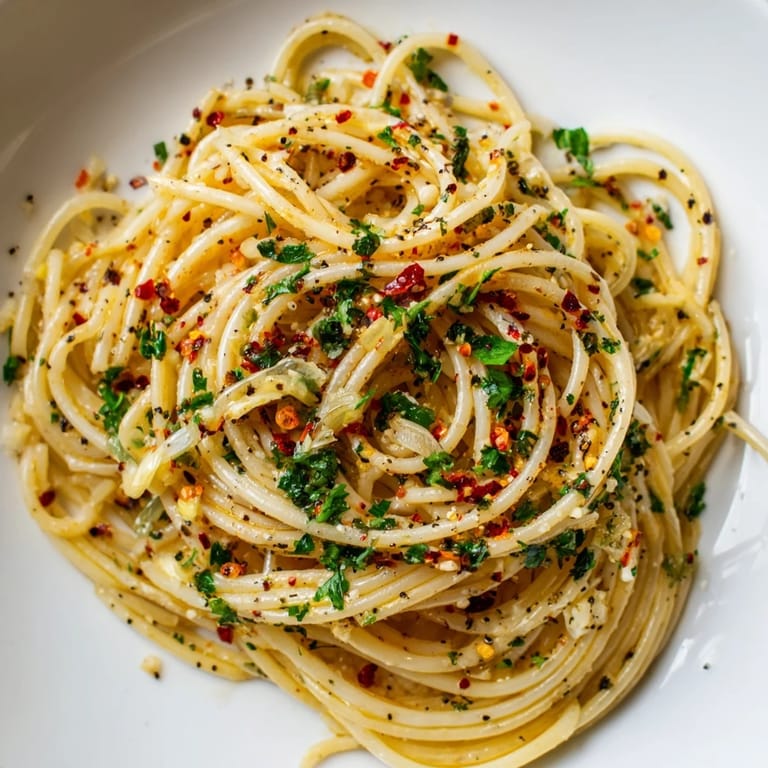
- Taste it and adjust the salt and pepper to your liking, then toss in the fresh parsley right at the end so it stays bright and green. Plate it up immediately and top with Parmesan if that's your thing.
 Save to Pinterest
 My neighbor once smelled this cooking through our shared wall and knocked on my door asking what I was making. We ended up sitting on my kitchen counter eating this straight out of the skillet while talking about everything and nothing. It became this little ritual between us on nights when the world felt overwhelming.
Timing Matters More Than Perfection
This dish lives and dies by not overthinking it. The second everything hits that pan, you're maybe three minutes from eating, so have your bowls ready and don't get distracted. Aglio e olio is one of those rare recipes where the speed actually improves the final result because everything stays fresh and bright instead of sitting around getting tired.
The Garlic Oil Is Everything
I've watched people make this and try to skip steps or rush the garlic, and it never turns out quite right. When you take those two minutes to properly infuse the oil, you're building the entire flavor foundation—the garlic becomes almost sweet and the oil becomes liquid gold. That patience transforms simple ingredients into something that tastes expensive and intentional.
Variations That Actually Work
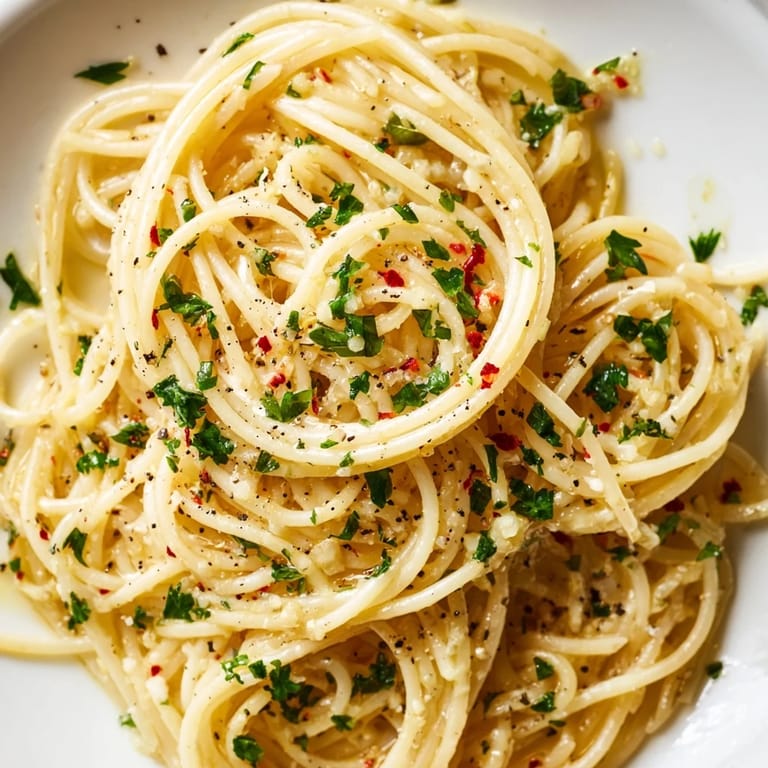
The beauty of this dish is how it welcomes small changes without falling apart. A squeeze of lemon juice at the very end brightens everything up, a little anchovy paste stirred into the oil adds depth if you're feeling fancy, or a handful of toasted breadcrumbs gives it some unexpected texture. I've even thrown in a can of white beans to make it heartier when I've had nothing else in the kitchen.
- Fresh lemon juice right before serving cuts through the richness and makes it feel lighter.
- A pinch of red pepper flakes can go higher than you think if you're into real heat—I know people who double it.
- Stale bread turned into panko-style crumbs and toasted in the leftover oil becomes a crunchy topping that elevates the whole thing.
 Save to Pinterest
 This is the recipe I reach for when I need to feel like I'm taking care of myself but don't have the energy for anything complicated. It's proof that the best meals aren't always the most elaborate ones.
Recipe FAQs
- → How do I prevent garlic from burning?
Cook garlic over medium-low heat, stirring frequently and removing from heat once it just begins to turn golden.
- → Can I adjust the spiciness level?
Yes, simply increase or reduce the amount of red chili flakes to suit your desired heat preference.
- → What is the purpose of reserved pasta water?
Adding reserved pasta water helps loosen the sauce, making it silky and better clinging to the pasta.
- → Is Parmesan necessary for this dish?
Parmesan adds a savory finish but can be omitted or replaced with vegan alternatives for dietary preferences.
- → Can this be made gluten-free?
Yes, simply substitute regular spaghetti with a gluten-free pasta option.