 Save to Pinterest
 I burned my first batch of naan so badly the smoke alarm went off and my neighbor knocked on the door. I had the heat too high and forgot to watch the pan. But once I figured out the rhythm—medium-high heat, quick flip, generous brush of garlic butter—it became the easiest impressive thing I make. Now I keep dough resting in the fridge most weekends, ready to roll out whenever dinner needs something warm and soft to soak up sauce.
I started making this when my friend brought over chicken tikka masala and I had nothing but stale pita in the pantry. She watched me roll out the dough on my counter and said it smelled better than anything she ordered. We tore the naan apart with our hands, still hot from the pan, and it became the kind of meal we both remembered. Now every time she visits, she asks if Im making the garlic bread, and I always say yes before she even finishes the sentence.
Ingredients
- All-purpose flour: The base of the dough, giving it structure without being too heavy or dense.
- Sugar: Feeds the yeast and adds a hint of sweetness that balances the garlic.
- Instant dry yeast: Skips the proofing step and gets the dough soft and airy quickly.
- Salt: Sharpens the flavor and keeps the dough from tasting flat.
- Warm water: Activates the yeast, but make sure its not too hot or it will kill it.
- Plain yogurt: Makes the naan tender and adds a slight tang that cuts through the butter.
- Vegetable oil: Keeps the dough pliable and easy to roll out.
- Unsalted butter: The carrier for all that garlic flavor, brushed on while the naan is still steaming.
- Garlic: Minced fresh is key, the jarred stuff never tastes the same.
- Fresh cilantro: Optional, but it adds a bright green finish that makes it look like you tried harder than you did.
Tired of Takeout? 🥡
Get 10 meals you can make faster than delivery arrives. Seriously.
One email. No spam. Unsubscribe anytime.
Instructions
- Mix the dry ingredients:
- Whisk together the flour, sugar, yeast, and salt in a large bowl so everything gets evenly distributed. This prevents clumps of yeast or salt from throwing off the dough.
- Add the wet ingredients:
- Pour in the warm water, yogurt, and oil, then stir with a wooden spoon until it looks shaggy and pulls away from the sides. It will look messy at first, but thats normal.
- Knead the dough:
- Turn it out onto a floured surface and knead for about five minutes until it feels smooth and springs back when you poke it. If it sticks, dust your hands with a little more flour.
- Let it rest:
- Cover the dough with a clean towel and let it sit for ten minutes. This short rest makes it easier to roll out and gives the gluten time to relax.
- Prepare the garlic butter:
- Melt the butter in a small bowl and stir in the minced garlic. Set it aside so its ready to brush on the moment the naan comes off the heat.
- Divide and roll:
- Cut the dough into six equal pieces, then roll each one into an oval about a quarter inch thick. They dont have to be perfect, uneven edges actually look more authentic.
- Heat the pan:
- Warm a skillet or cast-iron pan over medium-high heat until a drop of water sizzles and evaporates quickly. Dont add oil, the dough cooks best on a dry surface.
- Cook the naan:
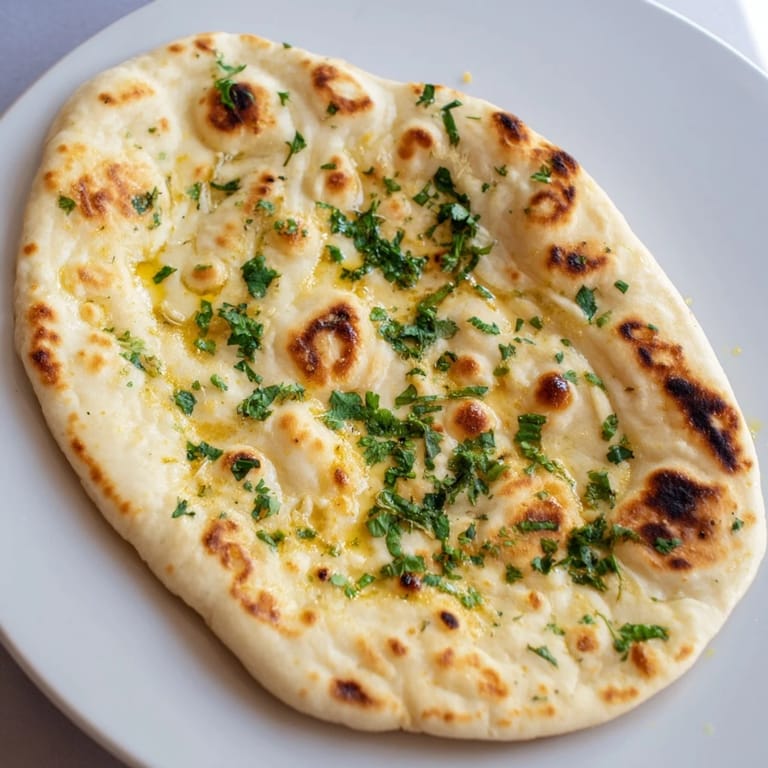
- Lay one piece of dough in the hot pan and cook for one to two minutes until bubbles form on top, then flip and cook until golden brown spots appear. Press gently with a spatula to help it puff up.
- Brush with garlic butter:
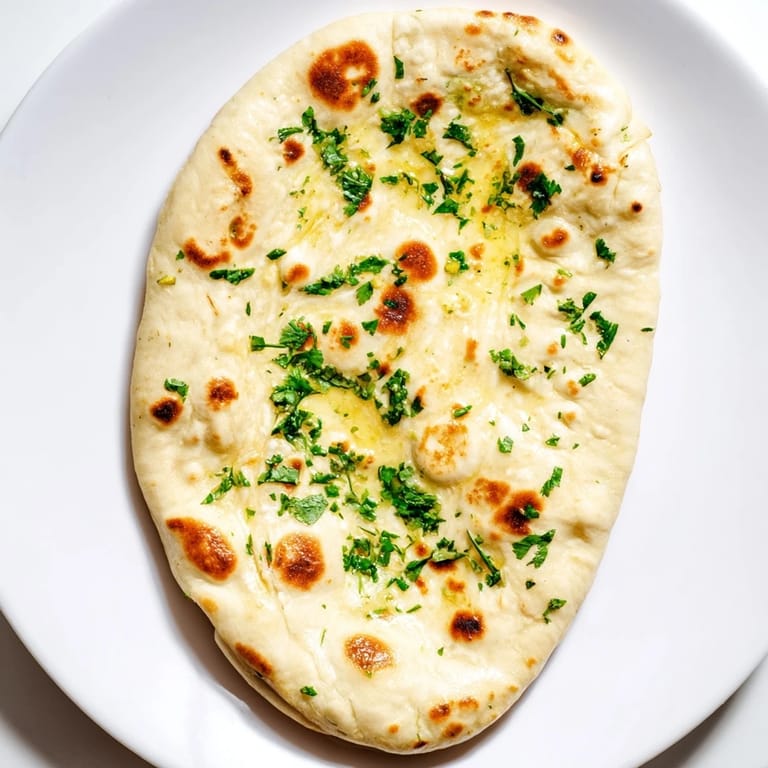
- As soon as you pull the naan off the heat, brush it generously with the garlic butter and sprinkle with cilantro if youre using it. The heat melts the butter right into the bread.
- Repeat and serve:
- Keep cooking the remaining dough, stacking the finished naan on a plate and covering with a towel to keep them warm. Serve them as soon as you can, theyre best when theyre still soft and steaming.
 Save to Pinterest
 The first time I made naan for my dad, he tore off a piece and dipped it into leftover dal without saying anything. Then he looked up and said it tasted like the bread his mom used to make on the stove when he was little. I didnt know if that was exactly true, but I knew it meant something, and I started making it every time he came over after that.
How to Store and Reheat Naan
I usually stack leftover naan in a zip-top bag and keep it in the fridge for up to three days. To reheat, I wrap it in a damp paper towel and microwave for fifteen seconds, or throw it back in a hot skillet for a few seconds on each side. It wont be quite as soft as fresh, but brushing it with a little more butter helps bring it back to life.
Ways to Use Leftover Naan
I cut cold naan into triangles and toast them in the oven with olive oil and salt to make chips for hummus. You can also use it as pizza dough, spread on sauce and cheese and bake it until bubbly. One morning I tore up leftover garlic naan and used it in place of croutons in a breakfast strata, and it soaked up the eggs perfectly without falling apart.
Variations and Swaps
If you want a richer dough, replace the vegetable oil with melted ghee or butter. I have swapped half the all-purpose flour for whole wheat and it still turned out soft, just with a slightly nutty flavor and darker color. You can also skip the garlic butter and brush the naan with honey butter, or sprinkle it with everything bagel seasoning for a completely different vibe.
- Add nigella seeds or sesame seeds to the dough before rolling for extra texture and flavor.
- Mix chopped green chili into the garlic butter if you want a little heat.
- Use the dough to make smaller naan and serve them as appetizers with dips.
 Save to Pinterest
 There is something about pulling hot naan off the stove and watching someone reach for it before you even set the plate down. It is one of those recipes that makes people feel taken care of, and it barely takes any effort once you know the rhythm.
Recipe FAQs
- → What ingredients make the dough soft and fluffy?
The combination of yogurt, warm water, and yeast helps create a tender and fluffy dough texture for the naan.
- → How is the garlic butter prepared and used?
Melted unsalted butter is mixed with finely minced garlic, then brushed onto the hot naan right after cooking to infuse robust flavor.
- → Can this bread be cooked without a skillet?
A cast-iron pan or non-stick skillet is ideal for even, high heat cooking, but a griddle or oven with a baking stone can be alternatives.
- → What spices can enhance the bread’s flavor?
Sprinkling nigella seeds or sesame seeds on the dough before cooking adds a subtle crunch and complementary taste.
- → Is whole wheat flour suitable for this dough?
Yes, substituting with whole wheat flour creates a nuttier flavor but may alter the softness of the final bread.